
The Ghost in the Attic: When Your Roof Lies to You
I stood on a roof last November in a biting wind that felt like it was trying to peel the skin off my knuckles. From the ground, the shingles looked fine—maybe a little granular loss, but nothing that would make a homeowner panic. But walking on that roof felt like walking on a sponge. I knew exactly what I would find underneath before I even pulled my bar. When we finally peeled back the valley, the plywood didn’t just break; it crumbled like wet cake. That is the problem with traditional roofing: by the time you see the stain on your ceiling, the war has been lost for five years. Water is patient. It will wait for you to make a mistake, and then it will sit in your decking, quietly rotting the bones of your house while you sleep soundly. This is why the shift toward smart sensors in 2026 isn’t just a gadget play; it is a necessity for anyone tired of the ‘tear-off and pray’ method used by so many roofing companies today.
“A roof is only as good as its flashing, but its longevity is dictated by what happens beneath the shingles.” – Old Roofer’s Adage
The Physics of Failure: How Capillary Action Destroys Your Investment
Local roofers often talk about leaks as if they are holes in a bucket. They find a hole, they slap some mastic on it, and they walk away. But real forensic roofing is about understanding hydrostatic pressure and capillary action. Imagine two shingles overlapping. During a wind-driven rain event, water doesn’t just run down; it gets sucked upward and sideways through the tiny gaps between materials. If your underlayment is cheap felt that has dried out and cracked, that water hits your OSB. In cold climates, this is exacerbated by the freeze-thaw cycle. Ice dams form because your attic is leaking heat—a phenomenon known as thermal bridging. The ice backs up under the shingles, melts against the warm roof deck, and creates a reservoir that eventually finds a ‘shiner’—a missed nail—and follows it straight into your insulation. Smart sensors, specifically the moisture-detecting filaments being integrated into high-end synthetic underlayments for 2026, catch this moisture long before it saturates the wood. They measure the electrical conductivity of the substrate, sending an alert to your phone when the humidity levels between the shingle and the deck hit a critical threshold.
The 2026 Standard: IoT and Thermal Imaging Integration
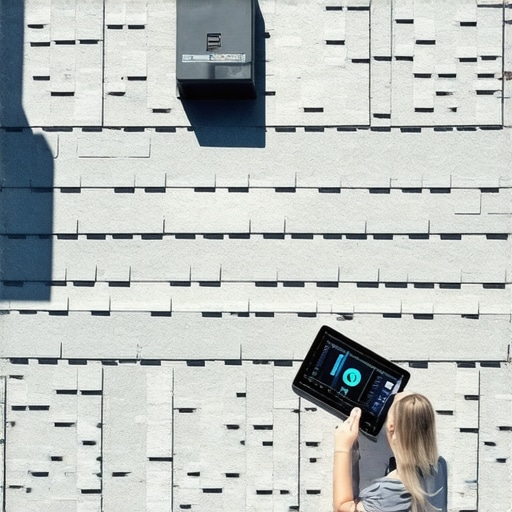
We are moving toward a world where roofing companies don’t just wait for your call after a storm. By 2026, leading contractors will be installing ‘Passive Thermal Probes’ at the eaves and ridges. These sensors monitor the R-value performance of your attic insulation from the outside in. If the sensor detects a sudden spike in heat loss, it indicates that your ventilation has failed or that an ‘attic bypass’ has opened up. In places like Chicago or Boston, this is the difference between a simple ventilation adjustment and a $30,000 deck replacement due to systemic rot. These sensors are often no larger than a coin and are tucked into the cricket—that small peaked structure behind a chimney designed to divert water. If the cricket isn’t doing its job, the sensor knows. It’s about moving from reactive repairs to predictive maintenance. You aren’t just buying a ‘square’ of shingles; you are buying a managed asset.
“The building envelope must be viewed as a single, integrated system where the roof acts as the primary thermal and moisture regulator.” – NRCA Technical Manual Reference
The Trap of the ‘Lifetime Warranty’ and the Sensor Solution
I have spent 25 years listening to sales guys from various roofing companies promise ‘Lifetime Warranties.’ Here is the cynical truth: those warranties almost never cover labor or ‘consequential damages’ like the mold in your drywall. They are marketing nonsense designed to get you to sign. However, the introduction of smart sensor technology is forcing a change. Some manufacturers are beginning to offer ‘Performance Guarantees’ that are only valid if the roof is equipped with monitoring hardware. This is because the hardware proves the roof was maintained and that leaks were addressed before they caused structural failure. It takes the guesswork out of the insurance claim. When an adjuster comes out and tries to tell you the damage is ‘wear and tear,’ you can pull up a log of sensor data showing exactly when the impact occurred and how it compromised the integrity of the system.
Why Most Roofing Companies Are Afraid of the Truth
The average ‘trunk slammer’ contractor doesn’t want you to have sensors. They want to come out, nail down some 3-tab shingles, and disappear before the first snow hits. Sensors hold the installer accountable. If a roofer leaves a valley improperly flashed or misses a ‘shiner’ that starts a slow drip, the sensor will bark. It exposes poor workmanship instantly. For the homeowner, this is the ultimate protection. You are no longer relying on a guy with a ladder and a tube of caulk who tells you ‘it looks good from here.’ You are relying on hard data. As we move into 2026, the best local roofers will be the ones who embrace this transparency. They will use these tools to show you that your roof isn’t just a covering, but a high-tech shield against the elements.