
The Rhythmic Thwack: Why Your Roof is Talking to You
You hear that? That rhythmic slap-slap-slap against the roof deck when the wind kicks up past twenty knots? That’s not just a noise; that’s the sound of your investment tearing itself apart. I’ve spent twenty-five years crawling over pitch-black asphalt in the middle of July, and I can tell you exactly what that sound means for 2026. If you’re seeing shingle lifting, you aren’t just looking at a cosmetic glitch; you’re looking at a systemic failure of the building envelope. Most local roofers will tell you that you just need a few dabs of mastic. They’re lying to you. They want to get off your roof before the sun hits 120 degrees and they want to take your check with them. But water? Water is the ultimate forensic investigator. It doesn’t need a ladder; it just needs a gap the size of a credit card.
The Forensic Scene: Walking on a Sponge
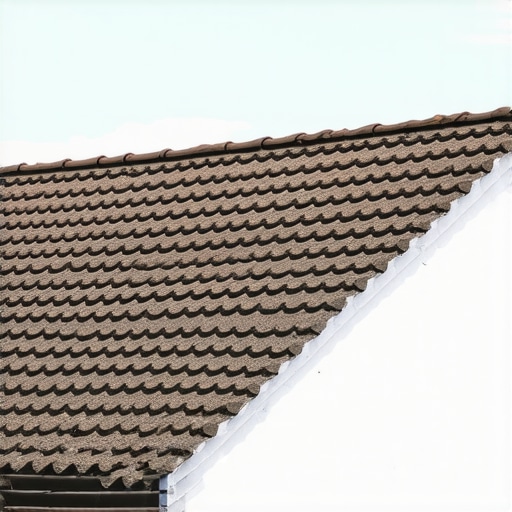
Walking on that roof felt like walking on a sponge. I knew exactly what I’d find underneath—a graveyard of rusted fasteners and delaminated OSB. I was out in the suburbs last Tuesday looking at a ten-year-old architectural shingle job. From the ground, it looked fine. But the moment my boots hit the eaves, I felt that sickening give. The homeowner thought they had another decade left. I had to show him the shiners—nails that missed the rafters and were currently weeping rust into his attic insulation. When the wind catches a shingle that has lost its bond, it creates a lever. That lever pulls on the nail, and if that nail is a shiner, it starts the slow, agonizing process of jacking itself out of the deck. By 2026, we are going to see a massive wave of these failures from the ‘speed-build’ era of the mid-2010s. [IMAGE_PLACEHOLDER]
Reason 1: The Molecular Breakdown of the 2010s Sealant Era
The first reason for the 2026 lifting epidemic is chemical, not just mechanical. Most roofing companies use shingles with a standard SBS-modified bitumen sealant strip. This strip is designed to activate under the heat of the sun, creating a waterproof bond. However, in our cold northern climate, these shingles undergo brutal thermal cycling. We’re talking about 140°F attic temperatures in July followed by -20°F wind chills in January. This causes ‘Thermal Bridging’ where the heat from the house escapes through the attic bypasses, warming the underside of the deck while the top stays frozen. This constant expansion and contraction fatigues the adhesive strip until the molecular bond snaps. Once that seal is broken, it never truly reseals. It just sits there, waiting for a gust of wind to get underneath it. This is where capillary action takes over. Water gets sucked upward, defying gravity, moving under the shingle and sitting against the nail head. Once that water hits the fastener, your roof’s countdown clock starts ticking toward zero.
“Asphalt shingles shall be secured to the roof decks in accordance with the manufacturer’s instructions and the requirements of Section R905.2.1.” – International Residential Code (IRC)
Reason 2: The Physics of Nail Back-Out and the ‘Shiner’ Epidemic
The second reason shingles lift is due to the physics of the fastener itself. When local roofers rush a job, they use pneumatic nail guns set to the wrong pressure. If the pressure is too high, the nail head blows right through the shingle (over-driven). If it’s too low, the head stays proud of the shingle (under-driven). An under-driven nail is a dagger. As the shingle above it expands in the heat, it presses down on that proud nail head. Eventually, it wears a hole right through the top layer. But the real 2026 killer is the shiner. In our region, moisture in the attic space is common due to poor ventilation. That moisture condenses on the cold metal of a missed nail. This causes the wood fibers around the nail to rot and lose their ‘grip strength.’ During the freeze-thaw cycles of a typical winter, the ice literally jacks the nail upward. I’ve seen entire squares of roofing where the shingles were being pushed up from below by a forest of backing-out nails. It looks like the roof has the mumps.
Reason 3: Attic Over-Pressurization and Failed Crickets
The final reason shingles lift is often ignored by roofing companies because it involves what’s happening *inside* the house. If your attic isn’t vented properly, wind can actually pressurize the space. When a heavy gust hits your soffits, it looks for an escape route. If your ridge vent is clogged or poorly installed, that air pressure pushes upward against the underside of the roof deck. Combined with the low pressure created by wind moving over the top of the roof (Bernoulli’s principle), you get a ‘suction-and-push’ effect that can lift even well-bonded shingles. Furthermore, the lack of a proper cricket—that small peaked structure behind a chimney—allows water to pool and freeze. That ice wedge grows every year, physically prying the shingles away from the flashing.
“A roof is only as good as its flashing, and the installer’s respect for the laws of physics.” – Old Roofer’s Adage
The Fix: Surgery vs. The Band-Aid
When you see shingles lifting, you have two choices. You can hire a ‘trunk slammer’ to come out and squirt some roof cement under the tabs. That’s the Band-Aid. It will last six months, and the acid in the mastic will actually eat the shingles over time. Or, you can perform the surgery. This means tearing back the affected area, replacing the rotten plywood, and installing a high-temp ice and water shield that creates a secondary water resistance layer. Don’t let a contractor talk you into a ‘layover.’ Adding a second layer of shingles just traps more heat and accelerates the lifting of the new layer. If you ignore these signs now, you aren’t just looking at a new roof in 2026; you’re looking at new rafters, new drywall, and a mold remediation bill that will make your mortgage look like pocket change. Water is patient. It doesn’t care about your budget. It only cares about the path of least resistance.