
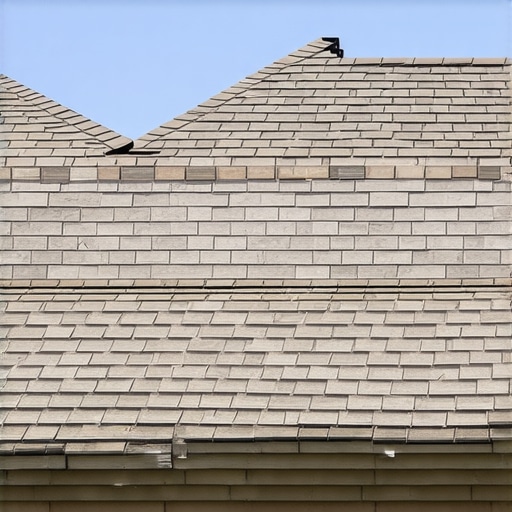
Listen, I’ve spent twenty-five years crawling over scorching roof decks, and I’ve seen enough ‘budget’ installs to know that water isn’t your only enemy. It’s the sun. In the Southwest, specifically across the desert corridors where the mercury hits 110°F by noon and drops to 65°F by midnight, your roof isn’t just sitting there; it’s breathing. Or rather, it’s trying to. Walking on that roof felt like walking on a sponge. I knew exactly what I’d find underneath: a micro-ecosystem of rot fostered by thousands of cycles of thermal expansion and contraction. This isn’t just aging; it’s a forensic crime scene. By 2026, we are going to see a massive wave of failures from shingles installed in the mid-2010s that simply weren’t built for the modern thermal reality.
The Material Truth: Why Your ‘Lifetime’ Roof is a Myth
The term ‘Lifetime Warranty’ is the greatest marketing trick ever played on a homeowner. In our climate, asphalt shingles are basically a giant chemical experiment. You have a fiberglass mat saturated with asphalt and topped with ceramic granules. Under the desert sun, the volatiles—the oils that keep the asphalt flexible—start to cook out. When those oils evaporate, the shingle loses its ability to stretch. Imagine a rubber band that’s been sitting on a dashboard for three years. You pull it, and it snaps. That is your roof. [IMAGE_PLACEHOLDER] Most roofing companies won’t tell you that a standard 30-year architectural shingle in a high-UV zone has a functional life of maybe 15 to 18 years before the molecular bonds give up the ghost. We aren’t just talking about a few leaks; we are talking about a total systemic collapse of the waterproofing layer.
“A roof system’s performance depends on the interaction of its components under environmental stress. Ignoring the physics of expansion is an invitation to failure.” – National Roofing Contractors Association (NRCA) Manual
Sign 1: Granule Sloughing and ‘Balding’
The first sign of 2026 thermal shock is what I call the ‘balding’ effect. Those granules on your shingles aren’t just for color; they are the sunscreen. They protect the asphalt from UV radiation. When thermal shock hits, the bond between the granules and the asphalt breaks. You’ll see it in your gutters first. If you find a half-inch of colored sand in your downspout splash blocks, your roof is losing its armor. Once the granules are gone, the sun hits the raw asphalt, baking it until it cracks. This leads to ‘scabbing,’ where entire sections of the shingle surface flake off, exposing the fiberglass mat. Once you see the white shine of fiberglass, the clock has run out. You aren’t looking at a repair; you’re looking at a replacement before the next monsoon season turns your attic into a swimming pool.
Sign 2: Transverse Thermal Splitting
This is the big one. Most local roofers call them ‘cracks,’ but that’s too simple. These are stress fractures. During the day, the shingles expand and push against each other. At night, they contract. If the roofer used a ‘shiner’—a nail that missed the hit line and went into the joint—the shingle is pinned. It can’t move. The resulting tension creates a straight-line tear that often runs right through the course. It’s a mechanism called ‘bridging.’ The shingle tries to shrink, but it’s held tight at the ends, so it rips in the middle. If you look across your roof at sunset and see long, horizontal or vertical lines that look like a knife cut, that’s thermal splitting. It goes all the way through the material. Water doesn’t even have to work hard to get in; it just flows through the gap like a highway. This is why proper ‘square’ count and nailing patterns are vital. A trunk slammer who doesn’t respect the nail line is basically pre-breaking your roof for you.
Sign 3: The ‘Potato Chip’ Cupping
Take a look at your roof’s edges. Do the shingles look like they are curling upward? In the trade, we call this cupping or clawing. It happens when the underside of the shingle (the part facing the hot attic) stays dry and brittle while the top side is pelted with moisture or extreme heat. The differential in moisture and temperature causes the edges to pull inward. This exposes the underlayment—usually just cheap #15 felt in older homes—to the elements. Once those edges lift, the wind gets under them. Now, instead of a protective shell, you have a series of sails. The next 40-mph gust will peel those shingles back like an orange, especially if the sealant strip has been compromised by years of ‘sweating’ its oils. It’s a cascading failure that starts with heat and ends with a tarp on your house.
“The primary purpose of a roof is to shed water, but its secondary purpose is to survive the sun.” – Architectural Axiom
The Physics of the ‘Pressure Cooker’ Attic
You can’t talk about thermal shock without talking about ventilation. If your local roofers didn’t install enough intake and exhaust vents, your attic is a pressure cooker. I’ve seen attic temperatures hit 160°F. That heat doesn’t just sit there; it attacks the underside of the roof deck. It bakes the shingles from both sides. This is where we see ‘blistering.’ Small bubbles form on the shingle surface as trapped moisture or gas expands rapidly in the heat. When those blisters pop, they leave a pit that invites water. If your roofer didn’t calculate the Net Free Venting Area (NFVA), they didn’t install a roof; they installed a slow-burning fuse. You need a balance—soffit vents for intake and ridge vents or solar fans for exhaust. Without that airflow, even the most expensive shingles will cook themselves to death in half the time they should last.
How to Pick a Roofer Who Isn’t a ‘Trunk Slammer’
When you start looking at roofing companies, don’t just look at the price tag. Look at the details. Does the contract specify the type of underlayment? If they are still using organic felt paper, run. You want a synthetic underlayment that doesn’t rot. Does the bid include a ‘cricket’ behind the chimney? Does it specify the type of ‘drip edge’ or the ‘kick-out flashing’ for the wall transitions? These are the small things that prevent big disasters. A real pro will talk to you about ‘thermal expansion’ and ‘deck protection’ because they know that by 2026, the cheap roofs are going to be failing all over town. They won’t just offer a ‘Lifetime Warranty’—they’ll offer a system designed to survive the physics of our local climate. If their truck is clean but their ladder is beat up, they’re doing the work. If they don’t have a ladder rack at all, they’re just a middleman who’s going to sub out your home to the lowest bidder. Don’t be the homeowner who pays for a roof twice because they tried to save a few thousand dollars the first time. Water is patient, but the sun is relentless. Protect your investment before the thermal shock turns your shingles into dust.