
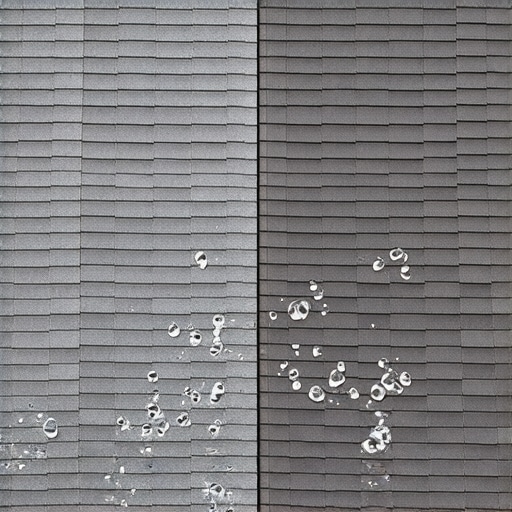
The Anatomy of a Hail Strike: Beyond the Sales Pitch
The sky goes green, the wind starts whistling through the soffits like a freight train, and then you hear it—the sound of a thousand ball-peen hammers hitting your roof. Once the storm passes, the ‘storm chasers’ descend. These guys aren’t local roofers; they’re storm tourists with a magnetic sign on a rented truck. After 25 years in the trade, I’ve seen it all. I’ve seen homeowners get scammed by ‘free roof’ promises and I’ve seen insurance adjusters walk right over a fractured mat without blinking an eye. Most people think a hail-damaged roof looks like it was hit by a shotgun. It doesn’t. Walking on that roof felt like walking on a sponge. I knew exactly what I’d find underneath. The damage is often invisible to the untrained eye until the first freeze-thaw cycle of winter turns a tiny bruise into a major leak. We’re going to look at the physics of 2026 hail events and how to separate actual functional damage from the fluff.
The Physics of Failure: Why Shingles Break
To understand hail damage, you have to understand the ‘Mechanism of Impact.’ When a hailstone—let’s say a 1.5-inch chunk of ice—hits an asphalt shingle at terminal velocity, it’s not just about the surface granules. It’s about the transfer of kinetic energy. The shingle is a sandwich: a fiberglass mat in the center, coated on both sides by bitumen (asphalt), and topped with ceramic granules for UV protection. When the ice hits, the shingle compresses against the wooden roof deck. If the asphalt is brittle from years of UV exposure—a common issue in our climate—the bitumen cracks. More importantly, the internal fiberglass scrim can fracture. This is what we call a ‘bruise.’ It’s not just a dent; it’s a structural failure of the waterproofing layer. Once that scrim is broken, capillary action begins. Water doesn’t just fall through the hole; it’s pulled sideways under the shingle by surface tension, eventually finding a ‘shiner’—that’s a nail that missed the rafter—and traveling straight down into your attic insulation.
“Hail physical damage is defined as either the ‘diminishing of the water-shedding capability’ or the ‘reduction of the expected service life’ of the roofing material.” – National Roofing Contractors Association (NRCA)
1. The Granule Displacement Test (The ‘Bruise’)
The first thing any of the reputable roofing companies will look for is granule loss. But here’s the catch: not all granule loss is hail damage. Old roofs shed granules naturally into the gutters. True hail damage is localized and circular. When you look at a strike point, you’re looking for ‘exposed bitumen.’ This is where the impact was so violent it physically embedded the granules into the asphalt or knocked them off entirely. If you see a dark, shiny spot where the granules are missing, that’s the asphalt mat exposed to the sun. Within months, UV radiation will bake that asphalt, causing it to crack and curl. If you’re inspecting your own roof (which I don’t recommend unless you like hospital food), look for ‘hitchhikers’—granules that have been knocked loose and are sitting in the valleys or gutters in high concentrations. A real local roofer will use a ‘hail square’—a 10×10 foot area—to count these strikes. If we find more than 8 to 10 strikes in that square, you’ve got a functional failure on your hands.
2. Collateral Evidence: The ‘Soft Metal’ Audit
Adjusters are trained to look at ‘soft metals’ first. Why? Because aluminum and thin-gauge steel don’t lie. If a hailstone didn’t have enough mass to dent your aluminum box vents, your gutters, or your chimney flashing, it likely didn’t have enough energy to fracture a heavy-duty architectural shingle. I always start my forensic inspections at the gutters. I look for ‘dings’ in the metal. If the face of the gutter looks like the surface of the moon, the shingles took a beating too. We also check the ‘cricket’—that’s the small peaked roof structure behind your chimney. Because of its angle, it often takes a direct, perpendicular hit from falling ice. If the flashing on the cricket is dimpled, you have clear evidence of the storm’s severity. Roofing companies that know their stuff will also check your AC condenser fins. If those thin aluminum fins are flattened, it’s a sign of high-velocity impact that correlates with roof damage.
3. The ‘Under-Tab’ Fracture (The Smoking Gun)
This is where the ‘trunk slammers’ fail and the forensic pros shine. Sometimes, a shingle looks fine from the top, but the damage is on the underside. We call this a ‘latent fracture.’ To find it, you have to carefully lift the tab—without breaking the sealant strip—and look for a star-shaped crack in the matting. This happens when the hailstone hits a spot where there’s a gap in the roof decking underneath (like a space between plywood sheets). The shingle flexes into the gap and the fiberglass mat snaps. This is functional damage that will lead to a leak in exactly two years. Most local roofers won’t bother with this because it’s time-consuming. But if you want to win an insurance claim, you need this level of detail. You need to show that the ‘water-shedding capability’ has been compromised, even if the roof doesn’t look ‘ugly’ yet.
“A roof system is a complex assembly of interacting components; damage to one part, even if not immediately visible, can lead to the premature failure of the whole.” – International Residential Code (IRC) Commentary
The Insurance Trap: Functional vs. Cosmetic
Here’s the cynical truth: Insurance companies are in the business of not paying for roofs. In 2026, many policies have moved to ‘Actual Cash Value’ (ACV) for wind and hail, or they’ve added ‘Cosmetic Damage Exclusions.’ This means if the hail just knocked off some granules but didn’t ‘break’ the shingle, they might deny the claim. This is why you don’t sign anything with a guy who knocks on your door five minutes after the clouds clear. You need a contractor who understands the IRC building codes and can argue the physics of the mat fracture. If the shingle is no longer ‘sealed’ because of the vibration of the storm, that’s wind damage, and it’s a different ballgame. Don’t let them tell you it’s just ‘wear and tear.’ If those dents weren’t there on Monday and they are there on Tuesday after a storm, that’s an occurrence.
How to Choose Local Roofers Who Won’t Vanish
When the ‘Storm Chasers’ leave town, they take their warranties with them. If your roof starts leaking in 2027 from a ‘shiner’ left behind by a rushed crew, you’re on your own. Always ask for a local address—not a P.O. Box. Check how many ‘squares’ they’ve laid in your specific ZIP code. A real local roofer will know the local wind load requirements and whether your city requires ‘Ice and Water Shield’ at the eaves (which they should in this climate). They won’t pressure you to sign a ‘contingency agreement’ before they’ve even shown you a photo of the damage. They’ll give you a detailed breakdown of the flashing, the ventilation, and the underlayment—not just a price for ‘roofing.’ Your roof is a system, not a commodity. Don’t treat it like a cheap repair. If you ignore the physics of the 2026 hail season, you’ll be paying for it with a bucket in your living room by 2028.