
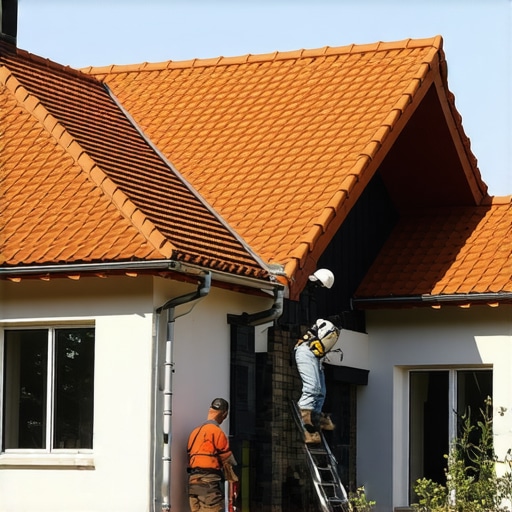
The Sun is an Assassin: Why 2026 Tile Systems are the Only Defense Left
Most homeowners think of their roof as a lid on a jar. They figure as long as the water stays out, the job is done. But after twenty-five years of pulling up failed systems and smelling the sour, vinegary stench of rot in 140-degree attics, I can tell you that a roof is more like a lung. If it can’t breathe, it dies. And in our climate, where the UV index spends half the year trying to melt the asphalt off your driveway, picking the wrong material is just a slow-motion way of burning money.
My old foreman used to say, ‘Water is patient; it will wait for you to make a mistake. But the sun? The sun is an assassin. It doesn’t wait; it just attacks.’ I remember standing on a steep-slope square of architectural shingles that was only seven years old. The ‘lifetime’ warranty was prominently displayed in the homeowner’s folder, but under my boots, the granules were shedding like dry skin. The oil had cooked right out of the mat, leaving behind a brittle, scorched mess that offered as much protection as a wet paper bag. That’s why we’re seeing a massive shift in how local roofers approach the 2026 standards for tile roofing.
“A roof system shall be designed and installed in accordance with this code and the manufacturer’s installation instructions such that it provides a weather-resistant exterior wall and roof envelope.” – International Residential Code (IRC) R905.1
1. Thermal Mass and the ‘Night-Cooling’ Effect
When we talk about roofing in high-heat zones, we have to talk about physics. Asphalt shingles have zero thermal mass. They get hot instantly and stay hot until the sun goes down, radiating that energy directly into your decking and into your AC ducts. 2026 tile technology, specifically high-density concrete and clay, utilizes ‘thermal lag.’ These tiles are thick. They take hours to absorb heat. By the time the heat finally reaches the underlayment, the sun is setting. This lag time significantly reduces the load on your HVAC system. We’re not just talking about a couple of bucks; we’re talking about extending the life of your air conditioner by years because it isn’t fighting a 160-degree ceiling all afternoon.
2. The Vented Rainscreen: Physics Under the Batten
One of the biggest mistakes roofing companies made for decades was ‘direct-to-deck’ installation. They’d slap tile right onto the felt. That’s a death sentence for the underlayment. The 2026 standard emphasizes elevated batten systems. By lifting the tile an inch off the deck, we create a chimney effect. Air enters at the eave and escapes at the ridge. This constant airflow dries out any moisture that gets past the tiles and, more importantly, keeps the underlayment cool. If you don’t have that gap, you’re just slow-cooking your secondary water barrier until it turns into dust. I’ve seen local roofers skip this to save on labor, and five years later, the homeowner is looking at a $30,000 ‘re-tile’ because the underlayment turned to crackers.
3. UV Degradation vs. Mineral Stability
UV radiation is the primary cause of roof failure in the Southwest. It breaks down the molecular bonds in organic materials. Asphalt is essentially oil and paper—it’s organic. Tile is mineral. It’s earth and fire. The new 2026 tile glazes are designed with infrared-reflective pigments. Instead of absorbing the UV, they bounce it back into the atmosphere. When I perform a forensic inspection, I look for ‘volatilization’—that’s the process where the oils in a roof evaporate, leaving it stiff and prone to cracking. You don’t see that with tile. A well-installed tile system doesn’t ‘age’ in the sun; it just sits there, bored, for fifty years.
“The roof is the most important part of a building… it is the very soul of the house.” – John Ruskin
4. Wind Uplift and Aerodynamic Interlocking
We’re seeing crazier wind events every year. In the trade, we talk about ‘uplift’—the vacuum created when wind rushes over a roof. Shingles are just sails waiting to be caught. But 2026 tile designs have moved toward deeper interlocking lugs. These tiles don’t just sit on the roof; they bite into each other. When wind hits a properly installed tile roof, the weight and the mechanical interlock keep it pinned. You aren’t going to see tiles flapping in a monsoon like you see shingles. And if you’re worried about weight, modern 2026 lightweight tiles provide all these benefits without requiring you to beef up your trusses like the old-school heavy clay did.
5. The ‘Last Roof’ Lifecycle Cost
Here is the cynical truth: most ‘Lifetime Warranties’ are marketing fluff. They cover the material, but they don’t cover the labor to tear off and replace it when it fails in fifteen years. A tile roof installed to 2026 specifications—using stainless steel fasteners to avoid galvanic corrosion and a high-temp synthetic underlayment—is a fifty-to-eighty-year system. When you do the math, you realize that while tile costs more upfront, it’s actually the cheapest roof you can buy. Why? Because you only buy it once. You aren’t paying a roofing crew to come back every twelve years to scrape off another layer of scorched asphalt and hunt for shiners (missed nails) that are causing leaks in your valley.
Protecting the Cricket and the Flashing
The most common failure point I find isn’t the tile itself; it’s the cricket and the flashing. A cricket is a small peaked structure behind a chimney designed to divert water. Cheap roofing companies will use flimsy galvanized tin that rusts out in a decade. A 2026 high-spec install uses heavy-gauge lead or copper. If your roofer isn’t talking about the ‘capillary break’ at the flashing points, they aren’t thinking forensicly. Water can actually ‘climb’ upward between two flat surfaces through capillary action. Tile systems designed for 2026 include offset seams and weep holes that ensure water can only go one way: down and off the roof. Don’t let a ‘trunk slammer’ tell you that ‘muck’ (roofing cement) is a permanent fix. Muck is a Band-Aid; tile is surgery. If you want a roof that survives the next thirty summers, you stop looking at the price per square and start looking at the physics of the system. Your attic, and your wallet, will thank you when the mercury hits 110 next July.
Reading this detailed breakdown of the benefits of 2026 tile roofing really highlights how much more thought needs to go into selecting materials that withstand our harsh climate. I’ve personally seen older asphalt shingle roofs start to fail in just about a decade, especially in high UV areas, which makes the longevity of tile systems so appealing. The point about the ‘thermal lag’ effect is particularly interesting—it’s a game-changer for energy efficiency and could really cut down on cooling costs over the years.
Also, the concept of a vented rainscreen really caught my attention. I’ve always wondered if skipping proper ventilation in roofing can contribute to premature failures or mold issues. Have others found that investing in this feature genuinely extends the life of the entire roof? It seems like such a straightforward preventative measure, but I wonder how many roofing projects omit it to save a quick buck. With the advancements for 2026, I think homeowners should demand systems that proactively address these common sources of failure rather than just patching problems after they appear.