
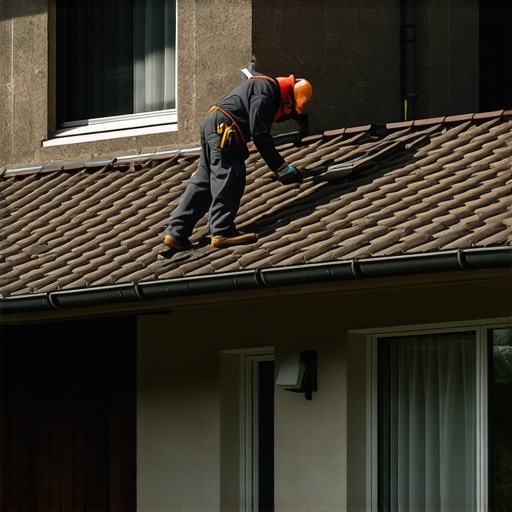
The Ghost in the Walls: Why Your Gutters Are Killing Your Home
You hear it before you see it. It’s a rhythmic, dull thud hitting the soil right next to your foundation, or worse, the sound of water scratching inside your exterior walls like a trapped rodent. Most homeowners call local roofers because they think their shingles are failing, but as a forensic roofer who has spent three decades peeling back layers of rot, I can tell you: the gutter is usually the primary suspect. By 2026, we are seeing a massive uptick in gutter-related failures due to heavier, concentrated rainfall patterns that the standard 5-inch gutters of the 90s simply weren’t designed to handle.
My old foreman used to pull me aside on hot July afternoons, wiping sweat from his forehead with a grease-stained sleeve, and say, ‘Water is patient, kid. It doesn’t need a front door; it’ll wait for you to leave a pinhole open, then it’ll invite its whole family in.’ He was right. Water doesn’t just fall off a roof; it clings, it climbs, and it destroys. When we talk about 2026 gutter leaks, we aren’t just talking about a clogged downspout. We are talking about systemic failure of the roof-to-wall transition.
The Physics of the ‘Over-Shoot’ and Capillary Action
When rain hits a roof, it gains velocity. On a steep-pitch roof, that water hits the gutter with enough force to jump the front lip if the pitch is off by even a fraction of an inch. But the real ‘assassin’ is capillary action. This is the physical phenomenon where water travels upward or sideways through tight spaces, defying gravity. If your local roofers didn’t install a proper drip edge or if your shingles don’t have the correct overhang, water wicks backward, climbing under the shingle, over the fascia board, and straight into your soffit. I’ve torn off fascia boards that looked fine from the ground but crumbled like wet cardboard in my hands because water had been ‘wicking’ behind the gutter for five years.
“Gutters and downspouts shall be sloped to prevent standing water and shall be securely fastened to the structure to withstand expected loads.” – International Residential Code (IRC), Section R806
1. The Surgical Strike: Installing Kick-Out Flashing
The number one place I find rot during a forensic inspection is where a roof slope meets a vertical wall—think of a garage roof hitting the side of the second story. Most roofing companies just slap some step flashing there and call it a day. That is a recipe for a disaster. Without a ‘kick-out’ flashing—a specially molded piece of metal that diverts water away from the wall and into the gutter—that water runs straight down the siding and behind the gutter’s end cap.
Installing a kick-out flashing is what I call ‘The Surgery.’ It requires carefully backing out the siding, tucking the diverter under the last piece of step flashing, and ensuring the water has no choice but to land in the trough. If your local roofers aren’t talking about kick-out flashings, they aren’t fixing your leak; they’re just giving it a different place to hide. Using a ‘shiner’—a nail that misses the mark—in this area is a common rookie mistake that leads to a slow drip directly onto your header beam.
2. The ‘Pitch Correction’ and Hidden Hanger Revolution
By 2026, the old-school ‘spike and ferrule’ method of hanging gutters is officially dead. If you still have big silver nails sticking out of your gutters, they are likely the source of your leak. As the wood fascia expands and contracts with the seasons, those spikes pull out, creating a gap between the gutter and the house. Water then pours down the back of the gutter, rotting the rafter tails.
The fix is a total system reset using heavy-duty hidden hangers with 3-inch screws. We don’t just screw them in; we recalibrate the pitch. A gutter should drop roughly 1/16th of an inch for every foot of run. Too much pitch and the water moves too fast to be caught; too little and you get standing water that breeds mosquitoes and causes the metal to rust out from the inside. When we do a forensic fix, we use a laser level to ensure that the water is channeled toward the downspout with surgical precision, preventing the ‘belly’ in the gutter that leads to overflow.
3. The Drip Edge Gap: Closing the ‘Entry Port’
I can’t count how many times I’ve seen roofing companies install a beautiful new roof but leave the original, corroded drip edge. This is like putting a silk suit on a pig. The drip edge is a metal flange that hangs over the fascia and directs water into the gutter. If there is a gap between the drip edge and the gutter, or if the shingles don’t overhang the drip edge by at least 3/4 of an inch, surface tension will pull that water right back against your wood fascia.
“A roof system is not a single product, but a series of components that must work in harmony to shed water.” – National Roofing Contractors Association (NRCA)
To fix this, we often have to install a ‘gutter apron.’ This is a wider version of a drip edge that reaches further down into the gutter, ensuring that even in a wind-driven rainstorm, the water has a physical slide that leads it into the trough. This prevents the ‘tiger stripping’ you see on the front of gutters and, more importantly, keeps the wood behind the metal bone-dry. If you ignore this, you’ll be replacing your entire soffit and fascia system within three years, a job that costs quadruple what a simple flashing fix would have cost.
The High Cost of the ‘Trunk Slammer’ Special
Choosing local roofers based solely on the lowest bid is a dangerous game. Those ‘trunk slammers’ save money by skipping the flashing and using cheap, thin-gauge aluminum that bends the first time a ladder touches it. They won’t mention the ‘cricket’—the small peaked structure behind a chimney—or the secondary water barrier. They just want to get the ‘square’ count up and get to the next job. But water is forensic. It will find the one spot they missed. When you’re looking for roofing companies, ask them about their gutter integration strategy. If they look at you sideways, keep looking. Your home’s foundation depends on it. Waiting until 2027 to fix a 2026 leak usually means you’re also paying for mold remediation and structural repair.