
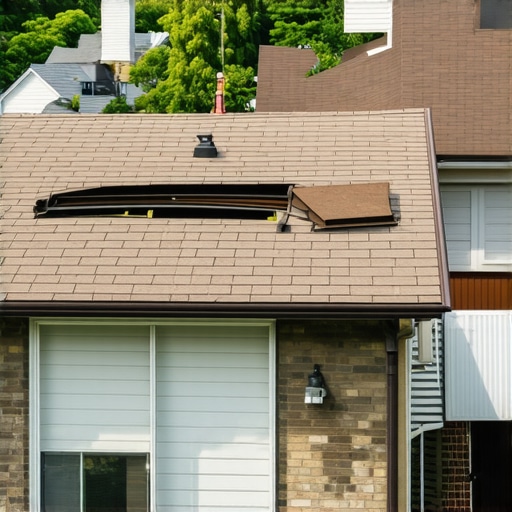
The Anatomy of a Slow-Motion Disaster
Walking on that roof in the heavy, salt-laden air of the Gulf coast felt like treading on a wet sponge. I didn’t need a moisture meter to tell me the deck was gone; I could hear the fibers of the OSB snapping under my boots with every step. The homeowner was baffled. They had a new roof installed just two years ago by one of those high-volume local roofers who promised the world. But now, in 2026, water is pouring through a light fixture in the kitchen. This isn’t a case of bad luck; it is a case of physics. When you ignore the mechanical realities of roofing in a tropical climate, the clock starts ticking the moment the last nail is driven.
As a forensic investigator, I spend my days looking at the ‘why’ behind the leak. Most roofing companies are great at the ‘how’—how to tear off shingles and how to nail them back on fast. But they fail to understand the mechanism of failure. By 2026, we are seeing a massive spike in failures caused by corners cut during the post-storm rushes of years prior. Here is why your roof is likely to fail, explained through the lens of pure trade science.
1. The ‘Shiner’ Epidemic: Corrosion from the Inside Out
In our trade, a ‘shiner’ is a nail that missed the rafter or was driven into the gap between plywood sheets. In a dry climate, a shiner is just a mistake. In a high-humidity environment, a shiner is a conduit for disaster. During a 140°F summer afternoon, your attic is a pressure cooker. When that warm, moist air hits the cold steel of a misplaced nail, it condenses. This isn’t a drip; it’s a slow, steady migration of moisture. By 2026, those shiners have rusted through, creating a hole directly into your attic. This is why local roofers must use stainless steel or high-grade hot-dipped galvanized fasteners. Standard zinc plating stands no chance against the salt air and internal condensation of a poorly ventilated attic space.
2. Capillary Action and the Drip Edge Myth
Water doesn’t just flow down; it moves sideways and upwards through a process called capillary action. If your roofing contractor didn’t install an oversized drip edge or failed to provide a 1/2-inch overhang for the starter strip, surface tension pulls rainwater back under the shingles and against the fascia board. I’ve seen roofing companies rely entirely on ‘ice and water shield’ to save them, but membrane is not a substitute for proper metalwork.
“A roof is only as good as its flashing and its ability to shed water away from the structure, not just collect it.” – Old Roofer’s Adage
Without that physical break, moisture sits against the wood, inviting rot and subterranean termites. By 2026, the wood has reached its saturation point, and the structural integrity of your eaves begins to vanish.
3. The Absence of a Proper Cricket
Go look at your chimney or any wide vertical projection on your roof. If it’s wider than 30 inches and doesn’t have a ‘cricket’—a small peaked structure designed to divert water—it’s a ticking time bomb. Without a cricket, water slams into the back of the chimney and pools. This creates hydrostatic pressure. Water isn’t just sitting there; the weight of the water behind it is pushing it upward under the flashing. Many local roofers skip the cricket because it takes an extra hour of framing and a few more squares of shingles. But without it, the 2026 rainy season will inevitably find a way into your living room through the chimney throat.
4. Thermal Expansion and ‘Picture Framing’
In the heat of the South, materials move. If the roofing companies tightly butted the 4×8 sheets of roof decking together without leaving an 1/8-inch gap, those sheets have nowhere to go when they expand. They buckle. This creates high spots in the roof known as ‘picture framing.’ These ridges aren’t just ugly; they are abrasive. Every time the wind blows, the shingles rub against these ridges. By 2026, the protective granules have been scrubbed off, leaving the volatile asphalt core exposed to the sun’s UV rays. Once that asphalt dries out and cracks, you aren’t looking at a repair; you’re looking at a premature tear-off.
5. The Failure of ‘Solar-Cooked’ Sealants
Cheap caulk is the hallmark of a ‘trunk slammer.’ If your roofer used standard silicone to seal a valley or a pipe boot, it has likely already failed by 2026. The intense UV radiation in our zone literally bakes the plasticizers out of the sealant, turning it into a brittle, useless crust.
“Flashing shall be installed in such a manner as to prevent moisture from entering the wall and roof through joints in copings, through moisture-permeable materials and at intersections with parapet walls.” – International Residential Code (IRC)
Proper roofing requires mechanical flashing—metal tucked into mortar joints or stepped under shingles—not a bead of ‘goop’ that can’t handle the thermal shock of a 30-degree temperature drop during a summer thunderstorm.
How to Protect Your Investment
If you want to avoid being the homeowner with the ‘sponge’ roof in 2026, you need to demand a forensic-level installation today. Ask your local roofers about their fastener specs. Walk the roof and look for those crickets. Ensure they aren’t just ‘papering over’ old problems. A roof is a system, and if one gear in that system is stripped—whether it’s a missed nail or a skipped valley liner—the whole machine eventually grinds to a halt. Don’t wait for the ceiling to sag. Get a real professional to look at the ‘bones’ of your system before the next storm season arrives.