
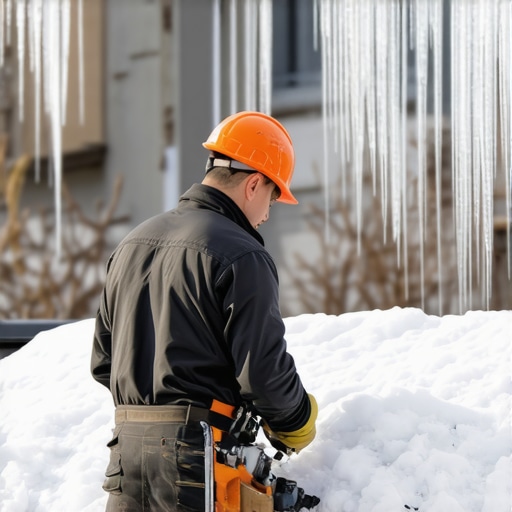
The Sound of a Winter Failure: Why 2026 is Different
You hear it before you see it. It’s a rhythmic, heavy thump-drip-thump echoing through the drywall of your master bedroom. It’s 3:00 AM, the temperature outside is hovering at a brutal 14 degrees, and your roof is currently losing a war of attrition against physics. As a veteran who has spent over two decades tearing off shingles in freezing wind, I can tell you that most homeowners don’t have a roofing problem—they have a physics problem. By the time you see that glistening spear of an icicle hanging off your gutter, the damage isn’t just coming; it’s already moved in and started rotting your rafters.
My old foreman, a man who had more scars from tin snips than he had teeth, used to grab me by the shoulder during every November inspection and bark, ‘Water is patient, kid. It doesn’t need a hole the size of a fist. It will wait for you to forget a single staple, and then it’ll use the cold to pry your house apart.’ He was right. In the world of local roofers, we see the same avoidable catastrophes every year because people treat ice removal like a chore rather than a forensic emergency.
“Ice dams are the result of complex interactions between the building’s thermal envelope, attic ventilation, and the external climate. Proper prevention requires addressing the root cause—heat loss—rather than just the symptoms.” – National Roofing Contractors Association (NRCA) Guidelines
Tip 1: Stop Chasing the Ice and Start Hunting Attic Bypasses
Most roofing companies will sell you a fancy heat cable or tell you to throw some salt socks on the eaves. That’s like putting a bandage on a gunshot wound. The mechanism of failure here is thermal bridging. In the cold climate zones of the North, your roof stays cold if your attic stays cold. But when you have ‘attic bypasses’—hidden gaps around your chimney, plumbing stacks, or recessed lights—warm air from your living room screams into the attic space. This heat hits the underside of the roof deck, warming the shingles just enough to melt the bottom layer of snow.
That meltwater runs down the slope until it hits the ‘eave’—the part of the roof that overhangs the house. Since the eave isn’t over a heated room, it’s still at sub-zero temperatures. The water refreezes, forming a ridge of ice. This is where capillary action turns deadly. Subsequent meltwater hits that ice ridge and backs up under the shingles. Water isn’t supposed to go up; shingles are designed to shed water downward. But once it’s trapped, the hydrostatic pressure forces that water under the starter course, through the underlayment, and directly onto your plywood deck. If you aren’t checking your R-Value and sealing those air leaks in 2026, you’re just inviting the rot to stay the night.
Tip 2: The ‘Surgical’ Steam Method vs. the Hammer and Axe
I have seen more ‘shiners’—those missed nails that conduct frost—and ruined roofing systems caused by panicked homeowners with hammers than by the weather itself. If you find yourself in 2026 with a massive ice buildup, do not, under any circumstances, take a blunt object to your roof. Modern shingles, especially in the cold, become brittle. A single strike to break an ice dam can crack the fiberglass mat inside the shingle, effectively killing its lifespan instantly.
The only professional way to handle this is high-temperature, low-pressure steam. Unlike a power washer (which will strip the granules right off your asphalt squares) or a pickaxe, a steamer melts a ‘cricket’ or a channel through the ice without mechanical force. We call it ‘surgical’ because it allows the trapped water to escape the ‘valley’ of the roof safely. When you’re vetting local roofers for emergency ice removal, ask them one question: ‘What is the PSI of your equipment?’ If they say anything over 500 PSI, tell them to get off your property. You want heat, not pressure.
“A roof system is an integrated assembly of components that must work in harmony. The failure of one component, such as the vapor retarder or insulation, often manifests as a failure of the water-shedding surface.” – Principles of Architecture Axiom
Tip 3: The 2026 Underlayment Standard (Ice & Water Shield)
By 2026, building codes have tightened, but many ‘trunk slammer’ contractors are still using outdated felt paper right up to the edge. If you are planning a replacement or a major repair, the most critical component is your secondary water resistance. In a cold climate, you need a minimum of two courses (6 feet) of self-adhering polymer-modified bitumen underlayment, commonly known as Ice & Water Shield. This stuff is literal magic; it heals around every nail driven through it. When that ice dam inevitably forms because you left the attic hatch open, the water will sit on top of this membrane instead of soaking into your wood. I once did a tear-off where the shingles were completely gone due to a windstorm, but the house stayed bone dry because the Ice & Water Shield was installed properly from the eave to the ridge. Don’t let a contractor skimp here to save a few bucks on a square of material; it is the only thing standing between your ceiling and a $20,000 mold remediation bill.
The Forensic Reality of Your Roof Deck
When I walk onto a roof that has been neglected through a few hard winters, the signs are unmistakable. The shingles feel ‘crunchy’ underfoot, a sign that thermal shock has baked the oils out of the asphalt. You might see ‘alligatoring’ on the surface. These aren’t just aesthetic issues; they are indicators that your roof’s ‘circulatory system’—its ventilation—has failed. If your roofing professional isn’t talking about soffit vents and ridge vent ratios, they aren’t a roofer; they’re a shingle flipper. Real protection in 2026 requires a holistic view of the house as a breathing machine. Don’t wait for the puddle on the dining table to tell you that the ice won the battle. Get an inspection while the sun is still out, or you’ll be paying ’emergency’ rates to someone like me to climb a ladder in a blizzard.
This article really hits home for me as I’ve seen firsthand how overlooked attic insulation and sealing can lead to costly repairs down the line. The point about ‘hunting attic bypasses’ resonated, especially around chimneys and recessed lights—those tiny gaps often go unnoticed but are a major culprit. I wonder, what are some practical but less costly ways homeowners can effectively identify and seal these bypasses before winter sets in? In my experience, a blower door test combined with some DIY sealing techniques can be pretty effective if you’re comfortable with a bit of home maintenance. Also, regarding the high-pressure steam method, have any of you tried renting or purchasing portable steamers designed for roofing? I’d love to hear what options others have found helpful or cost-effective for dealing with ice dams without calling in professionals every season.