
The Knock You Weren’t Expecting
It starts with a rumble that vibrates the window glass, followed by the rhythmic thud of ice or debris striking your home. By the time the storm clears, your driveway is littered with white pickup trucks and guys in crisp polo shirts claiming to be local roofers. They aren’t there to help; they are there to harvest. As a forensic investigator who has spent nearly three decades on the roof deck, I can tell you that what most roofing companies call ‘damage’ is often just the surface of a much deeper, more insidious failure. By 2026, the building codes for secondary water resistance and uplift ratings have shifted, making the old ways of assessing impact damage obsolete. You aren’t just looking for holes; you are looking for the structural compromise of the entire assembly.
“The roof shall be covered with materials that are designed, fabricated and installed to resist the maximum expected wind pressures.” – International Residential Code (IRC), Section R905
My old foreman used to say, ‘Water is patient. It will wait for you to make a mistake.’ He wasn’t talking about a glaring hole you can see from the sidewalk. He was talking about the microscopic fractures in the bitumen that allow moisture to migrate through the fiberglass matting via capillary action. When a high-velocity projectile—be it hail or wind-blown debris—hits an asphalt shingle, it creates a localized compression zone. This isn’t just about losing a few granules. It is about the kinetic energy transferring through the shingle and fracturing the bond between the asphalt and the reinforcement layer. Let’s look at the three definitive signs of 2026-grade impact damage that most adjusters try to ignore.
1. The Bitumen ‘Bruise’ and Granule Migration
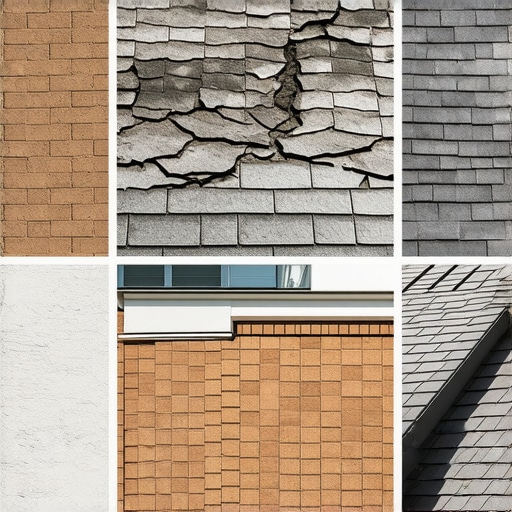
When you look at a shingle after a storm, don’t look for the obvious. Look for the ‘bruise.’ This is a dark spot where the protective granules have been driven into the asphalt or knocked off entirely. Mechanism zooming reveals the disaster: without those granules, the underlying asphalt is exposed to UV radiation. Within weeks, the sun cooks the oils out of the asphalt, causing it to become brittle and crack. This isn’t cosmetic. It is the beginning of the end for that square of roofing. The 2026 standards for impact-resistant shingles require a specific level of elasticity, but even the best materials fail when the impact is direct and high-velocity. If your roofing companies aren’t using a magnifying glass or high-resolution imagery to document the fracture of the fiberglass mat beneath the ‘bruise,’ they are missing the point. A shingle that has lost its granules is a shingle that has lost its shedding capability.
2. Distorted Drip Edges and Secondary Water Resistance Failure
Impact damage isn’t limited to the field of the roof. In the Southeast, where wind-driven rain is the primary enemy, the perimeter is where the battle is won or lost. I often see roofs where the shingles look fine, but the drip edge—that metal flashing at the eave—is slightly deformed. This ‘minor’ bend creates a gap in the secondary water resistance layer. When the next storm hits, wind-driven rain is forced upward under the shingles. This is hydrostatic pressure at work. The water doesn’t just sit there; it finds its way to the fasteners. If the installer left a ‘shiner’—a nail that missed the rafter and is sticking out into the attic space—that nail becomes a conduit for water to drip directly onto your ceiling. By the time you see a brown stain on the drywall, the plywood deck has already turned into something resembling wet cardboard.
“A roof is only as good as its flashing.” – Old Roofer’s Adage
3. Structural Deck Compression and Thermal Bridging
The most overlooked sign of impact is structural deck compression. This happens when heavy debris hits the roof with enough force to slightly deflect the roof deck. Even a fraction of an inch of movement can break the seal of the underlayment. In our 2026 climate reality, we deal with extreme thermal shock. A roof can hit 160°F during a Texas afternoon and drop to 65°F during a thunderstorm. This rapid contraction, combined with a deck that has been weakened by impact, leads to fasteners ‘backing out.’ You’ll see these as small bumps under the shingles. These aren’t just ugly; they are leaks waiting to happen. Local roofers who just want to ‘nail over’ the problem are setting you up for a total system failure within three years. You need a forensic tear-off of the affected area to inspect the integrity of the cricket—that small peaked structure behind the chimney designed to divert water. If the cricket is soft, the impact damage has already compromised the framing.
The Insurance Trap: Cosmetic vs. Functional
The biggest hurdle you will face with roofing companies and insurance adjusters is the ‘cosmetic’ argument. They will tell you the dents in your soft metal vents or the minor granule loss on your shingles is purely aesthetic. This is a lie. In the roofing trade, there is no such thing as ‘cosmetic’ damage to a water-shedding surface. Every indentation is a low point where water can pool. Every lost granule is a pathway for UV degradation. To protect your deductible, you must insist on a functional damage assessment. This includes checking for ‘spalling’ on tile roofs or ‘delamination’ on synthetic materials. If your contractor isn’t talking about uplift ratings and secondary water resistance, they are just a salesman in a truck. Demand a technical breakdown of how the impact has shortened the service life of the material. That is the only language an adjuster respects.
How to Handle the 2026 Adjuster
When the adjuster arrives, don’t let them dictate the pace. Show them the ‘bruises’ you’ve documented. Point out the shiners in the attic. Explain how the impact has compromised the thermal bridging of the assembly. A real professional doesn’t just look at the shingles; they look at the entire system from the rafters to the ridge vent. If they refuse to acknowledge the fracture of the bitumen matting, they are ignoring the physics of the material. Remember, the ‘free roof’ promised by some roofing companies usually comes at the cost of a shoddy installation that won’t survive the next five years. You want a roof that is built to the 2026 codes, utilizing stainless nails to prevent galvanic corrosion in salt-air environments and high-grade underlayment that provides a true secondary water barrier.