
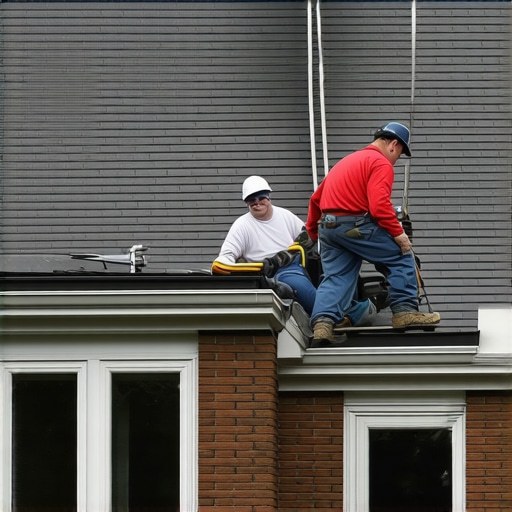
The Mirage of the Lifetime Shingle and the Reality of 140-Degree Heat
I have spent twenty-five years climbing ladders and peeling back layers of failure. Walking on a roof in the high desert at three in the afternoon feels less like an inspection and more like an interrogation. The heat radiating off the deck hits your face with the force of a furnace blast, and you can smell the oils cooking right out of the asphalt. In my time, I have seen every shortcut imaginable. I have seen roofing companies slap cheap silver paint over rotting modified bitumen and call it a restoration. I have seen homeowners sold ‘lifetime’ shingles that were crispier than burnt toast after eight years of Arizona sun. My old foreman used to say, ‘Water is patient. It will wait for you to make a mistake.’ But in the Southwest, water is not the only predator. The sun is an arsonist, and by the time you see the flakes of grit in your gutters, the crime has already been committed.
We are entering a new era. The 2026 formulations for roof coatings are not the white latex paint of your father’s generation. These are high-solids, cross-linking polymers designed to handle the brutal thermal expansion that rips apart standard systems. Most roofing companies are still stuck in 2015, pushing the same old tear-offs because that is where the labor hours are. But if you look at the forensic data, a full replacement is often a waste of good lumber and even better money. If your substrate is dry and your deck is sound, a 2026-spec coating is the surgical strike that saves the patient without the trauma of a full amputation.
“Roofing membranes must be protected from the degradation of ultraviolet radiation, which is the primary driver of premature failure in polymer-modified bitumen systems.” – NRCA Technical Manual
1. Decoupling Bitumen from the Sun: The UV Shield
When you look at a shingle or a roll of modified bitumen under a microscope after five years in the desert, it looks like the Grand Canyon. The UV radiation literally shears the molecular bonds of the asphalt, leaving it brittle. This is where the 2026 coating tech changes the game. We are talking about albedo ratings that exceed 0.85. That is a fancy way of saying the roof is redirecting the vast majority of short-wave infrared radiation back into space before it can convert into heat. Local roofers who understand the physics know that by keeping the bitumen cool, you prevent the ‘oils’ from migrating to the surface and evaporating. Once those oils are gone, the roof has the structural integrity of a cracker. A high-solids silicone or fluoropolymer coating acts as a sacrificial lamb, taking the UV beating so your actual roof deck doesn’t have to. It is the difference between a sunburn and SPF 100.
2. Halting the ‘Thermal Ticking’ and Material Fatigue
If you have ever been in an attic at dusk, you have heard it: the clicking and popping of the wood and metal. That is thermal shock. A roof can hit 160°F during the day and drop to 60°F at night. This constant expansion and contraction is what pulls the nails—what we call ‘shiners’—out of the deck and creates gaps in your flashing. 2026 roof coatings are engineered with elongation percentages often exceeding 500%. This means the coating moves with the building. Instead of the roof being a rigid shield that cracks under pressure, it becomes a flexible skin. When roofing companies apply these newer formulations, they are effectively dampening the vibration of the house. You are stopping the mechanical stress that leads to leaks in the valley or around a cricket. You are not just waterproofing; you are stabilizing the entire structural assembly.
3. The Financial Logic: Skipping the Landfill and the ‘Square’ Cost
Every time a crew tears off a roof, you are paying for three things that have nothing to do with protection: labor to destroy, the cost of the dumpster, and the landfill fees. When we talk about a ‘square’ of roofing (100 square feet), a significant portion of that bid from local roofers is just the logistics of trash. A restoration coating bypasses the waste. By 2026, environmental regulations and waste-hauling fees are projected to skyrocket. A coating is a ‘non-disruptive’ application. You aren’t waking up to the sound of hammers at 6:00 AM, and you aren’t worried about stray nails in your tires. From a forensic standpoint, a coating allows you to maintain the original factory-sealed integrity of the roof deck while adding a new wear layer. It is the most fiscally responsible move a building owner can make, provided they haven’t waited so long that the plywood has turned to oatmeal.
“The application of a reflective coating can reduce the peak cooling load of a building by as much as 15 percent in hot climates.” – Department of Energy Technical Report
4. Fighting Hydrostatic Creep and Ponding Water
Flat and low-slope roofs are notorious for ‘ponding’—standing water that refuses to evaporate within 48 hours. Most traditional roofing materials are designed to shed water, not hold it. When water sits, it creates hydrostatic pressure, forcing molecules through microscopic pores in the membrane. The 2026 silicone coatings are moisture-cure polymers. They don’t just resist water; they are chemically unaffected by it. In fact, they cure faster in the presence of moisture. I have seen roofs where the water sat for a week, and the coating didn’t even soften. This is the monolithic barrier. There are no seams. Most leaks happen at the seams where the ‘trunk slammers’ didn’t use enough mastic. A fluid-applied coating eliminates those weak points entirely, creating a continuous, rubberized membrane that covers every inch from parapet wall to scupper.
Choosing the Right Local Roofers for the Job
Don’t be fooled by a low-ball bid. Applying these 2026 coatings requires more than a roller and a bucket. It requires a forensic audit of the existing roof. You need to check for ‘shiners’ and ensure the substrate is dry using infrared thermography. If a contractor doesn’t mention ‘mil thickness’ or ‘adhesion testing,’ show them the door. You want a pro who knows the difference between wet mil and dry mil, and who won’t spray over a valley full of debris. A coating is only as good as the prep work. If you ignore the flashing or fail to reinforce the penetrations, you are just painting over a problem that will find its way into your living room during the next monsoon. Demand a contractor who understands the physics of the Southwest climate and treats your roof like the complex engineered system it is.