
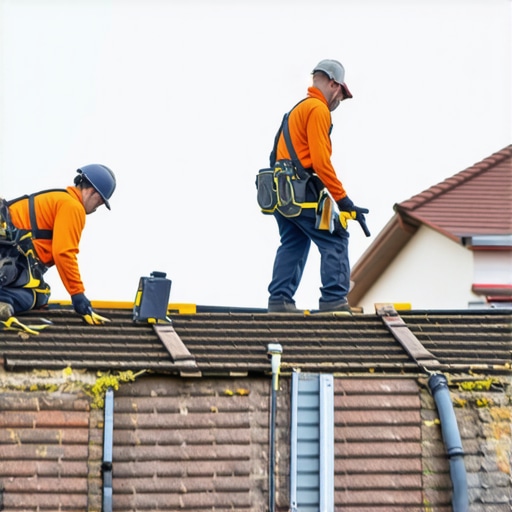
The Forensic Reality of the 2026 Roofing Market
I stood on a roof in the suburbs last Tuesday that felt less like a protective barrier and more like a water-logged sponge. The homeowner, a guy who thought he’d beat the system by hiring a crew off a digital marketplace two years ago, was staring at a brown stain spreading across his master bedroom ceiling. As I poked my awl through the soft, rotted OSB, the smell hit me—that unmistakable, cloying scent of wet wood and active mold colonies that have been feasting in the dark for months. This is what happens when you prioritize a low bid over physics. As we look toward 2026, the roofing industry is shifting. Material costs are volatile, and the labor pool is thinning out, leaving behind a wake of ‘trunk slammers’ who don’t know a cricket from a cricket bat. If you want to save money on a roof install in 2026, you don’t do it by shaving the price of the shingles; you do it by outsmarting the technical failures that force a total tear-off every decade.
1. Strategic Timing and the ‘Off-Peak’ Arbitrage
Everyone calls local roofers in the spring when the first thaw reveals the winter’s damage, or in the fall when they realize their gutters are pulling away from the fascia. That is the worst time to negotiate. In 2026, the smartest way to save is to leverage the shoulder seasons. Roofing companies are businesses with overhead; they have trucks to fuel and crews to keep busy. By scheduling your install for the late-winter window or the dog days of mid-summer, you aren’t just a number in a backlog—you’re the job that keeps their best foreman on the payroll. Use this leverage to negotiate on the total square price. Don’t just look for a discount; look for a material upgrade at the base price. Most homeowners don’t realize that a ‘square’—100 square feet of roofing—has a fixed labor cost, but the margin on the material is where the wiggle room lives.
“Roofing systems shall be installed in accordance with the manufacturer’s installation instructions and the requirements of this section.” – International Residential Code (IRC) R903.1
2. The Ventilation Audit: Saving the Deck from the Inside Out
In cold-weather zones, the enemy isn’t just the snow; it’s the heat you’re losing from your living room. When warm air leaks into your attic through unsealed bypasses, it hits the cold underside of the roof deck. This causes condensation, which drips back onto your insulation, destroying its R-value and rotting your plywood from the bottom up. I’ve seen 30-year shingles fail in seven years because the attic was a sauna. Before you hire roofing companies for a replacement, demand a ventilation audit. Are your soffit vents blocked by blown-in insulation? Is your ridge vent actually cut through the ridge, or is it just sitting on top of the shingles for show? A properly ventilated roof keeps the shingles at a uniform temperature, preventing the thermal bridging that leads to ice dams. You save money by ensuring this is the last roof you buy for 25 years, not by opting for the cheapest underlayment. Capillary action is a silent killer; it pulls water upward under the shingles at the eaves if your drip edge isn’t installed with the correct overlap.
3. Material Physics: Beyond the ‘Lifetime’ Marketing Smoke
The term ‘Lifetime Warranty’ in the roofing world is often a linguistic shell game. Most of those warranties cover manufacturing defects, not the inevitable wear and tear of a 140°F attic or 60-mph wind gusts. For 2026, consider the material physics of your specific climate. If you are in a high-wind area, the ‘saving’ isn’t in the shingle; it’s in the fastener pattern. Using six nails per shingle instead of four prevents ‘blow-offs’ that lead to emergency repairs. If you’re looking at metal, understand the difference between exposed fasteners and standing seam. Exposed fasteners will eventually leak because the rubber grommets dry rot in the sun. Standing seam is more expensive upfront, but it’s a ‘forever’ roof. When talking to local roofers, ask about the SWR (Secondary Water Resistance). Applying a self-adhering polymer-modified bitumen membrane (Ice & Water Shield) across the entire deck—not just the valleys and eaves—can lower your insurance premiums significantly in many jurisdictions, which is a recurring saving that pays for the upgrade within five years.
4. Avoiding the ‘Shiner’ and the Low-Bid Trap
The cheapest estimate you get will almost certainly come from a contractor who uses ‘shiners’—nails that miss the rafter and stick through the plywood into the attic. These metal spikes act as heat sinks; in the winter, frost forms on them, and in the spring, they ‘rain’ inside your attic. I’ve performed forensic inspections where the homeowner thought they had a massive leak, but it was actually just three hundred shiners sweating. To save in 2026, vet your roofing companies by their technical process, not their glossy brochures. Ask them how they handle the valley. Are they doing a ‘closed-cut’ valley or an ‘open’ metal valley? A metal valley is superior for shedding debris and ice, but it costs more in labor. If they try to talk you out of it by saying it’s unnecessary, they’re usually just trying to speed up the job. True savings come from a flashing job that doesn’t rely on a tube of caulk. Caulk is a maintenance item; metal is a permanent solution.
“A roof is only as good as its flashing.” – Old Roofer’s Adage
The Anatomy of a 2026 Roofing Contract
When you finally sit down to sign, look for the ‘unforeseen conditions’ clause. Many contractors bid low on the shingles and then hammer you on the price of plywood replacement once the old roof is off. Agree on a per-sheet price for OSB or CDX plywood before the first shingle is pulled. This prevents the ‘sticker shock’ when they find three rotted squares near the chimney. Also, ensure they are installing a cricket behind any chimney wider than 30 inches. Without a cricket to divert water, you’re essentially building a small dam on your roof that will eventually find a way into your living room through hydrostatic pressure. Saving money on a roof is a marathon, not a sprint. It’s about the physics of shedding water and the integrity of the ventilation, not the color of the granules. Follow the physics, and the savings will follow you for the next three decades.