
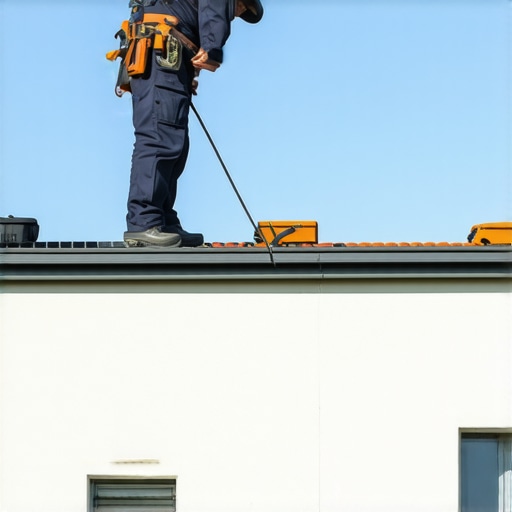
The Anatomy of a Dying Deck: Why Your Flat Roof is Failing
I’ve spent three decades on the business end of a pitchfork and a torch, and let me tell you, a flat roof doesn’t just ‘fail’—it’s murdered. Usually, it’s a slow-motion crime committed by a combination of physics, neglect, and a local roofer who thought a bucket of silver coat could fix a structural sag. Walking on that roof felt like walking on a sponge. I knew exactly what I’d find underneath. It’s that sickening, rhythmic squish-slosh sound under your boots that tells you the polyiso insulation has turned into a heavy, water-logged bog. When we finally peeled back the EPDM membrane, the smell hit us first: the stench of stagnant water and rotting OSB that had been stewing in the 140-degree heat of a summer afternoon. This wasn’t just a leak; it was a systemic collapse of the building envelope.
Tip 1: Master the Physics of Ponding and Hydrostatic Pressure
Most local roofers will tell you a little standing water is normal. They’re lying to get out of fixing a pitch problem. In the roofing trade, we talk about ‘ponding water’—anything that stays on the deck for more than 48 hours. By 2026, with the erratic weather patterns we’re seeing, those puddles are becoming petri dishes for failure. It’s not just about the weight, though 5.2 pounds per square foot per inch of water depth is no joke for your joists. It’s about hydrostatic pressure. When water sits, it finds the microscopic voids in your seams. It doesn’t drop straight through; it uses capillary action to crawl sideways under the membrane, traveling ten feet from the actual hole before it finally drips onto your desk.
“Ponding water is defined as water that remains on a roof for more than 48 hours after precipitation.” – NRCA (National Roofing Contractors Association) Standards
To fix this, stop looking for the hole and start looking for the sag. If your roofing companies aren’t suggesting tapered insulation to create a positive flow toward the scuppers, they aren’t repairing your roof; they’re just postponing the funeral.
Tip 2: The Scupper and Drainage Autopsy
I’ve seen roofing systems where the drain was the highest point on the roof. Think about that for a second. If your drainage isn’t the lowest point, you’re running an aquarium, not a building. Check your scuppers—those metal-lined holes in the parapet wall. If the flashing around the scupper isn’t integrated properly with a reinforced perimeter strip, water will wick behind the wall. I’ve seen bricks pop off the side of a building because water got behind the membrane at the edge and froze during a cold snap. In 2026, you need to demand ‘oversized’ drainage. The old 4-inch standard is failing under 2-inch-per-hour downpours. You want clear paths, no ‘shiners’ (missed nails) sticking through the metal work, and a ‘cricket’—a small gabled structure—behind every chimney or curb to divert water around the obstruction. If you hear a gurgle when it rains, that’s the sound of air being trapped; your drains are choking.
Tip 3: The Membrane Seam ‘Screwdriver Test’
Flat roofs are only as good as their seams. Whether it’s EPDM (rubber), TPO (plastic), or PVC, the seam is the weak link. I’ve watched ‘trunk slammers’ use cheap contact cement that dries out and curls in three years. A real pro uses a weighted roller and, for TPO, a robotic hot-air welder. Here is a trade secret: take a blunt-nosed screwdriver and gently run it along the seam edge with light pressure. If it ‘tucks’ or dives into the seam, you have a cold weld or a glue failure. That’s where the wind-driven rain gets in.
“A roof is only as good as its flashing.” – Old Roofer’s Adage
By the time you see a brown spot on the ceiling, that seam has likely been open for six months, allowing humidity to bypass the thermal barrier and condense on your cold steel deck, causing rust from the inside out.
Tip 4: Stop the Thermal Bridge and Air Leakage
In cold climates, the biggest enemy isn’t the rain—it’s the heat leaving your building. I call it ‘the attic bypass.’ If your local roofers just throw a new layer of rubber over the old one (a ‘recover’), they are trapping moisture. When warm air from your building hits the cold underside of that membrane, it turns into ‘man-made rain.’ I’ve seen roofs that weren’t leaking from the top at all; they were rotting from the inside because of poor vapor barriers. You need to ensure your roofing companies are using staggered insulation joints. If the gaps in the boards line up, heat escapes in a straight line, creating a ‘thermal bridge’ that melts snow on top and creates ice dams at the edge. This is forensic roofing 101: if you don’t control the air, you can’t control the water.
The Surgery: Why Cheap Repairs Cost Triple
You can go to the big-box store and buy a bucket of ‘wet-patch’ goop. That’s a band-aid on a gunshot wound. In 2026, the cost of materials like MDI-based adhesives and high-grade membranes is skyrocketing. If you pay a guy to slap a patch over a wet spot, you are just sealing the rot inside. The ‘surgery’ involves cutting out the wet square, replacing the saturated insulation, and ‘tying in’ a new piece of membrane with 6-inch cover tape and edge sealant. It’s expensive, it’s loud, and it’s the only way to keep your building from becoming a teardown. Don’t let a salesman talk to you about ‘lifetime warranties.’ Those warranties usually don’t cover ponding water or ‘acts of God.’ You don’t want a piece of paper; you want a roofer who knows how to weld a corner boot so tight it could hold vacuum pressure.