
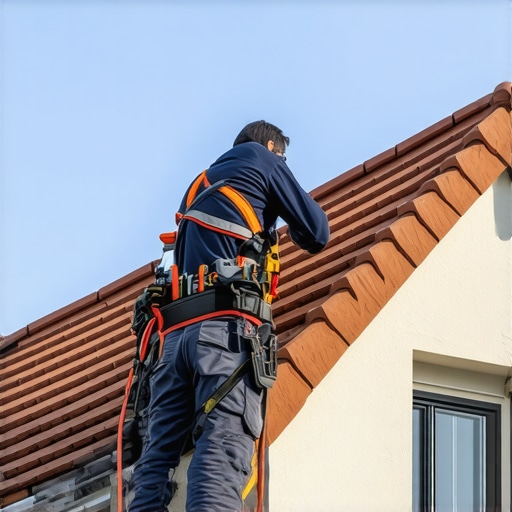
Looking at a roof in 2026 isn’t like it was twenty years ago. Back then, you threw some felt down, slapped on some three-tab shingles, and called it a day. Now, I spend half my life as a forensic investigator, climbing into 140-degree attics to find out why a three-year-old roof is already failing. My old foreman used to say, ‘Water is patient. It will wait for you to make a mistake.’ He was right. Water doesn’t sleep, it doesn’t get tired, and it certainly doesn’t care about your ‘limited lifetime warranty.’ Most roofing companies are rushing through jobs so fast they forget the basic physics of the building envelope. When you are looking for local roofers, you aren’t just buying shingles; you are buying a water management system that has to survive thermal shock, wind-driven rain, and the slow creep of ice dams. If you don’t understand how these components interact, you’re just paying for a temporary umbrella that will fold during the first real test of the season.
The Physics of the ‘Shiner’ and Fastener Failure
One of the most common things I find when I’m performing a post-mortem on a failed roof is the ‘shiner.’ That’s trade talk for a nail that missed the rafter or was driven into the gap between plywood sheets. In the cold climate zones of the North, a shiner is a thermal bridge. During the winter, warm, moist air from your living space leaks into the attic—what we call an attic bypass. That moisture finds the cold steel of the shiner and condenses into a drop of water. Multiply that by three hundred nails, and you don’t have a roof leak; you have an ‘attic rain’ problem. This moisture rots the decking from the inside out until the plywood feels like a wet sponge under my boots. When hiring roofing companies, you need to know their fastening pattern. If they aren’t hitting the common bond—the narrow strip where the shingle layers overlap—the wind uplift ratings are useless. A shingle that isn’t nailed correctly will chatter in the wind, eventually breaking the sealant strip and migrating right off the slope. We measure roofing in ‘squares’—a 100-square-foot area—and if a crew is rushing, they might miss a dozen nails per square. Over a 30-square roof, that’s 360 potential points of failure before the first raindrop even hits.
“A roof is only as good as its flashing.” – Old Roofer’s Adage
Tip 1: The Underlayment and the Myth of ‘Waterproof’ Shingles
The first thing you need to understand for your 2026 replacement is that shingles are not waterproof. They are water-shedding. They are the first line of defense, but the real work happens underneath. Most local roofers will try to sell you on a standard synthetic underlayment because it’s cheap and fast to roll out. But in areas prone to ice dams, you need a heavy-duty ice and water shield. I’m talking about a thick, rubberized asphalt membrane that self-seals around every nail penetration. Think about the physics of an ice dam: snow melts on the upper part of the roof, runs down to the cold eaves, and refreezes. This creates a dam that backs up liquid water. Through hydrostatic pressure, that water is forced upward, defying gravity, and slipping under the shingles. If you don’t have a secondary water resistance layer that extends at least 24 inches inside the interior wall line, that water is going to find its way into your soffits and down your bedroom walls. I’ve seen brand-new shingles look perfect from the street while the fascia boards behind them were turning into mulch because the ‘pros’ skipped the drip edge or used a cheap felt that curled as soon as it got damp.
Tip 2: The Ventilation Balance and Thermal Stress
If your attic can’t breathe, your shingles will bake. In the summer, your roof can reach temperatures that would fry an egg. Without proper intake at the soffits and exhaust at the ridge, that heat stays trapped. This causes ‘thermal shock’ when a sudden summer thunderstorm hits. The rapid cooling of the superheated shingles causes the asphalt to contract violently, leading to granule loss and cracking. When you talk to roofing companies, ask them about the NFA (Net Free Area) of their ventilation system. Most contractors just slap a ridge vent on and call it a day, but if your soffit vents are blocked by insulation, that ridge vent is actually pulling air from your conditioned living space, which drives up your energy bills and sucks moisture into the attic. It’s a closed-loop system of failure. You need a balanced ratio to ensure the air is constantly moving, flushing out the humidity that wants to turn your rafters into a mushroom farm. I’ve walked on roofs where the heat was so intense it felt like the shingles were melting under my feet—all because the installer didn’t understand the Bernoulli effect of airflow.
Tip 3: Flashing, Crickets, and the Danger Zones
The field of the roof—the big flat areas—rarely leaks. The leaks happen at the ‘terminations.’ This means chimneys, skylights, and valleys. A ‘valley’ is where two roof planes meet, and it carries the highest volume of water. If your local roofers are using a ‘closed-cut’ valley with cheap shingles, the water can actually bridge the gap and get underneath. I always advocate for an open metal valley or a high-performance California cut with a heavy-duty liner. And then there’s the chimney. If your chimney is wider than 30 inches, the building code requires a ‘cricket.’ This is a small peak built behind the chimney to divert water to either side. Without a cricket, that area becomes a ponding zone. Debris like pine needles and leaves collect there, holding moisture against the masonry until it eats through the flashing. I once investigated a leak where the homeowner had paid for three different ‘repairs’ only to find out the original installer never even put in step-flashing; they just gooped it up with a gallon of roofing cement. That ‘muck’ dries out, cracks, and becomes a funnel for water within two seasons.
“The primary purpose of a roof is to protect the structure below from the elements, and this requires meticulous attention to the integration of all components.” – National Roofing Contractors Association (NRCA)
Tip 4: The 2026 Warranty Trap
Be very careful with the phrase ‘Lifetime Warranty.’ In the roofing world, that often only covers the material, and it’s pro-rated. This means that by year ten, the manufacturer might only give you forty cents on the dollar for the shingles, and they won’t pay a dime for the labor to tear off the old ones or install the new ones. The real value is in the workmanship warranty. You want a contractor who has been in business longer than their warranty period. In 2026, many ‘trunk slammers’ are popping up, taking the insurance money, and disappearing before the first leak manifests. A forensic analysis of a failed roof usually points back to the ‘human element’—the guy who didn’t want to bend over to pick up a dropped nail or the crew leader who didn’t check the alignment of the starter strip. Your roof is a system of layers, and if one guy cuts a corner on the apron flashing or the pipe boots, the whole system is compromised. Don’t be fooled by a low bid. A cheap roof is the most expensive thing you will ever buy because you’ll be paying to do it twice.
The Final Inspection
Before you sign a contract for a 2026 shingle replacement, make sure you see the plan for the drip edge, the specific brand of ice and water shield, and how they intend to handle the ventilation. If a roofer tells you that your old flashing is ‘fine’ without even looking at it, show them the door. Water is patient, and your roof should be more patient than the water. Pick a crew that treats every nail like it’s the only one holding the house together, because, in a way, it is. Moving into 2026, the materials are getting better, but the labor is getting sloppier. Be the homeowner who knows the difference between a roof that looks good and a roof that actually works.