
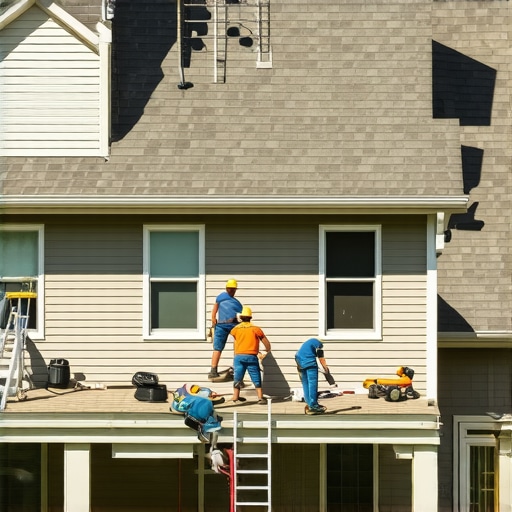
The Smell of a Failing Investment
Walking onto a roof in late autumn is a sensory experience most homeowners never have, and frankly, they shouldn’t want it. When I stepped onto a job site last month, the air didn’t just smell like crisp leaves; it smelled like the sour, heavy stench of rotting OSB. The homeowner complained about a ‘small spot’ on the master bedroom ceiling. To them, it was a cosmetic nuisance. To me, feeling the deck yield under my boots like a wet sponge, it was a forensic crime scene. I knew exactly what I’d find before I even pulled the first shingle. The plywood hadn’t just gotten wet; it had essentially reverted to its original state: wood chips and glue, minus the glue. This is the reality of hiring local roofers who prioritize speed over physics.
“A roof is only as good as its flashing; without proper integration, the highest quality shingle is merely a decorative cover for a future leak.” – Old Roofer’s Adage
The Physics of Failure: Why 2026 Demands More
We are entering a period where weather patterns are becoming more aggressive—short, intense bursts of rain followed by extreme thermal spikes. If your roofing companies are still quoting the same specs they used in 2010, they are setting you up for failure. Water is patient. It doesn’t just fall; it migrates. Through capillary action, water can actually travel uphill between the laps of shingles if the pitch is too low or the wind is high enough. It finds the shiners—those nails that missed the rafter and now sit in the attic, cold and metallic. On a humid day, that cold nail acts as a condenser, pulling moisture out of the air until it drips, mimicking a roof leak when the sun is shining. This is the Forensic Autopsy of a modern roof failure.
Fix 1: The Surgical Replacement of Step Flashing
The most common site of a ‘sudden’ 2026 leak isn’t the field of the roof; it’s the wall intersections. Many local roofers try to save time by using continuous ‘L’ flashing or, worse, slathering the old stuff in mastic. Mastic is the duct tape of the roofing world—it’s a temporary fix that bakes in the sun and cracks within two seasons. The fix is ‘The Surgery.’ We have to tear back the siding and the shingles to install individual step flashing pieces. Each piece must overlap the one below it, integrated into the course of shingles so that water is directed out and away. If you see a contractor reaching for a caulk gun instead of a hammer at a wall intersection, fire them. They aren’t fixing a leak; they’re hiding it for the next guy to find.
Fix 2: The ‘Cricket’ Strategy for Dead Valleys
If you have a chimney wider than 30 inches or a roof section that terminates into a vertical wall, you likely have a ‘dead valley.’ This is a water trap. In the forensic world, we see these areas as ticking time bombs. The fix for 2026 is the installation of a cricket—a small, peaked structure built behind the chimney to divert water to either side. Without a cricket, water dams up, hydrostatic pressure builds, and the water is forced under the shingles. We don’t just use standard underlayment here; we use a double layer of Ice & Water Shield, a self-adhering membrane that seals around every nail penetration. This creates a secondary water barrier that can withstand standing water, even if the primary shingles fail.
“Flashings shall be installed in a manner that prevents moisture from entering the wall and roof through joints in copings, through moisture-permeable materials and at intersections with parapet walls and other penetrations.” – International Residential Code (IRC), Section R903.2
Fix 3: Balancing the Attic’s Breath (Ventilation)
Many roofing issues aren’t caused by rain; they are caused by the house itself. In cold climates, warm air escapes the living space—an attic bypass—and hits the cold underside of the roof deck. It condenses, freezes, and then melts, creating a ‘leak’ that happens when it hasn’t rained for weeks. The fix is a calibrated ventilation system. You need a balance between intake (soffit vents) and exhaust (ridge vents). If your local roofers install a ridge vent without ensuring the soffits are clear of insulation, they are effectively suffocating your home. This leads to thermal bridging, where the heat transfer is so rapid it destroys the asphalt oils in your shingles, making them brittle and prone to wind damage long before their warranty expires.
Fix 4: Eliminating the ‘Shiner’ Epidemic
A ‘shiner’ is a nail that missed the wooden truss. In the forensic investigation of a leak, these are the ‘smoking guns.’ In the winter, these nails get freezing cold. When warm, moist air from the house hits them, they ‘sweat.’ Over a season, that sweat rots the surrounding wood. The fix for 2026 is a strict ‘hand-drive’ or ‘calibrated gun’ policy. High-volume roofing companies often use ‘slam-and-go’ crews who fire nails at a dizzying pace. To fix this, we perform a deck-level inspection during the tear-off, ensuring every nail finds meat. We also advocate for synthetic underlayment over traditional 15-lb felt. Synthetic doesn’t wrinkle or absorb moisture, providing a flat, stable surface that ensures the shingles lay tight, preventing wind-driven rain from getting a foothold.
The Cost of the ‘Cheap’ Contractor
When you look for local roofers, you aren’t just buying shingles; you are buying the integrity of the flashing, the precision of the nailing pattern, and the physics of the ventilation. A ‘cheap’ roof is the most expensive thing you will ever buy because it fails twice—once when it leaks, and once when you have to pay a forensic roofer like me to tear it all off and do it right. Water is patient. It is waiting for that one missed nail, that one un-flashed corner, that one clogged vent. Don’t give it the chance. Use these four fixes to ensure your 2026 roof stays where it belongs: over your head and out of your mind.