
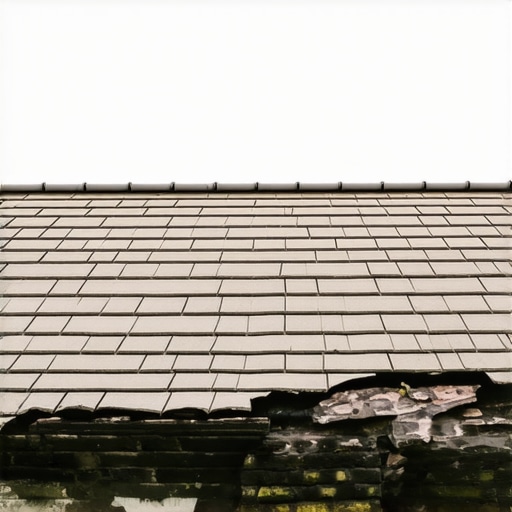
The Forensic Scene: Walking on Dry Crackers
Walking on that roof in the blazing 110-degree heat felt like walking on a layer of dry soda crackers. I knew exactly what I would find before I even reached the peak. As I climbed the pitch, every step sent a shower of brittle granules cascading down into the gutters—a clear sign that the asphalt’s binder had reached its terminal point. When I finally reached the ridge, I didn’t even need my pry bar. I could see the ridge caps lifting like the scales of a dehydrated lizard. This wasn’t a storm hit; this was a systemic failure of physics, chemistry, and lazy craftsmanship. Many local roofers are installing systems today that are ticking time bombs, and by 2026, we are going to see a massive wave of ridge cap failures across the Southwest. It’s not a matter of ‘if,’ but a matter of how many monsoon seasons those short-nails can hang on.
The Anatomy of the Ridge: Why the Peak is the Weakest Link
The ridge cap is the crown of your home, but in the world of roofing, it’s also the most abused component. While the rest of the roof lies relatively flat, the ridge cap is bent, stressed, and shoved into the direct line of fire of UV radiation and high-velocity winds. To understand why these fail, we have to look at Mechanism Zooming. When an asphalt shingle is bent over a ridge, the internal fiberglass mat is put under constant tension. In the desert heat, this tension is exacerbated by thermal expansion. During the day, the material stretches; at night, it snaps back. Over thousands of cycles, that stress finds the weakest point: the fastener hole.
“Roofing systems shall be fastened in accordance with the manufacturer’s instructions. Improper fastening is the primary cause of premature failure in high-wind events.” – International Residential Code (IRC) R905.2.5
Reason 1: The ‘Shiner’ and the Short-Nail Pandemic
The first reason 2026 will be the year of the leak is the epidemic of ‘shiners.’ In trade talk, a shiner is a nail that missed the framing or was driven at an angle, leaving the head exposed or the shank barely gripping the deck. Many roofing companies are rushing crews through jobs, and installers are using 1-1/4 inch nails for ridge caps. That is a recipe for disaster. When you are layering a ridge cap over a thick architectural shingle, you are often going through four or five layers of material. A standard nail barely penetrates the plywood. By the time 2026 rolls around, the constant vibration from the wind will have backed those short nails out, creates a gap, and allowing the next dust storm to rip the entire line of caps off like a zipper.
Reason 2: Thermal Shock and the Loss of Elasticity
In our climate, the temperature on a dark shingle can hit 160°F by 2:00 PM and drop to 60°F by 2:00 AM. This 100-degree swing causes what we call Thermal Shock. Local roofers often use standard 3-tab shingles cut into pieces to save money on ridge caps instead of using dedicated high-profile ridge products. These flat shingles aren’t designed to be bent. By 2026, the plasticizers—the chemicals that keep the asphalt oily and flexible—will have evaporated. The bend in the shingle becomes a fracture line. Once that fracture happens, capillary action pulls rainwater up and under the cap, rotting the ridge beam before you ever see a drop on your ceiling.
Reason 3: Ventilation Back-Pressure and Adhesive Failure
Most people think roofing is just about keeping water out, but it’s really about letting air out. If a contractor installs a ridge vent but fails to cut the slot in the decking correctly, or if they choke the intake vents at the soffits, the ridge cap becomes a pressure cooker. Hot air gets trapped at the peak, baking the adhesive strip on the underside of the ridge cap from the bottom up. I’ve seen roofing companies use cheap ‘contractor grade’ caps where the sealant strip is about as sticky as a used post-it note. By 2026, those strips will be completely oxidized, leaving the caps held down by nothing but prayer and a couple of rusted nails.
“A roof is only as good as its flashing and its ability to breathe; a choked roof is a dying roof.” – Old Roofer’s Adage
The Surgery: How to Fix a Failing Ridge
If you suspect your ridge is failing, don’t let a ‘trunk slammer’ come out and just slap a tube of caulk over the nail heads. That’s a Band-Aid on a bullet wound. The ‘Surgery’ requires a full tear-off of the ridge line. We strip it back to the deck, inspect the cricket (if there’s a chimney nearby), and install a high-profile, SBS-modified ridge cap. SBS stands for Styrene-Butadiene-Styrene; it’s a rubberized asphalt that can handle the thermal expansion without cracking. We use 1-3/4 inch ring-shank nails to ensure that once they go into the deck, they stay there until the house falls down.
The Cost of Waiting for 2026
If you wait until the 2026 monsoon season to check your roof, you’re not just paying for new shingles. You’re paying for the mold remediation in your attic and the drywall repair in your bedrooms. A single square (100 square feet) of roofing is much cheaper than a structural repair. When vetting local roofers, ask them specifically about their ridge cap fastening pattern and the length of the nails they use. If they can’t give you a technical answer, they aren’t pros; they’re just guys with a hammer. Protect your investment by demanding materials that can actually survive the physics of the peak.