
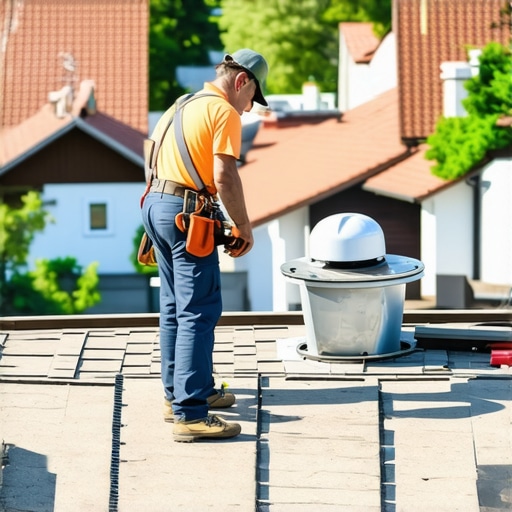
The Invisible Killer of Your Roof Deck
I’ve spent 25 years watching good plywood go bad. It doesn’t happen overnight. It’s a slow, quiet rot that smells like damp earth and failure. Most homeowners think a roof is just shingles and nails, but as any veteran investigator will tell you, a roof is a breathing organism. If it can’t exhale, it dies. My old foreman used to say, ‘Water is patient. It will wait for you to make a mistake.’ And the biggest mistake I see local roofers making today is ignoring the brutal physics of attic ventilation. We aren’t just slapping shingles anymore; we are managing thermodynamics in a world where 2026 building codes are finally catching up to what we’ve known on the job site for decades.
“A roof is only as good as its flashing.” – Old Roofer’s Adage
In our climate, the enemy is dual-headed. In the winter, we fight the ‘Attic Bypass’—that warm, moist air from your shower or kitchen that sneaks past the insulation. In the summer, we’re dealing with a 150-degree oven that cooks your shingles from the inside out. If you think your local roofing companies are doing you a favor by just ‘throwing in a ridge vent,’ you’re likely being set up for a premature tear-off. Let’s break down the mechanics of how air actually moves—or fails to move—under your deck.
1. The Myth of the Ridge-Vent-Only Solution
The most common failure I see during forensic inspections is a lack of balance. You can’t just have exhaust; you need intake. Think of it like a straw. If you plug one end, nothing moves. Many roofing companies will install a fancy ridge vent but ignore the soffits. When that happens, the ridge vent starts pulling air from the easiest source—which is often your conditioned living space through light fixtures or top plates. This isn’t just inefficient; it’s a recipe for disaster. You need a 50/50 balance. If you have 100 square inches of exhaust at the peak, you better have 100 square inches of intake at the eaves. Otherwise, that ridge vent is just a decoration that’s costing you money in AC bills and rotted fascia boards.
2. Mechanism Zooming: The Physics of the ‘Shiner’ and Condensation
Let’s talk about the ‘shiner.’ That’s a nail that missed the rafter and is sticking out into the attic space. In a poorly ventilated roof, that cold nail head becomes a ‘condensing surface.’ During a freeze, moisture in the attic air hits that metal and turns to frost. When the sun hits the roof, that frost melts, dripping onto your insulation. Over a season, you’ve got a thousand little leaks that aren’t leaks at all—they’re ventilation failures. This ‘molecular rain’ destroys the R-value of your fiberglass batts, making your home harder to heat and creating a breeding ground for black mold. If your roofer isn’t talking about the dew point inside your attic, they aren’t a roofer; they’re a shingle installer.
3. Baffles: The Unsung Heroes of 2026 Roofing
You can have the best soffit vents in the world, but if your insulation is stuffed tight against the underside of the roof deck, you’ve choked the system. Proper ventilation requires a clear path for air to travel from the eave to the ridge. This is where baffles come in. I’ve crawled through enough attics to know that 70% of ‘professional’ jobs have collapsed or missing baffles. We’re seeing more local roofers move toward extended baffles that run three or four feet up the rafter bay. Why? Because as we pack more insulation into attics to meet R-49 or R-60 standards, we’re accidentally killing the airflow. A real pro ensures that air can ‘wash’ the underside of the plywood, stripping away heat and moisture before it can settle.
“The primary purpose of attic ventilation is to maintain a cold roof temperature to avoid ice dams and to vent moisture that moves from the conditioned space to the attic.” – NRCA Manual
4. Thermal Bridging and the 2026 Material Shift
We are moving away from the old-school ‘turtle vents’ and toward high-efficiency continuous systems. But even the best materials fail if you don’t account for thermal bridging. The heat moves through the wood rafters themselves. In 2026, we’re looking at more radiant barriers integrated into the deck. However, if your local roofing companies don’t understand the ’emissivity’ of these materials, they can actually trap more heat if the ventilation isn’t perfect. It’s a delicate dance. You want materials that reflect UV radiation but don’t prevent moisture from escaping the wood fibers of the deck. If the plywood can’t dry toward the outside, it will rot from the inside.
5. The Danger of Mixing Ventilation Types
This is a trade secret that ‘trunk slammers’ hate: never mix two different types of exhaust vents on the same roof plane. I’ve seen houses with a ridge vent and a power fan on the same gable. The power fan is so strong it actually turns the ridge vent into an intake. It starts pulling rain, snow, and debris backward into your attic. It’s a literal vacuum for problems. When I do a forensic walkthrough, I look for these ‘short circuits.’ A single, continuous system—like a properly calculated ridge and soffit setup—will outperform a hodgepodge of high-tech gadgets every single time. It’s about the stack effect: hot air rises naturally. Let it do its job without over-complicating the path.
The Cost of the ‘Cheap’ Bid
When you get three quotes and one is $4,000 cheaper, look at the ventilation plan. The cheap guys skip the baffles, they don’t cut the ridge slot wide enough, and they certainly don’t check your soffits for paint-clogged screens. They leave you with a ‘square’ of shingles that looks great from the curb but is a ticking time bomb for your structural integrity. Don’t be the homeowner who has to call me in five years to explain why their brand-new roof feels like a sponge. Inspect the intake, balance the exhaust, and treat your attic like the lungs of your home. Anything less is just a temporary cover-up.