
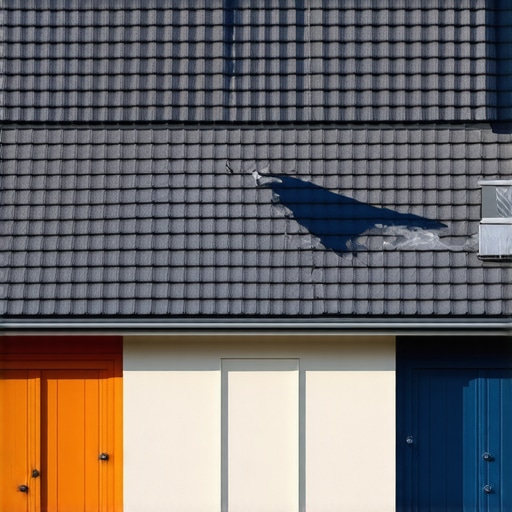
The Cold Truth About Your Roof Deck
Choosing a roof in a climate where the mercury spends four months a year hiding in the basement isn’t about curb appeal; it’s about survival. You see, the average homeowner treats roofing like a fashion choice. They look at the color and the price tag, then hire the first set of local roofers who show up with a ladder and a smile. But after twenty-five years of tearing off failed systems, I can tell you that the physics of a sub-zero environment don’t care about your aesthetic. My old foreman, a guy who’d seen every blizzard since the legendary ’78 storm, used to say, ‘Water is patient. It will wait for you to make a mistake.’ And in the cold, those mistakes aren’t just leaks; they are structural catastrophes born from thermal shock and ice damming.
When the temperature drops to -10°F, standard asphalt shingles become brittle, almost like glass. If your roofing companies aren’t using materials designed for high-flexibility, a simple wind gust can cause the shingle to snap at the fastener line. We call these ‘shiners’ when a nail is exposed or misplaced, but in the winter, a shiner becomes a thermal bridge that pulls frost directly into your plywood. I’ve seen roof decks in Minnesota and Maine that looked fine from the ground but felt like walking on a sponge because the internal condensation had rotted the wood from the inside out. This happens because the roof wasn’t built as a system; it was just slapped together by trunk-slammers looking for a quick check.
“In cold climate regions, the primary purpose of a roof system is to provide a continuous air and thermal barrier to prevent the formation of ice dams and interior condensation.” – NRCA (National Roofing Contractors Association) Guidelines
Mechanism Zooming: Why Cold Kills Cheap Roofs
Let’s look at the actual physics of failure. Most people blame the snow, but the snow is just the symptom. The real enemy is the ‘Attic Bypass.’ This is where warm, moist air from your shower or kitchen escapes through unsealed light fixtures or top plates into your attic. This heat warms the underside of the roof deck, melting the bottom layer of the snowpack. That water runs down to the eaves, which are cold because they overhang the house. It flash-freezes, forming a literal dam of ice. Now, gravity is working against you. The pool of water backed up behind that dam is pulled upward between the shingle courses through capillary action. If your local roofers didn’t install a high-quality Ice and Water Shield at least two feet past the interior wall line, that water is going into your drywall.
Then there is ‘Thermal Expansion.’ During a bright winter day, your dark shingles might reach 60°F. When the sun sets and the temp drops to zero, the material undergoes a massive contraction. Cheap shingles can’t handle the stress. They crack, or worse, the adhesive seal fails. Once that seal strip is broken in the winter, it will never re-seal until the following July. This leaves your roof vulnerable to wind-driven snow that blows up under the courses and sits there until it melts directly onto your underlayment. This is why material choice for 2026 is shifting toward high-performance polymers.
The Top 3 Shingles for Cold Environments in 2026
If you’re looking for a replacement this year, stop looking at the cheap 3-tab stuff. It’s a waste of labor. Here is what I’m seeing actually hold up when the wind is howling at 50 mph and the thermometer is broken.
1. Polymer-Modified SBS Asphalt Shingles
This is the gold standard for anyone living in the North. SBS stands for Styrene-Butadiene-Styrene. It’s essentially asphalt blended with a rubberizing polymer. When you touch an SBS shingle, it feels like a rubber mat. In the summer, it doesn’t get gooey, and in the winter, it doesn’t get brittle. I’ve taken a hammer to an SBS shingle at zero degrees and it just bounces off. A standard shingle would shatter into a dozen pieces. This flexibility means the shingle can expand and contract with the roof deck without tearing at the nail holes. It also has a much higher ‘impact rating,’ which is vital when frozen branches or hail hit the surface.
2. Triple-Laminate Architectural Shingles
For those who want mass, triple-laminates are the way to go. Most ‘architectural’ shingles are two layers. The 2026 high-end lines are adding a third layer of reinforcement. This adds weight—often over 400 pounds per square (that’s 100 square feet in trade talk). This weight is your friend in a windstorm. It makes it significantly harder for the wind to get under the butt-edge of the shingle. Furthermore, the triple-layer construction creates a thicker thermal mass, which can slightly reduce the rate of heat transfer through the deck, though you still need proper R-value insulation in the attic to do the heavy lifting.
3. Stone-Coated Steel Systems
If you have the budget, this is the ‘forever’ roof for the cold. It’s a steel panel stamped into the shape of a shingle or shake, then coated with stone granules. Why is this good for cold? Because it is often installed on a ‘batten’ system, creating an air gap between the roof and the deck. This air gap acts as an extra layer of insulation and allows for better ventilation, which drastically reduces the risk of ice dams. Snow also tends to slide off metal faster, though you’ll need snow guards to prevent a ‘roof avalanche’ from crushing your gutters or your car. It won’t crack, it won’t rot, and it laughs at the freeze-thaw cycle that destroys asphalt shingles in ten years.
“Roofing assemblies shall be designed and installed in accordance with this code and the manufacturer’s installation instructions.” – International Residential Code (IRC) R903.1
The Warranty Trap: Don’t Be Fooled
Every roofing company out there will brag about a ‘Lifetime Warranty.’ In the trade, we know that’s mostly marketing. Those warranties usually only cover manufacturing defects—like if the shingle spontaneously combusts. They do NOT cover ‘improper installation.’ If your local roofers missed the nail zone—high-nailing the shingle—and it blows off, the manufacturer will laugh at your claim. In cold weather, the biggest warranty issue is the ‘Seal Strip.’ Shingles have a line of adhesive that needs heat to activate. If you get a roof installed in November, those shingles might not seal until May. A good contractor will hand-seal every single shingle with a dab of asphalt cement if they are working in cold temps. If they don’t, you’ll be chasing shingles across the yard after the first winter storm.
How to Vet Your Local Roofers
Don’t just look for ‘roofing’ on a truck. You need a forensic-minded installer. Ask them about ‘crickets’—the small peaked structures we build behind chimneys to divert water. If they don’t know what a cricket is, kick them off the property. Ask them how they handle the ‘drip edge’ and ‘starter strips.’ A proper cold-weather roof starts with a solid foundation. If they are just ‘nailing over’ your old roof to save a buck, they are burying a problem that will cost you five times as much to fix in three years when the bottom layer of shingles rots out the rafters.
Walking on a roof in the dead of winter is dangerous, but living under a failing one is worse. Look for contractors who talk about ventilation and ice shields more than they talk about colors. They are the ones who understand that a roof is a shield, not a decoration. If you see signs of ‘granule loss’ in your gutters or ‘buckling’ shingles that look like little waves, your roof is already telling you it’s tired. Don’t wait for the dining room ceiling to start dripping to make a move. The cost of a tear-off is nothing compared to the cost of mold remediation and structural repair once the water has won its patient game.