
The Forensic Scene: The Sound of Potato Chips Underfoot
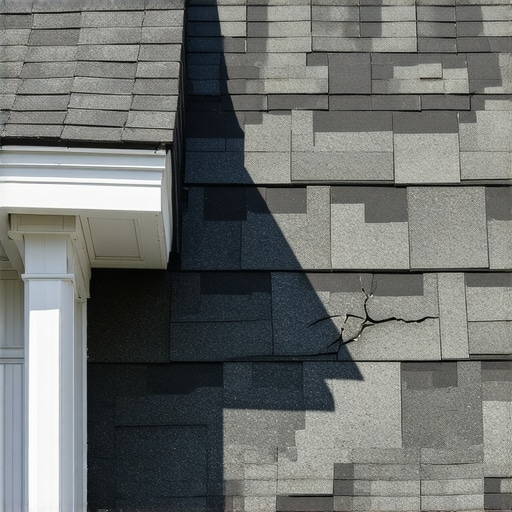
Walking on that roof felt like walking on a bag of sun-dried potato chips. I knew exactly what I’d find underneath before I even pulled my pry bar. The homeowner in the Southwest desert was complaining about leaks, but the sky was clear. The real problem wasn’t a hole; it was a total molecular collapse. When local roofers installed this deck in 2021, it looked pristine. Now, in 2026, the shingles are spider-webbed with cracks that look like a dry lake bed. This isn’t just ‘wear and tear.’ This is the physics of failure. Most roofing companies won’t tell you why this happens because it implicates the very materials they sell, but after 25 years of tearing off failures, the truth is written in the granules.
Mechanism 1: Photo-Oxidation and the Death of Bitumen
The primary culprit for shingle cracking in our high-UV environment is a process called photo-oxidation. An asphalt shingle is essentially a fiberglass mat drenched in bitumen (asphalt) and topped with ceramic granules. Think of the bitumen as the ‘glue’ that keeps the system flexible. In the brutal 110°F heat of a desert summer, short-wave UV radiation penetrates the granule layer. It attacks the long-chain hydrocarbon molecules in the asphalt, breaking them down into shorter, water-soluble fragments. As these molecules wash away during a rare monsoon, the shingle loses its plasticizers. It becomes brittle. When the roof hits 160°F in the afternoon and then drops to 70°F at night, the material needs to expand and contract. Because it’s lost its flexibility, it can’t. It snaps. You’ll see these as horizontal cracks following the top of the shingle below it. If you ignore this, the fiberglass mat is exposed, and water will use capillary action to travel upward, defying gravity, and rotting your decking from the inside out.
[image]
Mechanism 2: The Oven Effect and Improper Ventilation
I’ve crawled into attics where the temperature was a staggering 145°F. That’s not just uncomfortable; it’s an appliance-killing, roof-rotting environment. Many roofing companies slap on a new square of shingles without ever calculating the Net Free Venting Area (NFVA). If your attic can’t breathe, your roof is being baked from both sides. The sun hits the top, and the trapped heat hits the bottom. This ‘Oven Effect’ accelerates the chemical migration of oils out of the shingle. I often find a shiner—a nail that missed the rafter—dripping with rusty condensation in these attics. That moisture is a sign that your ventilation is failing. When the wood deck swells from moisture and then shrinks from the heat, a brittle shingle simply cannot keep up.
“Ventilation of the attic space shall be provided with an unobstructed opening of not less than 1 square foot for each 300 square feet of vented area.” – IRC Section R806.1
If your contractor didn’t check your soffits for daylight, they didn’t install a roof; they installed a countdown timer.
Mechanism 3: Thermal Shock and the Monsoon Hammer
In the Southwest, we deal with thermal shock, a phenomenon that happens when a roof at peak heat is suddenly hit by a cold rain. The temperature of the shingles can drop 70 degrees in less than five minutes. This rapid contraction is violent at a microscopic level. If the roofing material was manufactured with high levels of limestone filler—a common tactic to save money—the shingle lacks the tensile strength to survive that ‘hammer.’ We are seeing a massive uptick in 2026 for cracked shingles because the manufacturing batches from a few years ago were pushed out fast with lower-quality asphalt. This isn’t a warranty issue most manufacturers will cover; they’ll call it an ‘act of God,’ but a forensic eye knows it’s an act of bad chemistry. The valley of your roof is particularly vulnerable here, as it carries the highest volume of cold water over the hottest surface area.
The Anatomy of the Fix: Beyond the Caulk Gun
When you see cracking, your local roofing companies might suggest ‘sealing’ the cracks. That’s a Band-Aid on a gunshot wound. Once the bitumen has oxidized to the point of cracking, the structural integrity of the shingle is gone. You need a cricket installed behind large chimneys to divert water and a total system overhaul that prioritizes ventilation. Look for shingles with ‘Polymer Modified’ (SBS) asphalt. These have a rubber-like quality that handles thermal shock without snapping.
“A roof system is a complex assembly of interacting components, where the performance of each is dependent on the others.” – NRCA Manual
Don’t let a ‘trunk slammer’ tell you it’s just cosmetic. A cracked shingle is a sponge, and by the time you see a brown spot on your ceiling, the forensic evidence suggests the plywood underneath has already turned to mush. Catch it before the next monsoon turns your living room into a swimming pool.
This article really highlights the often overlooked factors contributing to shingle deterioration, especially in high-UV and desert environments like the Southwest. I’ve seen firsthand how improper attic ventilation accelerates roof aging, with many homeowners unaware that their ventilation setup could be the culprit. The point about thermal shock from sudden cold rain hitting hot shingles is particularly interesting—something I wouldn’t have considered until encountering a cracked roof after a quick monsoon in the summer. It makes me wonder if most homeowners are aware of these subtle yet impactful issues. From your experience, what are the most effective ways to assess and improve attic ventilation, especially in older homes that weren’t initially built with modern standards? And do you think the newer SBS asphalt shingles truly make enough of a difference to justify their higher cost in vulnerable climates like ours?
This article sheds light on some of the less obvious yet critical factors that contribute to shingle failure, especially in arid, high-UV environments like the Southwest. I’ve personally dealt with homes where inadequate attic ventilation accelerated the deterioration process. The point about thermal shock really resonated with me—our local monsoon season can cause rapid temperature drops that seemingly catch many homeowners off guard. I’ve found that installing proper venting and ensuring airflow has helped extend roof life significantly in my experience. As for the newer SBS asphalt shingles, I believe they do offer more resilience against these damaging effects, though their higher upfront cost can be a hurdle for some. In your view, what are some practical, cost-effective ways homeowners can assess and improve their attic ventilation without extensive renovations? It seems like proactive maintenance can be a game-changer in preventing these failures long-term.
This detailed breakdown of the failure mechanisms in shingles really highlights how important proper maintenance and quality materials are, especially in extreme climates like the Southwest. The part about photo-oxidation resonated with me—I’ve seen shingles that look perfectly fine visually but are actually brittle and ready to crack because of long-term UV exposure. I’ve always wondered how many homeowners consider their attic ventilation as part of their roof’s longevity. It’s such an easy fix in many cases, yet it’s often overlooked until it’s too late. The rapid temperature changes with seasonal shifts and rain seem so destructive at a microscopic level, yet they’re common climate patterns. I’d love to hear others’ experiences on how they’ve managed to improve their attic airflow effectively without resorting to costly full renovations. Do you think increasing soffit and ridge venting sometimes makes enough difference, or are more involved solutions necessary in old homes?