
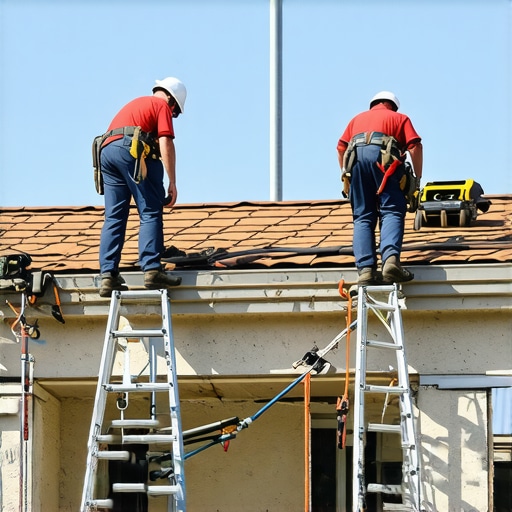
The Forensic Scene: Walking on a Sponge
Walking on that roof felt like walking on a sponge. I knew exactly what I’d find underneath. Last month, I was called out to a standard suburban ranch where the homeowner complained of a ‘small brown spot’ in the hallway. From the ground, the shingles looked like they had another five years in them. But as soon as my boots hit the deck, the structural integrity felt more like wet cardboard than 7/16-inch OSB. I didn’t need a moisture meter to tell me the story; I could smell it—that heavy, sweet, earthy scent of decaying organic matter trapped behind a vapor barrier. When we finally peeled back the squares, the plywood was black with rot. It wasn’t a storm that killed this roof; it was a slow, agonizing death by poor physics. This is the reality most local roofers won’t tell you: the repair you think you need is often just a symptom of a deeper, systemic failure.
Tip 1: The ‘Shiner’ and the Hidden Physics of Thermal Bridging
If you’re looking for roofing companies, the first thing you should ask about isn’t the price—it’s their nailing pattern. A ‘shiner’ is a trade term for a nail that missed the rafter or was driven into a gap in the sheathing. In 2026, with our increasingly volatile temperature swings, these metal nails act as thermal bridges. In the winter, that nail becomes a tiny popsicle sticking into your attic. Warm, moist air from your living space hits that frozen metal, condenses, and drips. Over a thousand nails, that’s not a leak; it’s an indoor rainstorm. You see a water spot and think ‘shingle repair,’ but the shingle is fine—the installation was the crime. A real pro ensures every nail is buried in solid meat, preventing that moisture cycle from ever starting.
Tip 2: Capillary Action and the Edge Detail
Water is patient. It doesn’t just fall; it climbs. Due to surface tension, water can actually travel upward between two surfaces that are pressed tightly together—a process called capillary action. I’ve seen countless local roofers jam shingles tight against a side wall without a proper gap. When rain hits that wall, it gets sucked up and behind the flashing.
“A roof is only as good as its flashing.” – Old Roofer’s Adage
To prevent this, your repair needs to include a ‘kick-out’ flashing. This tiny piece of metal diverts water away from the siding and into the gutter. Without it, you’re just inviting the water to bypass your shingles and rot out your fascia and soffits. If your contractor doesn’t talk about ‘diverting’ water rather than just ‘stopping’ it, find a new one.
Tip 3: The Stack Effect and Attic Ventilation
Your roof is part of a respiratory system. If it can’t breathe, it dies. Many roofing companies will happily slap new shingles over an attic that has zero intake ventilation. In the summer, your attic hits 140°F. That heat cooks the asphalt from the inside out, causing the shingles to ‘fish-mouth’—where the edges curl up like a dying trout. This isn’t a material defect; it’s a slow-motion arson. According to the International Residential Code (IRC), you need 1 square foot of net free vent area for every 150 square feet of attic floor. If your roofer isn’t measuring your soffit vents and comparing them to your ridge vent capacity, they aren’t roofing; they’re just decorating your house with trash that will fail in eight years.
Tip 4: The Valley of Death—Physics of the ‘Woven’ Mistake
Valleys take more water than any other part of the roof. Some old-school guys still swear by ‘woven’ valleys where shingles overlap in a basket-weave pattern. It looks clean, but it’s a disaster in the making. Debris—pine needles, grit, leaves—gets trapped in those folds. This creates a dam. Water backs up under the shingles, finds a nail head, and you have a leak. In 2026, the only acceptable repair for a valley is an ‘open metal’ valley. A piece of W-shaped pre-finished steel or copper allows water to scream off the roof without ever touching a shingle edge. It’s louder when it rains, sure, but I’d rather hear the rain than watch it drip through my ceiling.
Tip 5: The Warranty Trap vs. Material Reality
Don’t get blinded by ‘Lifetime Warranties.’ Most of those are marketing fluff designed to make you feel warm and fuzzy while you sign a check. They usually only cover material defects, which account for about 1% of roof failures. The other 99% are installation errors. When you’re vetting local roofers, look for a ‘workmanship warranty’ backed by the manufacturer. This means the manufacturer has actually inspected the contractor’s work and trust them enough to put their own money on the line.
“The primary purpose of a roof is to shed water; the secondary is to provide a thermal break.” – Architectural Standard
If the person on your roof is talking about ‘squares’ and ‘bundles’ but can’t explain the R-value of your attic insulation, they are a shingler, not a roofer. You need a forensic approach to ensure your 2026 repair is the last one you’ll ever pay for.