
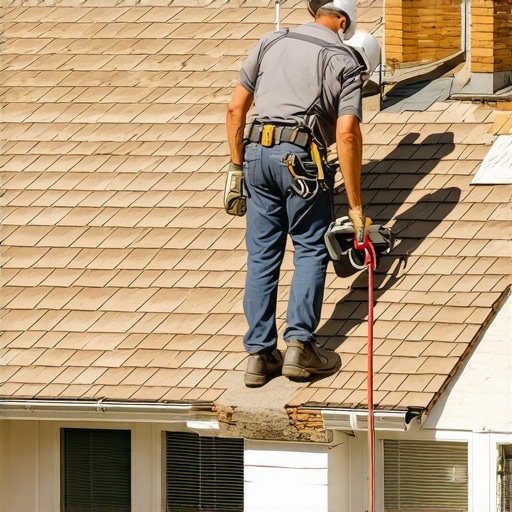
The Patience of Water and the Physics of Failure
I’ve spent twenty-five years crawling over hot asphalt and smelling the distinct, sickly-sweet scent of wet OSB that’s been rotting for a decade. My old foreman, a man who had more scars on his hands than shingles in a square, used to tell me every morning: ‘Water is patient. It will wait for you to make a mistake.’ He wasn’t talking about the big errors, the ones that make a house flood overnight. He was talking about the microscopic failures—the shingle tab that didn’t quite bond, the nail driven just a quarter-inch too high, the capillary action that sucks moisture uphill against the pull of gravity. When we talk about how local roofers handle 2026 shingle tab security, we aren’t just talking about aesthetics. We are talking about the physics of keeping a three-thousand-pound roof attached to a structure when the wind is trying to peel it off like an orange skin.
“A roof is only as good as its flashing.” – Old Roofer’s Adage
In the humid, wind-battered corridors of the Southeast, where roofing companies fight a constant war against wind-driven rain, the shingle tab is the frontline soldier. If that tab isn’t secured, the entire system is a house of cards. When a gust of wind hits a roof slope, it creates a zone of negative pressure. This isn’t a gentle breeze; it’s a vacuum. If a shingle tab is loose, the wind lifts it, creating a lever. That lever then puts stress on the mechanical fasteners below. Once the seal is broken, you aren’t just looking at a leak; you’re looking at a catastrophic failure of the building envelope.
The Geometry of the Fastening Zone
The first way we secure tabs for the 2026 standard is by mastering the nail line. Most ‘trunk slammers’—those guys who give local roofers a bad name—will fire their nail guns with reckless abandon. They create ‘shiners’—nails that miss the structural framing or the double-layer of the shingle. A shiner is a thermal bridge and a direct conduit for water. If a nail is driven too high, above the sealant strip, it creates a hinge point. When the wind gets under the tab, the shingle folds over the nail head. This is why we insist on a 6-nail pattern in high-wind zones. It’s not just about the number of nails; it’s about the shear strength of the asphalt matrix. We are looking for the ‘sweet spot’ where the nail penetrates both the top layer and the underlying shim, locking the shingle into a singular, monolithic unit.
Thermal Bonding and the Chemical Sealant Strip
The second method involves the chemistry of the sealant strip. In our climate, the sun is both an enemy and an ally. Those black strips of modified bitumen on the back of your shingles aren’t sticky right out of the bundle. They require ‘thermal activation.’ In the heat of a 140°F attic environment, those strips soften and fuse to the shingle below. However, if roofing companies install these in late autumn, they might not seal before the first winter gale hits. This is where hand-sealing becomes non-negotiable. We use a high-grade roofing cement, applied in three spots the size of a quarter under each tab. It’s tedious, back-breaking work, but it’s the difference between a roof that lasts thirty years and one that ends up in your neighbor’s pool after a tropical storm.
“The roof is the most important part of the building’s exterior skin, and its failure can lead to the deterioration of the entire structure.” – National Roofing Contractors Association (NRCA)
The Perimeter Defense: Starter Strips and Drip Edges
The third and perhaps most vital way to secure tabs is at the eaves and rakes. This is where most roofs fail. You can’t just cut a shingle and use it as a starter. You need a dedicated starter strip with a factory-applied adhesive at the very edge of the roofline. This strip creates a permanent bond at the most vulnerable point of the roof—the perimeter. Without a properly installed starter strip, the wind gets under the first course of shingles and peels the whole thing back like a zipper. We also look at the drip edge. If the drip edge isn’t integrated with a secondary water resistance layer, water will back up via capillary action, rotting out the fascia and the rafter tails. I’ve seen valleys where the installer forgot to clip the top corner of the shingle, leading to ‘wicking’ that destroyed the substrate two feet away from the actual water flow. It’s about understanding that water doesn’t just fall; it travels.
Choosing a Professional Over a Price Tag
When you look for local roofers, you aren’t just buying shingles. You are buying the integrity of the install. A ‘lifetime warranty’ is a marketing gimmick if the guy who installed the roof didn’t understand the uplift ratings required for your specific zip code. You need to ask about their ‘nailing schedule’ and what type of starter strips they use. If they don’t mention the ‘cricket’ behind your chimney or how they handle ‘valleys,’ they aren’t roofing; they’re just laying down expensive trash. A forensic look at a roof failure always points back to the same thing: someone ignored the physics of the system to save twenty minutes on a Friday afternoon. Don’t let your home be the next case study in my folder of failures.