
The Anatomy of a Failed Valley: A Forensic Investigation
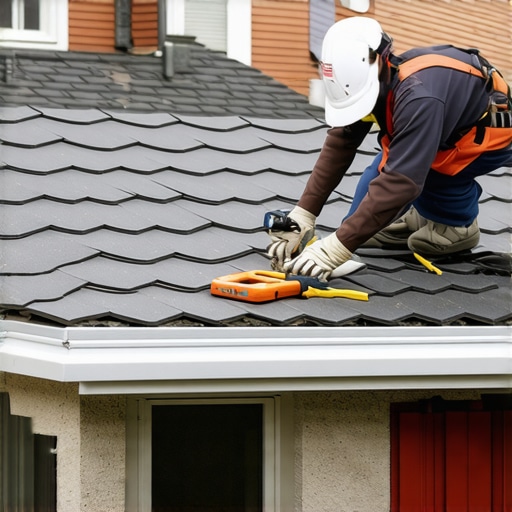
Walking on that roof felt like walking on a sponge. I knew exactly what I’d find underneath before I even pulled my flat bar out of my belt. The homeowner was complaining about a phantom leak in the foyer—one of those drips that only shows up during a sideways northeaster. To the untrained eye, the shingles looked fine. To me, the way the valley felt under my boots—that slight, nauseating give of delaminated plywood—told the real story. When I finally peeled back the top layers, the smell hit me first: that sour, earthy stench of wood that’s been wet for three years and has finally given up the ghost. The valley flashing wasn’t just leaking; it was a highway for water to bypass the entire drainage system. This is the reality most roofing companies won’t tell you: valleys are the most vulnerable parts of your roof because they are where the physics of water and the gravity of bad craftsmanship collide.
“Valleys shall be lined with metal or a minimum of two layers of underlayment… flashing shall be installed to divert water away from the vertical sidewall.” – International Residential Code (IRC) R905
The Physics of Failure: Why Valleys Are the ‘Kill Zone’
Most roofing failures don’t happen in the middle of a field of shingles; they happen at the transitions. In a roof valley, you have two planes of the house dumping hundreds of gallons of water into a single channel. If you’ve got a 10-square slope on one side and an 8-square slope on the other, that’s 1,800 square feet of surface area funneling water into a space about 18 inches wide. The water doesn’t just flow down; it rushes. And when water rushes, it creates hydrostatic pressure. This pressure forces water sideways, using capillary action to climb uphill under your shingles. If your local roofers didn’t account for this ‘back-climb,’ that water is finding your nails. Once it hits a nail—especially a shiner that missed the rafter—it follows the metal straight down into your attic insulation.
Tip 1: The ‘W-Metal’ Profile vs. Flat Flashing
In 2026, if your roofing professional is still using flat, 20-inch wide rolls of aluminum, fire them. A forensic-grade valley needs a ‘W’ profile. This is a piece of heavy-gauge metal with a one-inch rib standing right in the center. That rib acts as a physical barrier. When water from a steep slope hits the valley, it doesn’t just wash over to the other side and force itself under the opposite shingles; it hits that ‘W’ rib and is redirected straight down to the gutters. It prevents ‘cross-wash,’ which is the leading cause of internal rot in complex roof designs. Without that rib, a heavy downpour creates a wave that overcomes the shingle lap, turning your valley into a sieve.
Tip 2: The ‘No-Fly Zone’ for Fasteners
This is where the ‘trunk slammers’ get lazy. There is a 6-inch zone on either side of the valley center that should be a total ‘No-Fly Zone’ for nails. I’ve seen countless jobs where local roofers drive a coil-nailer right through the metal flashing just four inches from the center. They think the shingle will cover it. It doesn’t. Metal expands and contracts with the sun. A nail through metal creates a hole that grows over time. As the valley heats up to 150°F and cools down at night, that nail hole becomes a pump. Every time it rains, the thermal expansion allows a tiny amount of water to bypass the metal. Over five years, that’s enough to turn a 2×4 into a science experiment. Proper installation requires securing the flashing with clips or nails at the very outer edges, far away from the water channel.
“A roof is only as good as its flashing.” – Old Roofer’s Adage
Tip 3: The Hemmed Edge Technique
Water has a nasty habit called surface tension. It likes to cling to the underside of surfaces. If the edge of your valley metal is just a raw, flat cut, water will roll over the edge and crawl backward toward your roof deck. This is why we insist on a hemmed edge. By folding the outer inch of the metal back on itself, you create a ‘drip edge’ internal to the roof system. This break in surface tension forces the water to drop off the metal and stay on top of the underlayment. It sounds like a small detail, but in a forensic tear-off, the difference between a hemmed edge and a raw edge is the difference between a dry deck and a rotted fascia board. Most roofing companies skip this because it takes an extra five minutes per valley. Those five minutes are worth ten years of roof life.
Tip 4: Ice and Water Shield—The Secondary Defense
In 2026, the standard isn’t just felt paper; it’s a high-temperature, self-adhering polymer modified bitumen—commonly known as Ice and Water Shield. We don’t just put one layer down. For a valley that’s going to last thirty years, you need a double-layered approach. The first layer goes down the center of the valley, and the second layer laps over the metal edges. This creates a ‘sandwich’ that seals around every fastener. If the metal ever fails, the membrane is the backup. If your roofer is just throwing down some synthetic underlayment and calling it a day, they aren’t building a valley; they’re building a ticking time bomb. You want to see that rubberized material hugging the wood, sealed tight against the transition.
Tip 5: The California Cut vs. The Open Valley Controversy
There’s a lot of debate among local roofers about the ‘California Cut’ (where a shingle is used as the valley lining) versus an ‘Open Metal’ valley. From a forensic standpoint, the Open Metal valley wins every single time. Why? Debris. In a closed valley, pine needles, oak leaves, and grit from the shingles get trapped in the fold. This creates a wet mulch that holds moisture against the shingles, causing them to degrade from the bottom up. An open metal valley is self-cleaning. The smooth surface of the copper or coated steel allows debris to wash right into the gutters. It might not look as ‘seamless’ (a word I hate because roofs are never seamless), but it works. A roof is a machine for shedding water; don’t sacrifice function for a certain aesthetic that will eventually lead to a fungus-covered ceiling.
The Surgery: Why You Can’t Just ‘Caulk It’
When I see a homeowner with a bucket of roofing cement or a tube of silicone trying to fix a valley leak, I know they’re just delaying the inevitable. You cannot ‘Band-Aid’ a valley. It’s the highest-traffic water area on the house. Caulk dries out, cracks, and eventually traps water *inside* the repair, accelerating the rot. The only real fix is ‘The Surgery’—tearing it back to the deck, replacing the compromised wood, and flashing it properly with the tips mentioned above. If your roofer suggests a quick smear of black tar, they’re just looking for their next paycheck, not a long-term solution for your home. Protect your investment by demanding metal, proper fasteners, and the physics-based approach that keeps the inside of your house dry for the next two decades.