
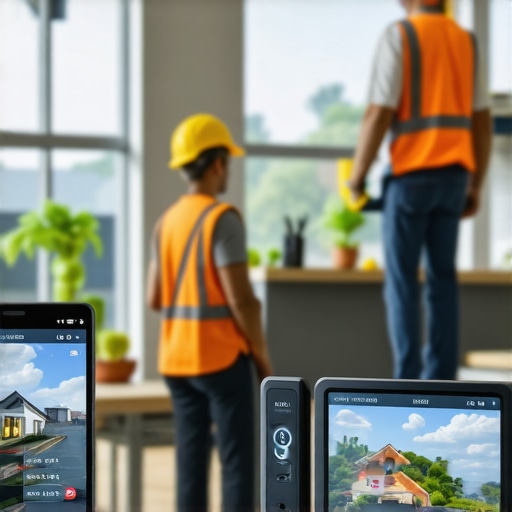
The Death of the Eyeball Estimate
I’ve spent the better part of three decades crawling over 12-pitch gables and digging out rotten step flashing from chimneys that were ‘guaranteed’ to never leak. If there is one thing I have learned while my knees slowly turned to gravel, it is that human error is the most common cause of roof failure. Most roofing companies still rely on a guy with a tape measure, a ladder, and a prayer. But as we move into 2026, the ‘old school’ way is becoming the ‘expensive’ way. Augmented Reality (AR) estimation isn’t just some tech-bro gimmick; it is the forensic tool we have been waiting for to stop the bleeding—both in terms of water and your bank account.
My old foreman used to say, ‘Water is patient. It will wait for you to make a mistake.’ He was a man who didn’t trust anything he couldn’t hit with a hammer, but even he would have been silenced by the precision of 2026 AR tools. These systems don’t just look at the surface; they analyze the geometry of a structure with a level of scrutiny that prevents the ‘shiners’—those missed nails that stay hidden until they rust through and start a slow-motion disaster in your attic.
1. Eliminating the ‘Short Square’ and Material Waste
In the trade, we talk in squares—a 100-square-foot area of roofing. A traditional roofer might walk your perimeter, eyeball the pitch, and add a 10% ‘waste factor’ because they aren’t sure how the valleys will eat up shingles. AR estimates change the physics of the order. Using high-resolution LiDAR and AR overlays, local roofers can now map every cricket, every valley, and every vent pipe to the millimeter. When the estimate says you need 34.2 squares, you order 34.2 squares. You aren’t paying for three extra bundles that end up sitting in your garage for a decade, and you aren’t paying for the labor of a crew sitting on their hands because they ran short on a Friday afternoon.
“A roof is only as good as its flashing, and the flashing is only as good as the measurement behind it.” – Old Roofer’s Adage
2. Forensic Visualization of Ice Dam Potential
For those of us in the North, the enemy isn’t just rain; it’s the ice dam. AR estimation tools in 2026 now integrate thermal mapping. When a contractor walks your roof with AR glasses, they can see the thermal bridging occurring where your attic insulation has failed. They aren’t just giving you a price for shingles; they are showing you the mechanism of failure. They can visualize where the warm air leakage is hitting the underside of the deck, causing that snow to melt, run down to the cold eave, and freeze. This allows them to quote for proper Ice & Water Shield placement and attic bypass sealing before the first nail is even pulled. It’s the difference between a band-aid and actual surgery.
3. Detecting Hydrostatic Pressure Points
Water doesn’t just fall; it moves through capillary action. It gets sucked up under shingles during wind-driven rain. 2026 AR software simulates wind flow over your specific roof’s architecture. It identifies high-pressure zones where standard nailing patterns won’t hold up. Most roofing companies just slap on shingles according to the manufacturer’s minimum. An AR-driven estimate highlights the need for six-nail patterns and reinforced underlayment in the very spots where your home’s unique shape creates a vacuum effect. We are talking about preventing the ‘shingle flap’ that leads to catastrophic uplift during a March gale.
4. Transparency: No More ‘Hidden’ Plywood Rot
The biggest scam in the industry is the mid-job ‘change order’ where the contractor tells you all your plywood is ‘oatmeal’ and it’s going to cost another $5,000. While no tool can see through shingles perfectly yet, AR systems in 2026 use acoustic sensors and moisture-density mapping to flag soft spots in the deck before the tear-off. When a local roofer hands you an AR estimate, they can show you a 3D heat map of your roof deck’s integrity. You see the rot before they even touch a pry bar. This transparency kills the ‘trunk slammer’ tactic of low-balling the bid only to gouge you once the house is unprotected.
“The International Residential Code (IRC) requires that roof coverings be applied in accordance with the manufacturer’s installation instructions, but physics requires they be applied to the reality of the climate.” – Modern Forensic Builder
5. Future-Proofing for 2026 Insurance Standards
Let’s talk about the money. Insurance adjusters are getting stingier. They don’t want to pay for a full replacement if they can argue for a patch. AR estimates provide a ‘Digital Twin’ of your roof. This data-rich model is much harder for an adjuster to argue with than a few grainy photos taken from a driveway. It proves the functional damage by showing the deformation of the shingle substrate that the naked eye misses. If you want your claim approved, you need the data that roofing companies using AR can provide. It turns a ‘he-said-she-said’ argument into a forensic certainty.
The Warranty Trap
Don’t be fooled by the ‘Lifetime Warranty’ stickers. Those warranties usually only cover material defects, not the 140°F heat in your attic that fried the shingles from the inside out because your ventilation was choked. An AR estimate ensures your ventilation is calculated correctly based on the actual cubic volume of your attic, not just a guess. If the ventilation is wrong, the warranty is void. Period. In 2026, if your roofer isn’t using AR to check the net free area of your soffit vents, they are setting you up for a denied claim five years down the road.
Ultimately, roofing is a game of millimeters and moisture. The 2026 AR estimate is the first real step toward a roof that actually lasts thirty years instead of fifteen. It’s about finding the man who cares enough about the physics of your home to use the best tools available. Stop hiring guys who estimate with their eyes; start hiring the ones who estimate with the truth.