
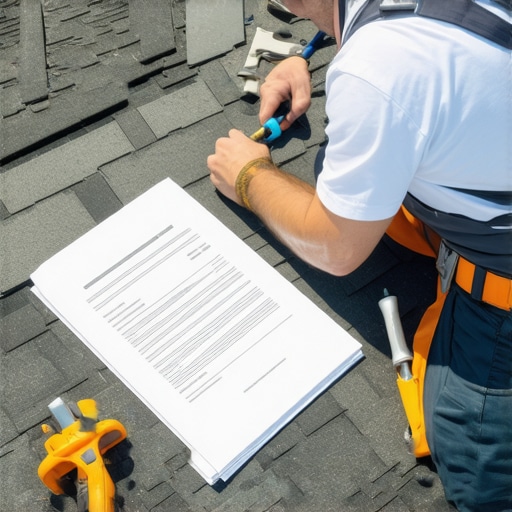
The Mirage of the ‘Lifetime’ Guarantee
My old foreman, a man whose hands looked like gnarled oak roots from forty years of tearing off cedar shakes, used to growl the same thing every morning while we loaded the hoist: ‘Kid, water doesn’t have a watch. It’s patient. It will sit in a valley and wait for you to miss one nail—just one—then it will spend the next three years eating the subfloor while the homeowner sleeps soundly.’ He was right. After twenty-five years in the forensic roofing game, I’ve seen more ‘lifetime’ warranties than I have square feet of sound decking. Most of them aren’t worth the recycled paper they’re printed on because they ignore the physics of how a roof actually dies in our humid, wind-lashed coastal climate.
When you start talking to local roofers about a 2026 project, you aren’t just buying shingles; you are buying a legal contract. But in the Southeast, where the sun beats down with enough UV radiation to turn standard asphalt into brittle crackers in a decade, that contract is often full of escape hatches. To truly vet a warranty, you have to look past the shiny brochures and understand the chemistry of the build. Most local roofing companies will offer you a manufacturer’s warranty, but they rarely mention that the fine print excludes ‘improper ventilation’—a catch-all term they use to deny claims when your attic hits 140°F and bakes the adhesive from the inside out.
“A roof is only as good as its flashing, and the warranty is only as good as the contractor’s documentation of that flashing.” – Old Roofer’s Adage
1. Scrutinize the ‘Shiner’ and Installation Errors
The first way to vet a warranty is to ask about their quality control process regarding ‘shiners.’ In the trade, a shiner is a nail that missed the rafter or the structural member and is just hanging out in the attic space. During a cold snap or a heavy humidity spike, these cold metal nails act as condensation points. Water drips off the nail, hits the insulation, and eventually rots the ceiling. If your roofing companies aren’t performing a mid-job forensic walk-through, that manufacturer’s warranty won’t cover the resulting mold because it’s an ‘installation defect.’ You need a local roofer who provides a workmanship warranty that mirrors the length of the material warranty. If they offer 50 years on the shingle but only 2 years on the labor, they are telling you exactly how much they trust their crew’s ability to hit the nail line.
2. The Physics of Wind-Driven Rain and Secondary Water Resistance
In our tropical corridor, we don’t just get rain; we get pressurized water delivery. Mechanism zooming reveals that at 70 mph, rain doesn’t fall; it moves horizontally and even upward. It uses capillary action to suck itself under the laps of your shingles. Most 2026 warranties require a ‘Secondary Water Resistance’ (SWR) layer to be valid. This isn’t just felt paper. We’re talking about a self-adhering polymer modified bitumen membrane that seals around every nail shank. If your local roofers are still pushing old-school #30 felt, they are effectively voiding the high-wind portion of your warranty before the first square is even laid. You want to see ‘stainless nails’ in the quote if you’re within five miles of the salt air. Galvanic corrosion will eat standard galvanized fasteners in seven to ten years, causing the shingles to slide off the deck during the next big blow.
3. Thermal Expansion and the ‘Cricket’ Requirement
Any roof with a chimney wider than 30 inches requires a ‘cricket’—a small peaked structure behind the chimney to divert water. I’ve performed autopsies on dozens of roofs where the local roofing companies skipped the cricket to save four hours of labor. The result? A ‘dead valley’ where debris collects, holds moisture, and creates a hydrostatic head of water that eventually forces its way over the top of the flashing. The 2026 warranty standards from major manufacturers like GAF or CertainTeed are becoming stricter about these structural diversions. If your contractor doesn’t mention the IRC R905.2.8.3 code requirement for crickets, they aren’t vetting your warranty; they’re just trying to get off the roof before the inspector shows up.
“The roof covering shall be installed in accordance with the manufacturer’s published installation instructions and this code.” – International Residential Code (IRC)
4. The ‘No-Dollar-Limit’ (NDL) Reality Check
Finally, you must distinguish between a pro-rated warranty and a No-Dollar-Limit (NDL) warranty. Most local roofers sell you on the ‘Lifetime’ promise, but after year ten, the value of that warranty drops faster than a lead weight. By year fifteen, they might only cover 20% of the material costs and zero percent of the labor to tear off the old mess. A true 2026-ready warranty for a high-end replacement should be non-prorated for at least 20 years. This covers the ‘Surgery’—the full tear-off and replacement—not just a ‘Band-Aid’ of caulk and prayer. When interviewing roofing companies, ask to see a claim sample. If they can’t show you how a client got a full replacement after twelve years, the warranty is just a marketing ghost. Remember, water is patient, and your roofer should be too—taking the time to flash the valleys and eaves with the precision of a surgeon so that the warranty is never actually needed.