
The Morning After the Gale: Why Your Doorbell Is About to Break
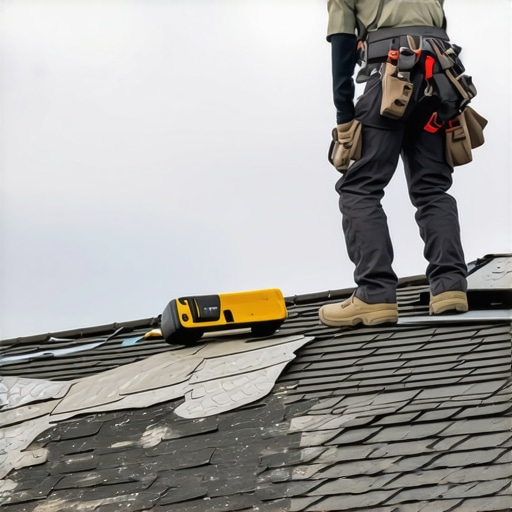
The wind of 2026 wasn’t just a storm; it was a stress test your house probably failed. I’ve spent twenty-five years crawling over pitch-black asphalt in the middle of July, and if there’s one thing I know, it’s that a storm brings out the best in nature and the worst in roofing companies. You see them everywhere now, don’t you? Those white trucks with out-of-state plates, guys in polo shirts claiming they can get you a ‘free roof.’ Listen to me: nobody gives away a roof for free. You pay for it in the long run when your insurance premiums skyrocket or when that ‘free’ roof starts leaking three years from now because a ‘shiner’ is slowly rusting through your decking. My old foreman used to say, ‘Water is patient. It will wait for you to make a mistake.’ He wasn’t talking about a hole you can see from the ground. He was talking about the microscopic fractures in the sealant strip that happen when the wind gets under a shingle and starts it ‘chattering.’ Imagine a shingle flapping up and down at sixty miles per hour. It’s not just a piece of material; it’s a lever, and it’s prying at the fasteners with every gust. By the time you see a brown spot on your ceiling, the wood underneath has been soaking for months, smelling like a swamp and turning your OSB into something that looks and feels like wet oatmeal.
“Proper fastening is the most important element in wind resistance. A single poorly placed nail can reduce the wind rating of an entire square by fifty percent.” – National Roofing Contractors Association (NRCA)
1. The Invisible Lift: Shingle Chatter and Sealant Fatigue
When the 2026 winds ripped through our neighborhoods, they didn’t always take the shingles with them. Often, they just broke the bond. Most modern shingles rely on a thermoplastic sealant strip—a line of glue that activates in the sun. During high-wind events, the uplift pressure creates a Bernoulli effect over your ridge. This suction pulls at the shingles. If the wind is strong enough, it breaks that thermal bond. Even if the shingle lays back down, the seal is gone. It’s now a ‘flapper.’ The next time it rains, the wind will push water uphill—yes, uphill—under that shingle. This is called capillary action, and it’s how you end up with rotten plywood despite having all your shingles intact. Local roofers who know their trade will perform a ‘pull test’ to see if that sealant has failed. If you can lift the shingle with one finger, your roof’s primary defense is compromised. In our humid coastal climate, once that seal is broken, salt air begins to eat at the exposed nail heads, leading to premature failure of the entire system.
2. The Valley of Death: Flashing and Crickets
Every roof has a weak point, usually where two planes meet. We call this a valley. After the 2026 winds, these are the first places I check. The wind forces debris—pine needles, grit, leaves—into the valley. This creates a dam. When the rain follows the wind, the water backs up behind this dam and finds the flashing. If your local roofing company didn’t install a proper ice and water shield or used cheap galvanized flashing instead of stainless steel, the wind-driven rain will find its way into your attic. Another spot is the cricket—that small peaked structure behind your chimney. It’s designed to divert water, but in high winds, it acts like a sail. If the flashing wasn’t integrated properly into the masonry, the wind literally peels it back, opening a direct line for water to pour down the side of your chimney and into your living room. Walking on a roof after a storm, I can usually smell the dampness before I see it. It’s a heavy, musty scent that tells me the flashing has failed.
“Flashings shall be installed in a manner that prevents moisture from entering the wall and roof through joints in copings, through moisture-permeable materials and at intersections with parapet walls and other penetrations.” – International Residential Code (IRC) R903.2
3. The ‘Shiner’ Epidemic and Fastener Fatigue
Let’s talk about ‘shiners.’ A shiner is a nail that missed the rafter or was driven into the wrong part of the shingle. When the wind is gusting at 80 miles per hour, your roof deck is actually flexing. If the nails aren’t driven perfectly into the ‘common bond’—the narrow strip where the shingle is strongest—the wind will pull the shingle right over the head of the nail. This is called a ‘pull-through’ failure. I’ve seen entire squares of shingles lying in a yard with the nails still perfectly in place on the roof. That’s a sign of a bad install. After the 2026 winds, you need to check your gutters. If you see more than a handful of granules—that stuff looks like coffee grounds—it means your shingles were vibrating so hard they scrubbed themselves bald. Those granules protect the asphalt from UV radiation. Without them, the sun will bake your shingles until they crack like a dry saltine cracker. A reputable roofing professional won’t just look for missing pieces; they’ll look for the physical evidence of mechanical stress on the fasteners.
The Storm Chaser Defense: How to Not Get Scammed
After a major wind event, the ‘storm chasers’ descend. They’ll offer to pay your deductible. Here’s a trade secret: that’s insurance fraud, and it usually means they’re cutting corners on the materials. They’ll use ‘seconds’ or shingles that have been sitting in a warehouse for five years. They won’t replace the drip edge, and they definitely won’t install a cricket where one is needed. If you’re looking for roofing companies, ask them about their uplift ratings. Ask them if they use six nails per shingle instead of the standard four. In a high-wind zone, that extra two cents per shingle is the difference between a roof that lasts twenty years and one that ends up in your neighbor’s pool. Don’t sign a contingency agreement just to get a ‘free’ inspection. A real local pro will give you a forensic breakdown of the damage without holding your insurance claim hostage. Protect your home, protect your deductible, and for heaven’s sake, keep an eye on those valleys. Water is waiting, and the 2026 winds just gave it a map to your living room.