
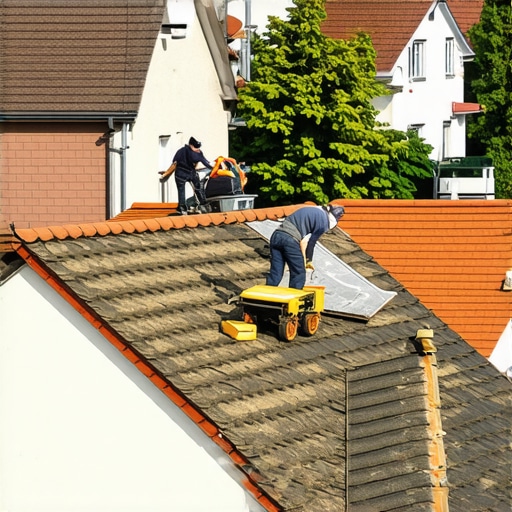
The Phantom in the Attic: Why Your Roof is Screaming
It usually starts at 2:00 AM. You’re lying in bed, the house is silent, and then you hear it—a sharp, metallic crack that sounds like a dead branch snapping, followed by a low, rhythmic thrumming. You call out for local roofers, hoping for a simple fix, but most just want to sell you a new layer of shingles without ever sticking their head in your crawlspace. My old foreman used to say, ‘Water is patient. It will wait for you to make a mistake.’ But noise? Noise is honest. Noise is the sound of physics trying to tear your house apart. As a forensic investigator who has spent three decades smelling rotting OSB and roasting in 150-degree attics, I can tell you that the ‘ghosts’ in your ceiling are actually structural failures in progress. By 2026, we are seeing a massive uptick in noise complaints, and it isn’t because the materials are worse—it’s because the installation ‘pros’ are getting lazier. Here is the forensic autopsy of why your roof won’t shut up.
1. Thermal Expansion and the ‘Popping’ Deck
The most common complaint I hear involves a loud, structural popping sound during the transition from a hot afternoon to a cool evening. This isn’t just the house ‘settling.’ This is the coefficient of linear thermal expansion at work. When local roofers jam plywood or OSB sheets tight against one another without the mandatory 1/8-inch gap, they create a ticking time bomb. As the sun beats down on your roof, those sheets expand. With nowhere to go, they press against each other until the friction is overcome by the force of expansion, resulting in a violent bang as the wood buckles or slides. This movement exerts tremendous shear force on the fasteners. Every time you hear that pop, a nail is potentially being ‘backed out’ of the rafter. In the trade, we call these ‘shiners’ when they miss the wood entirely, but even a well-placed nail can’t hold back the movement of an entire roof deck.
“The roof shall be designed and constructed to resist the specified wind loads and shall be installed in accordance with the manufacturer’s instructions.” – International Residential Code (IRC) R905
This isn’t just a suggestion; it’s the difference between a silent home and a structural headache. If your roofing companies didn’t use H-clips or leave proper spacing, your roof is essentially a giant wooden accordion struggling to breathe.
2. The ‘Shiner’ Symphony: Wind Uplift and Chattering Shingles
If the noise you hear is more of a rhythmic flapping or a metallic vibration during high winds, you’re likely dealing with poor fastening patterns. I’ve walked on roofs where the shingles felt like a loose deck of cards. When a roofer is ‘gunning’ shingles too fast, they often miss the common bond—that narrow strip where two layers of the shingle overlap. When the nail is placed too high, it provides zero wind resistance. This creates a phenomenon called wind uplift. As air moves over the peak of your roof, it creates a low-pressure zone (Bernoulli’s principle). If the shingles aren’t locked down by their sealant strip and proper nailing, they begin to vibrate. This ‘chattering’ isn’t just annoying; it’s the sound of the asphalt mats fatiguing. Each flap breaks the ceramic granules off the surface, exposing the bitumen to UV rays. Within a few months, those shingles will be as brittle as a cracker. I once investigated a forensic site where the homeowner complained of a ‘humming’ sound; it turned out the local roofers had installed the drip edge without enough fasteners, turning the entire perimeter of the house into a giant reed for the wind to play.
3. The Attic Bypass and Pressure Imbalance
The third reason for 2026 roof noise is perhaps the most overlooked by standard roofing companies: pressure differentials. In cold climates, we see ‘attic bypasses’ where warm, moist air from the living space leaks into the attic. This creates a pressure imbalance. When a gust of wind hits the ridge vent, it can create a momentary vacuum. If the attic isn’t properly balanced with soffit intake, the pressure difference can actually cause the ceiling drywall to flex or the roof sheathing to ‘oil-can’—a term we use for metal or thin wood snapping back and forth.
“A roof is only as good as its flashing and its ability to breathe.” – Old Roofer’s Adage
This noise is often a dull thud or a groaning sound. It’s the house gasping for air because the ‘pro’ you hired didn’t understand the relationship between intake and exhaust. They saw a roof as a hat; I see it as a lung. If you ignore these sounds, you aren’t just living with a noisy house—you’re watching your R-value plummet and your energy bills climb as that moisture-laden air rots your rafters from the inside out. Fixing this isn’t about more caulk; it’s about ‘surgery’—tearing out the blocked vents and restoring the physics of the attic. Don’t let a ‘trunk slammer’ tell you it’s just the wind. Your roof is talking to you; you’d better start listening before the silence of a total collapse takes over.