
The Molecular Meltdown: Why Your Roof is Turning to Dust and How Local Roofers Can Stop It
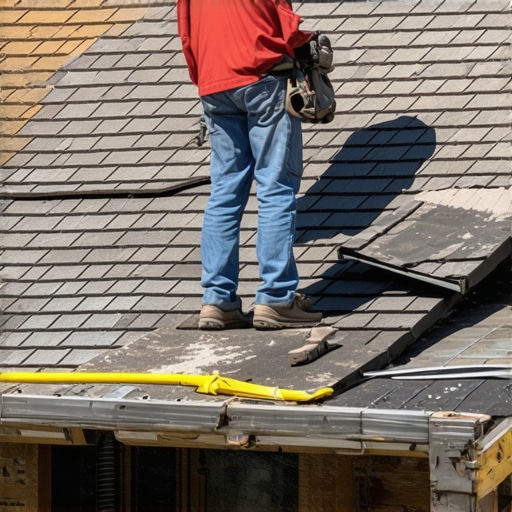
Walking on that roof felt like treading on parched, cracked earth; I could hear the shingles snapping under my boots like dry leaves in November. I didn’t need a moisture meter or a thermal camera to tell me the story. One look at the brittle, greyish-white edges of the fiberglass mat told me exactly what I’d find: a total molecular collapse of the bitumen. In my 25 years inspecting decks from Vegas to the Texas panhandle, I’ve seen 20-year shingles give up the ghost in six years because of the relentless desert UV. Most roofing companies will just quote you a tear-off, but if you understand the physics of failure, you can actually fight back against the 2026 climate trends.
The Physics of Sun Damage: Mechanism Zooming into the Shingle
To understand why your roof is failing, you have to look past the surface. Asphalt shingles aren’t just solid slabs; they are a complex sandwich of a fiberglass mat, asphalt (bitumen), and mineral granules. In the high-heat zones of the Southwest, UV radiation acts like a microscopic wrecking ball. The photons smash the long-chain hydrocarbon bonds in the asphalt. As these bonds break, the volatile oils—the secret sauce that keeps your roof flexible—literally evaporate. This process, known as photo-oxidation, leaves behind a brittle, carbonized shell. When the sun goes down and the temperature drops 40 degrees in three hours, the material tries to contract. But because it has lost its elasticity, it can’t. It cracks. It curls. It ‘cups.’ This isn’t just cosmetic; it’s the end of your secondary water barrier. Local roofers often see this as ‘granule loss,’ but that’s just the symptom. The disease is the sun-cooked bitumen underneath.
“Asphalt shingles shall be designed and manufactured to withstand the thermal stresses of the climate in which they are installed, with specific attention to the degradation of the bitumen binder due to ultraviolet exposure.” – International Residential Code (IRC) R905.2
Fix 1: Thermal Decoupling via Advanced Ventilation
The first and most effective fix for sun-damaged shingles isn’t on the roof—it’s under it. In a 110°F desert afternoon, your attic can easily hit 150°F. This creates a ‘thermal sandwich’ where the shingle is being cooked from the top by the sun and from the bottom by the trapped attic heat. Most roofing companies install the bare minimum of ‘turtle vents’ or a single ridge vent, but that’s not enough. You need true cross-ventilation. By increasing the Net Free Venting Area (NFVA) and ensuring a 1:150 ratio of intake to exhaust, you create a ‘cool’ deck. We call this thermal decoupling. When you pull cool air through the soffits and push it out the ridge, you lower the shingle temperature by up to 20 degrees, significantly slowing the evaporation of those volatile oils.
Fix 2: Reflective Granule Restoration and UV Coatings
If you’ve noticed a ‘shiner’—a nail head poking through because the shingle has shrunk—you’re already in trouble. However, for roofs that are just starting to show signs of oil depletion, specialized UV-reflective coatings can be a lifesaver. These aren’t just ‘paint.’ They are high-solids silicone or elastomeric membranes that reflect up to 85% of solar radiation. By preventing the photons from reaching the asphalt, you stop the chemical breakdown in its tracks. Local roofers are increasingly using these as a ‘bridge’ to extend a roof’s life by another 5 to 10 years, especially in 2026 where material costs have skyrocketed. You’re effectively putting a SPF 50 sunscreen on your house.
Fix 3: Strategic Perimeter Shielding and Cricket Installation
Sun damage is never uniform. The south-facing slopes always fail first. A smart fix used by high-end roofing companies is ‘zonal replacement.’ Instead of a full tear-off, we focus on the high-stress areas. We often install a ‘cricket’—a small peaked structure—behind chimneys or large obstructions to prevent water from pooling on sun-weakened spots. In these zones, we also swap out standard galvanised flashing for heavy-duty copper or stainless steel, as the heat cycles in the Southwest can cause lesser metals to warp and pull away from the ‘valley’ where the most water travels. If the valley is brittle from the sun, the slightest movement will cause a catastrophic leak.
“Ventilation of the attic space is the single most important factor in the longevity of an asphalt roof system.” – NRCA (National Roofing Contractors Association) Manual
Fix 4: Upgrading to Polymer-Modified (SBS) Asphalt
When the damage is too far gone and a replacement is the only option, don’t let a ‘trunk slammer’ sell you standard 3-tab shingles. The fix for 2026 is SBS (Styrene-Butadiene-Styrene) modified asphalt. Think of it like rubberized shingles. These are engineered to handle ‘thermal shock’—the rapid expansion and contraction caused by desert temperature swings. While a standard shingle becomes brittle, SBS stays pliable. It’s the difference between a cracker and a gummy bear. Local roofers who know their salt will recommend these because they have a much higher resistance to granule loss and UV-induced cracking. They cost more per square, but they won’t turn into potato chips in five years.
The ‘Lifetime’ Warranty Trap
Be skeptical when roofing companies pitch a ‘Lifetime Warranty’ on a sun-scorched roof. If you read the fine print, most of these warranties have ‘climate exclusions’ or ‘proration’ that starts as early as year five. They don’t cover ‘thermal shock’ or ‘UV degradation’ in extreme zones. Your best defense isn’t a piece of paper; it’s proper installation. If the roofer misses the ‘nail line’ and creates a ‘shiner,’ no warranty in the world will save you when the shingles start to slide down the deck because the heat has softened the adhesive strip. You need a contractor who understands that in the desert, the sun is a physical force, not just a weather condition.
This post sheds crucial light on the complexities of sun damage and the importance of proactive maintenance for roofs in hot climates. I agree that attic ventilation plays a pivotal role in managing heat buildup, which can significantly extend the lifespan of shingles. I have personally seen how poorly ventilated attics accelerate the deterioration process, especially with the relentless sun in the Southwest. The idea of using reflective UV coatings as a kind of SPF for roofs is particularly interesting; I wonder, though, how often they need to be reapplied to maintain their effectiveness over the years. Has anyone here tried these coatings, and what has been your experience regarding their durability and cost-effectiveness? It seems like choosing the right shingles, like SBS-modified types, is a smart move, but I’m curious — how do these options compare in terms of long-term costs and performance in extreme heat zones?