
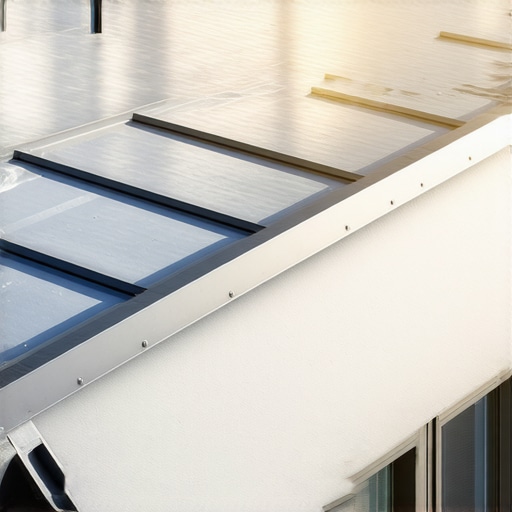
The Autopsy of a Leaking Chimney: Why Your Flashing is Bleeding Red
I was standing on a steep-slope coastal property last Tuesday, the kind where the humidity feels like a wet wool blanket and the salt air eats car engines for breakfast. The homeowner was complaining about a brown stain on the ceiling of his master bedroom. Most roofing companies would have walked up there, slapped a bucket of plastic cement over the metal, and cashed the check. But when I peeled back the first layer of shingle, I saw it: the flashing looked like it had been pulled out of a shipwreck. It wasn’t just old; it was chemically defeated. Rust had eaten a hole the size of a nickel right through the seat of the valley.
My old foreman used to say, ‘Water is patient. It will wait for you to make a mistake, and then it will spend the next ten years exploiting it.’ In our line of work, that mistake is usually choosing the wrong metal for the environment. When we talk about roofing failures heading into 2026, we aren’t talking about shingles blowing off—we’re talking about the slow, silent corrosion of the metal components that are supposed to keep the water out. If your flashing dies, your roof dies, regardless of how much you paid for those fancy architectural shingles.
The Physics of Failure: How Rust Actually Works
To understand how to stop rust, you have to understand the forensic reality of a roof deck in a high-moisture zone. We are dealing with galvanic corrosion and oxidation. When oxygen, water, and metal meet, the electrons start moving. In coastal areas, the salt acts as a catalyst, accelerating this process until your ‘protective’ metal becomes a porous sponge. Local roofers often ignore the electrochemical compatibility of materials. If you put a copper pipe next to a galvanized steel flashing, you’ve essentially built a battery that eats itself. This isn’t just a cosmetic issue; it’s a structural death sentence. Once that iron oxide takes hold, it expands, lifting the edges of your shingles and creating a cricket that actually traps water instead of diverting it.
“A roof is only as good as its flashing; the intersection of materials is where the battle against gravity and time is won or lost.” – Old Roofer’s Adage
1. The Stainless Steel Mandate
If you are within five miles of the ocean, galvanized steel is a joke. By 2026, the industry standard for high-end roofing companies should be nothing less than 316-grade stainless steel. While standard galvanized metal relies on a thin zinc coating—which is literally designed to sacrifice itself—stainless steel contains molybdenum to resist chlorides. It costs more per square, but it’s the difference between a 30-year roof and a 7-year leak. When I see a shiner (a missed nail) through a piece of cheap galvanized metal, I know that hole will be a rusted-out leak point within three seasons.
2. High-Performance Kynar 500 Coatings
For those who want color options, we look at PVDF-based coatings like Kynar 500. This isn’t your hardware store spray paint. It’s a resin-based finish that creates a molecular bond with the metal. It’s designed to withstand the brutal UV radiation that cooks a roof at 150°F and the salt spray that turns cheap metal into powder. When local roofers tell you they can just ‘paint’ your old flashing to stop the rust, they are selling you a lie. True protection happens at the factory level, baked on to prevent oxygen from ever touching the substrate.
3. The ‘Reglet’ Strategy: Mechanical over Chemical
Too many roofing contractors rely on a bead of caulk to seal the top of a flashing against a brick wall. That caulk will bake, crack, and fail in two years. The forensic fix is a reglet—a saw-cut groove into the mortar or stone where the metal is physically tucked in and counter-flashed. This uses the physics of a ‘drip edge’ to ensure water falls over the metal rather than relying on a chemical bond that can’t handle the thermal expansion of a hot summer day.
“Flashings shall be installed in a manner that prevents moisture from entering the wall and roof through joints in copings, through moisture-permeable materials, and at intersections with dissimilar materials.” – International Residential Code (IRC) R903.2
4. Eliminating Dissimilar Metal Contact
This is where the ‘trunk slammers’ get caught. You cannot use aluminum nails in copper flashing. You cannot use galvanized nails in stainless steel. The resulting electrolysis will eat the fastener until it snaps, leaving the flashing to flap in the wind. 2026 standards require EPDM gaskets or isolation tapes between different metal types. If your contractor doesn’t have a roll of isolation tape on their truck, they aren’t prepared to stop rust.
5. The Secondary Water Resistance (SWR) Layer
Finally, we have to talk about what’s under the metal. If the metal does rust, your last line of defense is a high-temp, self-adhering modified bitumen underlayment. This ‘ice and water shield’ seals around the fasteners. Even if the metal develops a pinhole from corrosion, the SWR prevents that water from reaching the plywood. It’s the backup parachute every house needs.
The Cost of the Quick Fix
Ignoring rust is like ignoring a termite infestation; it only gets more expensive every time it rains. A full ‘surgery’—tearing off the shingles, replacing the rotted wood, and installing proper stainless flashing—might cost four times what a ‘Band-Aid’ caulk job costs. But the Band-Aid guarantees you’ll be replacing the entire ceiling in three years. Choose a roofing partner who understands the chemistry of the coast, not just the price of a hammer.