
The Anatomy of a Slow Drip: Why Your Roof is Dying Behind the Drywall
That rhythmic thump-thump-thump on your bedroom ceiling at 3 AM isn’t just annoying; it’s the sound of your equity rotting away. Most homeowners think a leak is a hole. As a forensic roofer who has spent three decades crawling through 140°F attics and peeling back layers of neglected history, I can tell you: a leak is rarely a hole. It is a failure of physics. My old foreman used to say, ‘Water is patient. It will wait for you to make a mistake.’ Usually, that mistake is thinking a $5 tube of hardware-store caulk from 1998 can handle the thermal expansion of a modern roof deck.
When we talk about local roofers and the call-backs they hate most, it’s always the ‘nuisance leak.’ These aren’t the gushers from a tree limb through the rafters; they are the insidious trickles caused by capillary action. Water hits a surface, finds a microscopic gap, and tension pulls it upward and sideways, defying gravity to find your insulation. By the time you see a brown ring on your ceiling, the roofing system has likely been compromised for months. The plywood is already soft, smelling of damp earth and decay, and the ‘shiners’—those missed nails—are weeping rust onto your R-30 batts.
The Physics of Failure in Cold Climates
Since we are dealing with the harsh freeze-thaw cycles of the north, your roof isn’t a static object. It’s a living, breathing lung. In the winter, your attic air leakage creates a ‘thermal bridge’ that melts snow from the bottom up, creating ice dams. This water pools behind the dam and searches for a way in. This is where roofing companies often fail—they rely on standard shingles when they should be looking at the Ice & Water Shield and the sealant integrity at the valley and cricket joints.
“A roof is only as good as its flashing, and flashing is only as good as the sealant that bridges the gap between disparate materials.” – Forensic Roofing Institute
The 2026 Sealant Revolution: Beyond the Caulk Gun
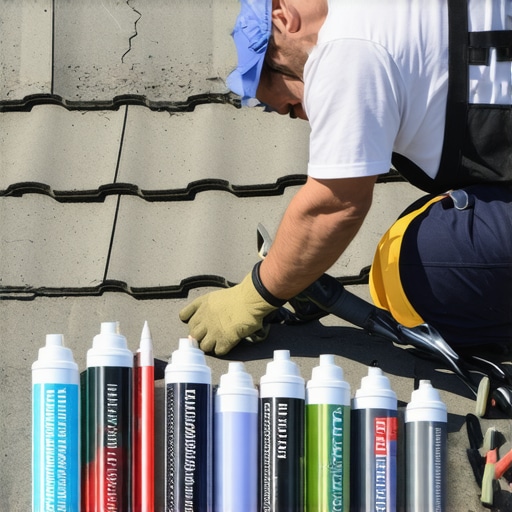
By 2026, the chemistry of roofing has shifted. We no longer just ‘plug’ gaps. We create molecular bonds. If you’re calling local roofers for a repair, you need to ensure they aren’t using outdated asphalt-based mastics that crack within two seasons. Here are the top five sealants currently dominating the trade for high-performance leak stopping.
1. Polyether-Based Hybrid Sealants
These are the heavy hitters. Unlike silicone, they can be applied to damp surfaces—perfect for when you’re on a roof in a drizzle trying to stop a leak before the drywall collapses. They have zero VOCs and don’t shrink. When the sun beats down and that square of shingles expands, a polyether sealant stretches without losing its grip on the flashing.
2. High-Solids Silicone (The UV Shield)
If your leak is near a skylight or a chimney where the sun exposure is brutal, silicone is the answer. The 2026 formulations have higher solids content, meaning they don’t ‘gas out’ and become brittle. It remains flexible even when the thermometer hits sub-zero, preventing the bond from snapping during ‘thermal shock’ events.
3. Tri-Polymer Sealants
This is what we use when we don’t know exactly where the water is coming from. It sticks to everything: Kynar-finished metal, asphalt shingles, and masonry. It’s stringy, messy, and tough as nails. It’s the closest thing to ‘liquid roofing’ we have in a tube.
4. MS Polymer (Modified Silane)
The ‘chameleon’ of sealants. It combines the best of polyurethane and silicone. It’s paintable, which is vital for aesthetic repairs on fascia boards or around high-visibility vents. It doesn’t yellow, and it handles joint movement up to 50%.
5. Butyl Rubber Mastic (The Hidden Barrier)
You won’t see this on the surface. We use this for ‘lap sealing’ metal or under step flashing. It never truly hardens, staying tacky for decades. It’s the ultimate defense against wind-driven rain that tries to push its way under your starter strip.
The Autopsy: Why Most Repairs Fail
I recently did a tear-off where the homeowner had tried to fix a leak around a plumbing vent four times. Each time, they just gopped more ‘wet-or-dry’ plastic cement over the old stuff. When I pulled it up, it looked like a layered cake of failure. Underneath it all, the original shiner nail was rusted through, and the water was traveling six feet down the rafter before dripping.
“The International Residential Code (IRC) Section R903.2 requires all roof flashings to be installed in a manner that prevents moisture from entering the wall or roof through joints and intersections.” – IRC Building Standards
The mistake wasn’t the material; it was the lack of surgery. You have to cut out the rot. You have to clean the surface. If you’re hiring roofing companies, watch their prep work. If they don’t have a wire brush and a rag of denatured alcohol, they aren’t fixing your leak; they’re just hiding it for the next guy to find.
The Cost of Hesitation
A $300 repair today using a high-grade 2026 hybrid sealant is a bargain. If you wait, you’re looking at a $15,000 deck replacement. When water sits on plywood, it triggers a fungal feast. I’ve seen ‘oatmeal’ roofs where the wood was so soft I could put my thumb through it. Don’t let your home become a statistic of neglect. Get a veteran on the roof, find the source of the capillary draw, and seal it with the right chemistry. Your attic—and your wallet—will thank you.