
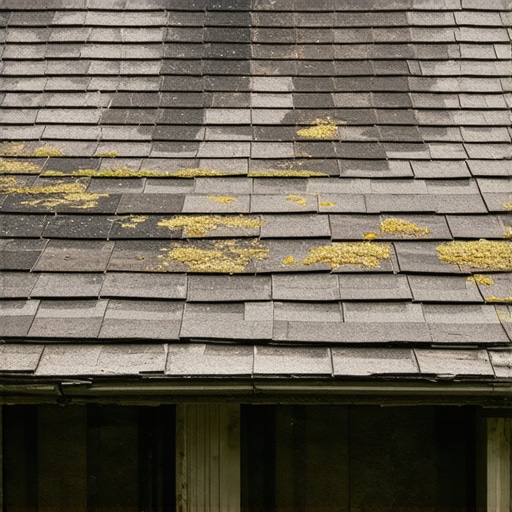
The Drip That Isn’t a Leak: The 2026 Moisture Crisis
It starts with a rhythm. A slow, syncopated tap-tap-tap hitting the drywall above your dining room table. You call the usual suspects—the roofing companies that sent you a flyer last week—and they tell you that you need a new roof because your shingles are ‘shot.’ But here is the secret most local roofers won’t tell you: that water isn’t coming from the sky. It’s coming from inside the house. As we approach 2026, we are seeing a massive surge in what I call the ‘Moisture Trap,’ a direct result of newer, tighter building codes and ‘energy-efficient’ attic upgrades that essentially turn your roof into a terrarium. My old foreman used to say, ‘Water is a ghost; it finds the holes you didn’t even know you left,’ and today, those holes are often the ones we’ve plugged too well.
“A roof is only as good as its flashing, but a house is only as healthy as its breath.” – Old Roofer’s Adage
1. The Frost Ghost in the Attic
If you live in a cold climate, the first sign of the 2026 Moisture Trap isn’t a stain; it’s a winter frost. When roofing companies pack your attic with blown-in cellulose to hit higher R-values, they often inadvertently block the soffit vents. This prevents the intake of cold air. Meanwhile, warm, humid air from your shower or kitchen migrates upward through ‘attic bypasses’—small gaps around light fixtures or plumbing stacks. This warm air hits the freezing underside of your roof deck and flash-freezes. When the sun hits that roof the next morning, you get ‘indoor rain.’ This isn’t a shingle failure; it’s a physics failure. The OSB (Oriented Strand Board) begins to act like a sponge, drawing moisture into its core through capillary action. Once that wood reaches a moisture content of 20%, the structural resins begin to break down, and you’re no longer walking on a roof; you’re walking on a layer of wet cardboard.
2. The ‘Shiner’ Epidemic
One of the most damning pieces of forensic evidence I find during a roof inspection is the ‘shiner.’ A shiner is a nail that missed the rafter and is sticking through the roof deck into the attic space. In a properly ventilated home, a shiner is a minor nuisance. In a Moisture Trap home, that cold steel nail acts as a thermal bridge. It becomes the coldest point in the attic, attracting every molecule of water vapor in the air. Over time, the nail rusts, and the moisture travels down the shank, rotting the wood around the penetration. When you see local roofers just slapping new shingles over old wood without checking for these ‘sweating nails,’ you are looking at a repair that will fail within three seasons. The rust stains on your attic floor are the footprints of a failing system.
3. OSB Telegraphing and Deck Swelling
By 2026, many of the ‘fast-build’ homes from the last decade will show ‘telegraphing.’ This is when you look at your roof from the street and can see the rectangular outline of every single sheet of plywood or OSB. This happens because the edges of the boards are soaking up the trapped humidity in the attic. Wood expands when it gets wet, but it doesn’t always shrink back to its original shape. This expansion creates ridges that lift the shingles, breaking the sealant strip. Once that seal is broken, wind-driven rain can blow sideways under the shingle. It’s a vicious cycle: the moisture trap weakens the roof, and the weakened roof lets in more moisture.
“The building envelope must be considered as a single, integrated system where heat, air, and moisture flows are inextricably linked.” – IRC Building Code Commentary
4. The Cloying Scent of ‘Attic Earth’
If you open your attic hatch and it smells like a damp forest floor, you’ve already lost the battle. That earthy, slightly sweet smell is the scent of basidiomycetes—fungi that are literally eating your rafters. Most roofing companies focus on the ‘top side’ (the shingles), but the forensic veteran looks at the ‘bottom side.’ I’ve seen 2×4 rafters that I could poke a screwdriver through because the lack of a cricket behind a wide chimney or poor ridge ventilation trapped a pocket of stagnant, wet air. This stagnant air creates a microclimate where mold thrives. If you see black staining on your rafters, don’t just bleach it. You have to change the air-exchange rate of the entire attic.
5. The Ice Dam Paradox
Most homeowners think ice dams are caused by the roof being too cold. It’s the opposite. Ice dams are a symptom of a ‘hot roof.’ When your attic is a moisture trap, it’s usually because warm air is stuck there. This heat melts the snow on the roof, which then runs down to the cold eaves and freezes, creating a dam. The water then backs up under the shingles through hydrostatic pressure. In the 2026 Moisture Trap scenario, even a ‘good’ roof will leak if the thermal envelope is breached. You can’t just throw more Ice & Water Shield at the problem; you have to fix the thermal leakage from the living space below. Don’t let local roofers sell you a ‘heavy-duty’ shingle to fix an insulation problem.
How to Avoid the Trap
To avoid being a victim of these failures, look for roofing companies that use a manometer to check attic pressure or those who talk about ‘Net Free Ventilating Area’ (NFVA). If they don’t mention your soffit-to-ridge ratio, they aren’t roofing experts; they are just shingle installers. You need a contractor who understands the vapor drive of a house. When we tear off an old system, we’re looking for ‘blackened’ wood around the valleys and peaks. If we find it, we don’t just replace the wood; we redesign the airflow. Anything less is just putting a designer band-aid on a structural wound. The cost of waiting is more than just a new roof; it’s the cost of your home’s structural integrity and the air your family breathes.