
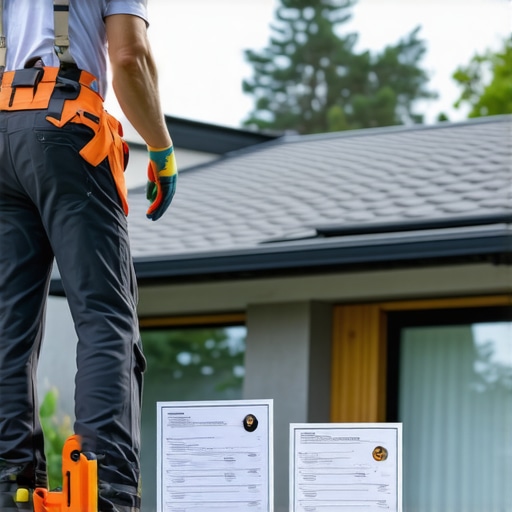
The 2026 Shift: Why a Standard License No Longer Protects Your Home
My old foreman used to say, ‘Water is patient. It will wait for you to make a mistake.’ He spent forty years watching water find the one un-taped seam in a hundred-square project, and he was never wrong. As we head into 2026, the game for roofing companies has changed. The simple occupational license of yesterday has been replaced by more rigorous structural resilience requirements and environmental mandates that most local roofers are still trying to figure out. If you’re looking at a contract today, you aren’t just buying shingles; you are buying a complex thermal and moisture management system that must withstand increasingly volatile weather cycles.
1. The Verification of Tiered Liability and Bonding
By 2026, the industry has shifted toward tiered licensing. You can’t just look for a number on a truck anymore. A forensic audit of failed roofing projects often reveals that the contractor was licensed for residential ‘repairs’ but was actually performing a full ‘replacement’—a distinction that voids their insurance coverage the moment a claim is filed. When you vet roofing companies, you need to see the 2026-stamped certificate of competency that specifically covers the ‘Uplift Resistance’ and ‘Thermal Envelope’ categories. This isn’t just bureaucracy; it’s your only defense when a 100-mph wind gust tries to peel your home like an orange.
“A roof is only as good as its flashing, and the license is only as good as the insurance policy behind it.” – Old Roofer’s Adage
2. The Forensic Reality of Ice Dams and Thermal Bridging
In our cold northern climates, the physics of a roof failure starts long before the first snowflake hits the deck. It starts in the attic. The 2026 licensing standards now require local roofers to understand ‘Attic Bypasses.’ This is the mechanism where warm air leaks through unsealed light fixtures or plumbing stacks, warming the underside of the plywood. This heat melts the bottom layer of the snowpack on your roof. That meltwater runs down to the cold eave, where it freezes, forming a dam. The resulting pool of water isn’t just sitting there; it’s using capillary action to move sideways and upwards under the shingles. This isn’t a ‘leak’ in the traditional sense; it’s a failure of the thermal boundary. A licensed pro in 2026 must demonstrate knowledge of R-value continuity and how to prevent thermal bridging—where the rafters themselves act as heat conduits that bypass your insulation.
3. Detecting the ‘Shiner’ and Fastener Patterns
Walking onto a job site, I can tell within thirty seconds if a crew is going to cause a disaster. I look for the ‘shiner.’ A shiner is a nail that missed the rafter and is sticking through the roof deck into the attic space. In the winter, these nails become frost magnets. They freeze, then they thaw, dripping moisture directly onto your insulation. Over five years, this creates a localized rot zone that turns your plywood into something resembling wet oatmeal. The 2026 licensing protocols now include mandatory fastener pattern inspections. Roofing companies that ignore the ‘sweet spot’—that narrow strip on the shingle where the nail must penetrate both layers for maximum pull-through resistance—are essentially building a kite, not a roof. If they aren’t using six nails per shingle in high-wind zones, they are failing the code, even if the roof looks ‘pretty’ from the curb.
“The International Residential Code (IRC) requires that roof assemblies shall be designed and installed in accordance with this code and the approved manufacturer’s instructions.” – Section R903.1
4. Material Integrity and the Myth of the ‘Lifetime’ Warranty
Let’s talk about the cynicism of the industry. The ‘Lifetime Warranty’ is often the biggest scam in roofing. Most of these warranties are pro-rated and only cover manufacturing defects, not ‘workmanship.’ By 2026, the new licensing laws in many jurisdictions require contractors to provide a ‘Transferable Workmanship Guarantee’ that is separate from the manufacturer’s paper. We see too many local roofers using mismatched components—Brand A shingles with Brand B underlayment and Brand C ventilation. This ‘Frankenstein Roof’ approach is a recipe for disaster. The different materials expand and contract at different rates during the thermal shock of a sudden cold front. This differential movement causes ‘granule loss’ and premature aging. A true 2026-certified professional will insist on a single-manufacturer ‘System’ to ensure the chemical compatibility of every layer, from the ice and water shield to the ridge vent.
The Anatomy of a Proper Replacement
When we perform a forensic tear-off, we often find that the previous crew just ‘roofed over’ old flashing. This is laziness disguised as a cost-saving measure. Proper roofing in 2026 requires the ‘surgery’ approach: stripping the deck bare, inspecting the structural integrity of the ‘cricket’ (that small peaked roof structure behind a chimney designed to divert water), and replacing every bit of galvanized steel with high-grade aluminum or copper. If your contractor isn’t talking about ‘Hydrostatic Pressure’ at the valleys, they aren’t thinking like an engineer; they’re just thinking like a shingle-slapper. The cost of waiting for a total failure is always triple the cost of a proactive, licensed replacement. Don’t let a ‘trunk slammer’ convince you that a few tubes of caulk will fix a systemic drainage issue.
This article provides a much-needed spotlight on the complexities involved in modern roofing standards, especially with the 2026 regulations coming into effect. I agree that verifying tiered liability and bonding is critical; it’s surprising how often homeowners overlook this step, yet it can be a real safeguard against incomplete or shoddy work. I’ve personally dealt with a situation where a roofing contractor performed a full replacement but lacked the proper licensing for uplift resistance, which led to serious issues during a storm. It makes me wonder, how many homeowners are aware of the importance of inspecting fastener patterns or insisting on a single-system manufacturer? These details can often be the difference between your roof lasting decades versus premature failure. Has anyone else experienced challenges in convincing their contractor to follow such stringent standards or verified licensing? Ensuring these standards isn’t just about compliance—it’s about protecting your investment and your home’s safety.