
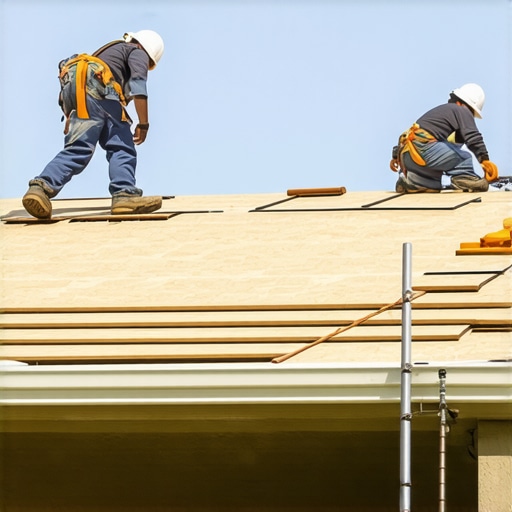
The Anatomy of a Hurricane-Proof Roof
Walking onto a job site after a Category 3 storm is like performing a post-mortem on a house. I remember a scene in the Florida Panhandle where the entire upper floor of a luxury home was gone, but the garage remained perfectly intact. The difference wasn’t the shingles or the fancy siding; it was the lack of mechanical fasteners on the main house trusses. I stood there, smelling the damp insulation and the salt spray, looking at the top plate of the wall where the trusses used to be. Not a single hurricane tie in sight. Just a few ‘shiners’—nails that missed the wood entirely—poking out of the plate. It’s that kind of negligence from subpar local roofers that turns a home into a debris field.
As we head toward 2026, the building codes are tightening, and for good reason. If you think your roof is just a lid sitting on a box, you’re missing the physics of fluid dynamics. When a high-velocity wind hits your gable end, it doesn’t just push; it creates a vacuum on the leeward side. This is the Bernoulli effect in its most destructive form. Your roof becomes a wing, and without the proper hurricane ties, it wants to fly. Any roofing company worth their salt knows that the ‘continuous load path’ is the only thing standing between you and a roofless house. This means every component, from the rafters to the foundation, must be mechanically linked.
“Roof assemblies shall be designed to resist the uplift forces determined in accordance with Section R301.2.1.” – International Residential Code (IRC) R802.11
1. Prioritize Stainless Over Galvanized in Coastal Zones
If you live within 3,000 feet of the ocean, salt-laden air is your roof’s worst enemy. Most roofing companies will use standard galvanized steel hurricane straps because they’re cheap and available by the ‘square’ (100 square feet) at any big-box store. However, in a humid, salty environment, galvanic corrosion eats through that zinc coating in less than a decade. I’ve seen straps that looked solid from five feet away, but when I touched them, they crumbled into red dust. For the 2026 standards, insist on 316-grade stainless steel. It’s the difference between a fastener that lasts 50 years and one that fails when the pressure drops during a storm.
2. The ‘Cricket’ Strategy and Proper Drainage Around Ties
Water is patient. It will wait for a tiny gap in your flashing to begin its slow rot. When installing hurricane ties, many contractors overlook the cricket—that small peaked structure behind a chimney or on a steep roof transition designed to divert water. If water pools near the eaves where your straps are anchored, you’re inviting rot into the very wood that holds your house together. A forensic look at failed roof systems often shows that the fasteners didn’t fail, but the wood they were nailed into turned to mush due to poor water management. Your local roofers should ensure that the drip edge and the secondary water barrier are integrated so that moisture never touches the metal-to-wood connection.
3. Eliminating the ‘Shiner’ and Ensuring Fastener Depth
A ‘shiner’ is what we call a nail that looks like it’s in the truss but actually shot off to the side, missing the meat of the wood. In the rush to beat a rain cloud, many crews get sloppy with pneumatic nailers. For a hurricane tie to reach its rated uplift capacity, every single hole in that metal strap must be filled with the correct specified nail. You can’t use a roofing nail; you need a structural connector nail. I’ve seen roofs where the crew used staples on the straps. Staples! That’s like trying to hold a freight train with a bungee cord. The 2026 codes will likely require more rigorous photo documentation of these connections before the decking goes down.
“A roof is only as good as its flashing and its connection to the walls.” – Old Roofer’s Adage
4. Understanding the Wind-Driven Rain Component
It’s not just the wind that rips the roof off; it’s the rain that follows. When a roof deck lifts even half an inch, it breaks the seal of your underlayment. Local roofers should be discussing ‘Secondary Water Resistance’ (SWR) with you. This involves taping the seams of your plywood or OSB deck with a high-strength bitumen tape. Even if the shingles blow off, the SWR keeps the water out of your attic. Think about the heat in a 140°F attic—if moisture gets in there and mixes with that heat, you’ve got a mold factory within 48 hours. The 2026 ties are designed to minimize that deck movement, keeping your internal dry-envelope intact during the peak of the hurricane season.
Why the ‘Trunk Slammer’ Estimate is a Red Flag
When you get three quotes from roofing companies and one is 40% lower, you aren’t getting a deal; you’re getting a liability. That low-baller is going to skip the stainless fasteners, they’re going to ignore the rusted-out drip edge, and they’re certainly not going to spend three hours crawling into the tight corners of your eaves to install retrofitted hurricane ties. They’ll slap some shingles down and be gone before the first cloud appears on the horizon. Don’t let your home be the one I’m investigating next year. Ask for the uplift ratings of the hardware they use and demand to see the ‘continuous load path’ in their scope of work. Your safety is worth more than a cheap estimate.
This post really highlights how critical proper hurricane tie installation is, especially in coastal zones where salt corrosion can severely compromise fasteners over time. I’ve personally seen homes where the difference between a disaster and surviving a storm was just a few well-installed stainless steel ties and good water drainage. The point about inspecting for ‘shiners’ resonated with me because I’ve often noticed that even experienced crews can overlook these small details in the rush to finish a job before bad weather hits. I wonder, though—what are some best practices for homeowners to verify these connections during routine inspections? It seems like regular checks could save a lot of damage, especially as codes become more stringent in 2026. Also, I agree that cheap quotes often cut corners, and it’s worth investing in quality hardware and craftsmanship for peace of mind during a hurricane. Has anyone here had experience with retrofitting older roofs to meet these new standards?