
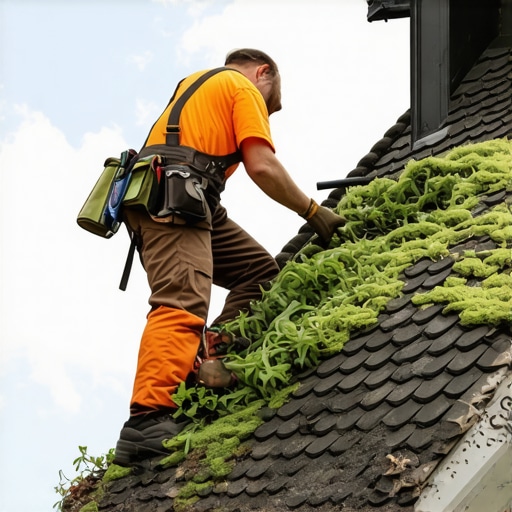
The Green Carpet of Death: Why Your Roof Isn’t a Garden
Walking onto a roof in the Pacific Northwest or the damp corners of the Atlantic coast, you can smell it before you see it. It is that heavy, earthy scent of a forest floor, but it is coming from a structure that is supposed to be bone-dry. In my twenty-five years as a forensic roofing investigator, I have seen homeowners treat moss like a cosmetic quirk. It is not. By the time you see those thick, emerald clumps from the driveway, the biological clock on your roofing system is ticking toward a premature and expensive end. Most local roofers will tell you to just spray it off, but that is how you end up with a saturated deck and a failed inspection. I have spent decades examining why roofs fail, and moss is one of the most patient killers in the business.
My old foreman, a man who had more tar under his fingernails than blood in his veins, used to tell me, ‘Water is patient, kid. It will wait for you to make a mistake, and then it will invite its friends in.’ Moss is the ultimate invitation. It is not just sitting on top of your shingles; it is actively dismantling them. When you look at a moss-covered roof, you are looking at a living organism that has anchored itself into the mineral granules. To understand how to clean it safely in 2026, you first have to understand the physics of the damage it is doing right now.
The Physics of Failure: How Moss Bypasses Your Defense
Moss does not have traditional roots, but it has multicellular filaments called rhizoids. These tiny anchors don’t just sit on the surface; they wrap around the ceramic-coated granules of your asphalt shingles. As the moss grows and expands, it physically pries these granules loose. Why does that matter? Those granules are the only thing protecting your shingles’ bitumen—the oil-based waterproofing—from the sun’s UV radiation. Once the granules are gone, the asphalt dries out, cracks, and becomes as brittle as a saltine cracker.
“A roof is only as good as its flashing and its ability to shed water immediately.” – Old Roofer’s Adage
But the real damage happens through capillary action. In a healthy roof, water flows downward, shed by the overlap of the shingles. Moss acts like a dam. It traps water and, through capillary action, siphons that moisture upward under the shingles. This moisture reaches the unsealed plywood deck, which has no protection. I have performed tear-offs where the shingles looked fine from twenty feet away, but once we pulled them up, the plywood was so soft you could poke a finger through it. It didn’t leak through a hole; it rotted from the constant, stagnant humidity trapped by the moss ‘sponge.’
The Trap: Why Your Local Roofing Companies Might Be Ruining Your Roof
If you call a random contractor from a flyer, they will likely show up with a high-pressure washer. This is the ‘Trunk Slammer’ special. Pressure washing a roof is the fastest way to turn a fifteen-year-old roof into a twenty-five-year-old wreck in twenty minutes. The high-pressure stream shears off the protective granules and forces water deep into the attic bypasses. You might have a clean-looking roof for a week, but you have fundamentally compromised the integrity of every square on that deck. In the trade, we call this ‘washing away the warranty.’
Safe moss removal in 2026 requires a chemical and manual balance, not brute force. You need to kill the organism at its cellular level before you even think about moving it. Any roofing professional worth their salt knows that the goal isn’t just to make it look pretty; it’s to stop the biological decomposition of the asphalt. We use a low-pressure ‘soft wash’ system that relies on chemistry rather than kinetic force.
The 2026 Protocol: A Forensic Guide to Safe Cleaning
First, we start with a dry brush. This isn’t a vigorous scrubbing—that would be like taking sandpaper to your shingles. We use a stiff-bristled brush to gently dislodge the heavy clumps when they are dry. If you do this while it’s raining, you’re just spreading the spores and making a muddy mess. We work from the top down, ensuring we don’t lift the shingle tabs and create shiners (exposed or misplaced nails) or break the sealant bond.
“Roofing systems must be designed and installed to provide a weather-resistant exterior wall envelope.” – International Residential Code (IRC) R703.1
Once the bulk is gone, we apply a biodegradable surfactant and a sodium hypochlorite solution specifically buffered for roofing. This solution penetrates the rhizoids and kills the spores. You have to be careful with the runoff; a real pro will pre-wet your landscaping and use a gutter-diversion system to ensure the chemicals don’t kill your prized hydrangeas. In 2026, we are also seeing better results with zinc and copper strips installed at the ridge. When it rains, these metals leach ions that create a toxic environment for moss and algae, preventing regrowth without further chemical intervention.
The Forensic Inspection: What to Look for After Cleaning
After the moss is dead and washed away, the real work begins. This is when I put on my forensic hat. I look for ‘granule loss valleys’—areas where the moss has eaten away the protective layer. If more than 30% of the granules are gone in a specific area, that section is functionally dead. We also check the crickets and valleys. Moss loves to grow in the valleys because that is where the most water flows. If moss has been sitting in a valley for years, the metal or ice-and-water shield underneath might be corroded or degraded.
We also look for ‘tab lift.’ If the moss has grown thick enough to lift the bottom edge of the shingle, the wind-resistance rating of that roof has dropped to near zero. A moderate windstorm that would normally be no problem can now catch those lifted tabs and peel the roof back like a banana. This is why local roofers who just ‘spray and go’ are doing you a disservice; they aren’t checking the structural damage the moss left behind.
Choosing Between the Band-Aid and the Surgery
Sometimes, the moss has won. If I walk on a roof and it feels like I’m walking on a sponge, the cleaning is a waste of money. That is a sign that the moisture has already compromised the decking. At that point, you aren’t looking for a cleaner; you are looking for a full replacement. However, if the deck is still solid and the shingles aren’t curling like old parchment, a professional cleaning can add five to seven years to the life of your roof. It is the difference between a routine cleaning and a forensic restoration.
Don’t fall for the ‘lifetime warranty’ pitch from roofing companies that claim their cleaning solution is permanent. There is no such thing. Physics and biology always win in the end. The best you can do is manage the environment. Keep the overhanging branches trimmed to allow UV light to reach the shingles, keep your gutters clear so the roof can dry out, and have a pro look at it every three years. In the world of roofing, an ounce of prevention is worth about twenty thousand dollars of cure.