
The Lie Your Roofer Told You About Attic Heat
Most roofing companies are great at banging nails, but they couldn’t tell you the difference between a BTU and a BLT if their lives depended on it. I’ve spent twenty-five years crawling through attics where the temperature hits a blistering 150 degrees, smelling the unmistakable scent of baking asphalt and slow-rotting OSB. My old foreman used to say, ‘Water is patient, but heat is aggressive. Water waits for a hole; heat makes its own path through your wallet.’ He was right. If you’re looking at roofing companies to fix a leak but ignoring the R-value of the fluff under your feet, you’re just putting a new band-aid on a gangrenous leg.
When we talk about 2026 standards, we aren’t just talking about thicker batts. We are talking about the physics of the ‘Attic Bypass’—those sneaky gaps around chimney flues and light fixtures where your expensive heated air screams into the attic, hits the cold underside of the roof deck, and turns into dew. That moisture is what rots your rafters, not just a missing shingle. To get this right, you have to understand how heat moves through conduction, convection, and radiation. If your local roofers aren’t talking about thermal bridging, they aren’t roofing; they’re just decorating.
“Attic ventilation is required to minimize the temperature difference between the attic and the outside air, preventing moisture accumulation and ice dams.” – International Residential Code (IRC)
1. Closed-Cell Spray Polyurethane Foam: The Structural Sealant
In the world of forensic roofing, closed-cell foam is the heavy hitter. This isn’t the soft, spongy stuff that looks like a marshmallow. This is a dense, rigid barrier that actually adds structural integrity to the roof deck. The mechanism at work here is air-sealing. By spraying the underside of the deck, you eliminate the attic space entirely, moving the thermal envelope to the roofline. This stops ‘shiners’—those missed nails that frost up in winter and drip in the spring—from ever causing a problem. The downside? It’s expensive, and if you have a leak, finding the entry point is like looking for a needle in a haystack made of hardened plastic. Roofing companies often hate it because it makes their job harder during a tear-off, but for your energy bill, it’s a powerhouse.
2. High-Density Mineral Wool: The Fireproof Fortress
Mineral wool is the grizzled veteran of the insulation world. Made from basalt rock and slag, it is hydrophobic—it literally repels water. When I see a roof with mineral wool batts, I know that even if a stray wind-driven rain gets under a ridge vent, that insulation isn’t going to turn into a soggy, heavy mess that collapses the ceiling. It’s also fireproof. You could hit this stuff with a blowtorch and it wouldn’t flinch. For local roofers working in high-density areas, this is the gold standard for sound dampening and safety. It doesn’t settle like fiberglass, meaning the R-value you pay for today is the same R-value you’ll have in 2040.
3. Borate-Treated Cellulose: The Pest-Killing Recycler
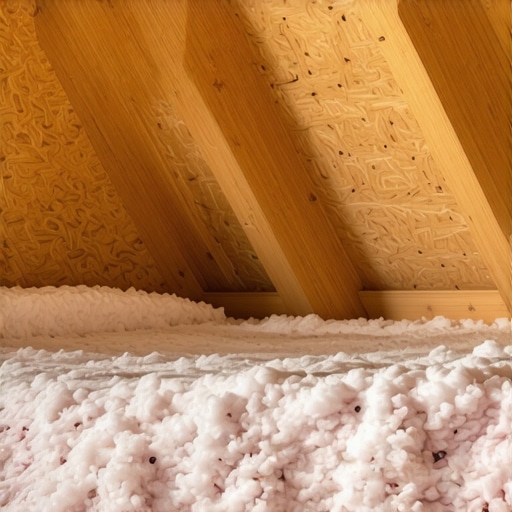
Cellulose is basically ground-up newspaper, but don’t let that fool you. When it’s treated with borates, it becomes a nightmare for squirrels and ants. In 2026, we’re seeing more ‘dense-pack’ cellulose applications. The physics here involves the material’s ability to manage hygroscopic moisture—it can actually absorb and release small amounts of vapor without losing its insulating properties. However, you have to watch out for the ‘settle factor.’ I’ve seen attics where 14 inches of cellulose turned into 8 inches over a decade because the installer didn’t know how to calibrate their blower. If your roofing companies aren’t using a depth gauge, they’re cutting corners.
“A roof is only as good as its flashing, but a home is only as comfortable as its attic insulation.” – National Roofing Contractors Association (NRCA) Guidelines
4. Vacuum Insulation Panels (VIPs): The Space-Age Slimline
This is the newcomer for 2026. VIPs are thin panels that use a vacuum to almost entirely eliminate conduction. Think of a thermos bottle, but flat. We use these in tight spaces where we don’t have the height for 20 inches of fluff. The mechanism zooming here is incredible—you get R-30 or R-40 in a panel only an inch thick. The catch? You can’t cut them. You can’t nail through them. If you puncture the skin, the vacuum is lost and it becomes just an expensive piece of plastic. It requires a contractor with the precision of a surgeon, not a ‘trunk slammer’ with a hammer and a dream.
5. Aerogel Blankets: The Thermal Break
If money is no object and you want the absolute best, aerogel is it. Originally developed for NASA, it’s now trickling down to high-end residential roofing. It’s the ultimate way to stop thermal bridging through the rafters. Even with thick insulation between the joists, heat still escapes through the wood itself. By laying aerogel strips over the top of the rafters before the drywall goes up, you break that heat bridge. It’s light, thin, and incredibly effective. When I walk onto a job site and see aerogel, I know the homeowner isn’t playing around. They’ve hired roofing companies that actually understand thermodynamics.
[image placeholder]
The Trap: Why Your Warranty Might Be Worthless
Listen closely: Most shingle manufacturers will void your warranty if your attic isn’t ventilated properly. Why? Because an overheated attic cooks the shingles from the bottom up. I’ve seen thirty-year shingles brittle and cracking after seven years because the attic was a 140-degree convection oven. You can hire the best local roofers in the state, but if they don’t fix the airflow and insulation, you’re just throwing money into the wind. Don’t fall for the ‘Lifetime Warranty’ marketing. The fine print always says the ‘installation must meet local codes,’ and if you’re under-insulated, you’re out of luck. Ask your contractor about the ‘square’—the 100 square feet of coverage—and how they plan to handle the intake at the soffits versus the exhaust at the ridge. If they look at you like you’re speaking Greek, find someone else.