
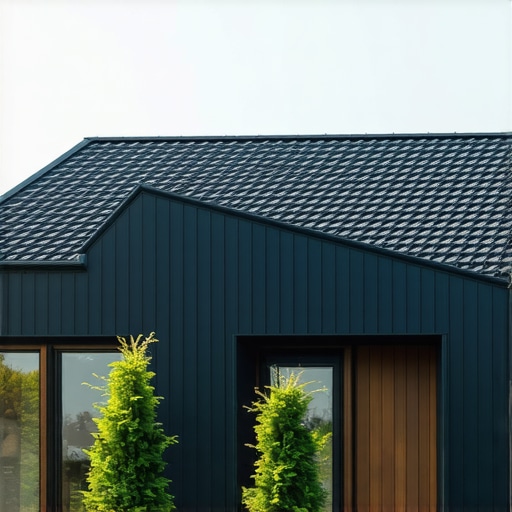
The Deception of the ‘Natural’ Look: Why Your Cedar is Dying
I’ve spent the last quarter-century crawling over steep-slope pitches, peeling back layers of failed promises. Most homeowners see a cedar shake roof and think ‘timeless character.’ I see a ticking time bomb. My old foreman used to say, ‘Water is patient. It will wait for you to make a mistake.’ And wood? Wood is the biggest mistake you can offer a patient drop of rain. In the damp corridors of the Pacific Northwest or the humid coastal reaches, a traditional wood shake is essentially a sponge that you’ve paid twenty thousand dollars to nail to your house. By the time local roofers are called out to look at a ‘minor leak,’ the plywood underneath has usually achieved the consistency of wet bread. This is where the 2026 generation of polymer shakes changes the physics of the roof deck.
1. The End of Capillary Chaos: Moisture Resistance That Actually Works
To understand why polymer is superior, you have to look at capillary action. In a traditional wood shake, the organic fibers are like microscopic straws. When it rains, these fibers draw water upward, against gravity, tucked neatly behind the overlapping course. Once that water is trapped, it sits against the felt underlayment, slowly cooking in the attic heat. The result? Rot. Polymer shakes, specifically the high-density composites hitting the market in 2026, are non-porous. They don’t ‘breath’—which is a good thing. They repel. When we install a square (that’s 100 square feet in trade speak) of polymer, we aren’t worrying about the material cupping or curling as it dries. The edges stay flush.
“A roof system must be designed to shed water, but more importantly, it must resist the migration of moisture into the structural components of the building.” – NRCA Roofing Manual
By eliminating the absorption factor, polymer shakes ensure that your cricket and your valleys aren’t fighting a losing battle against water that wants to stay for the summer.
2. Class A Fire Ratings: Moving Beyond the Tinderbox
In many regions where roofing companies operate today, fire codes are becoming the primary driver of material choice. A natural cedar shake is, quite literally, kindling. Even ‘treated’ wood shakes eventually lose their fire-retardant chemicals through years of UV exposure and leaching. Polymer shakes are engineered with fire-retardant polymers that achieve a Class A rating without additional chemical coatings.
“Roof coverings shall be materials that are compliant with ASTM E108 or UL 790 for fire resistance.” – International Residential Code (IRC) R902.1
When a stray ember from a neighbor’s chimney or a nearby brush fire hits a polymer roof, it doesn’t find a fuel source. It finds a heat-resistant barrier. As a forensic investigator of failed roofs, I’ve seen houses saved simply because the roof didn’t participate in the combustion. For local roofers, this means fewer liability headaches and a product that actually meets modern safety standards.
3. The UV Defense: Why 2026 Polymers Don’t ‘Silver’ Into Dust
The sun is a slow-motion wrecking ball. UV radiation breaks down the lignin in wood, leading to the grey, weathered look people claim to love. But that silver color is actually the sign of a dying cell structure. The 2026 polymer lines use advanced carbon-black and titanium-dioxide UV inhibitors that are baked into the entire thickness of the shingle, not just a surface coating. This matters because when a branch scrapes across your roof, you won’t see a bright white scar. The color is through-and-through. We’re talking about a material that can withstand 140°F attic temperatures and the brutal thermal shock of a sudden summer thunderstorm without the ‘thermal bridging’ effect that causes cheaper synthetics to warp. Most roofing failures I see involve materials that couldn’t handle the expansion and contraction cycles; polymer shakes are designed with ‘slotted’ nail holes to allow the roof to move without pulling the shiners (those missed nails that cause leaks) out of the rafters.
4. Impact Resistance and the Hail Myth
Insurance companies love polymer shakes, and for a good reason. Most local roofing companies spend their springs chasing hail damage. A standard cedar shake or a cheap asphalt shingle will crack or lose its granules under the impact of one-inch hail. The 2026 polymer blends are rated Class 4 for impact. This isn’t just marketing fluff; it means the material can withstand a two-inch steel ball dropped from 20 feet without cracking. In practical terms, it means when the neighbor’s kid throws a baseball or a heavy branch falls during a gale, you aren’t looking at a fractured substrate. You’re looking at a roof that bounces back. It saves you from the ‘Storm Chaser’ cycle where you’re constantly fighting adjusters over whether a dent is ‘functional’ or ‘cosmetic.’
The Warranty Trap: A Veteran’s Warning
Don’t let a ‘Lifetime Warranty’ fool you. Most of those documents are written by lawyers to ensure the manufacturer never pays a dime. They’ll cover ‘manufacturer defects’ but exclude ‘acts of God,’ ‘improper ventilation,’ or ‘foot traffic.’ When picking a contractor from the sea of local roofers, look for someone who understands secondary water resistance. If they aren’t talking about ice and water shield in the valleys or using stainless steel nails near the coast, their warranty is worthless. A polymer shake is a premium product, but if the guy installing it doesn’t know how to flash a chimney or a dormer, you’ve just bought an expensive sieve. Real roofing isn’t about the shingle; it’s about the physics of the install. Stop buying the marketing and start buying the engineering. Polymer is the first time the engineering has actually caught up to the aesthetic.