
The Smell of a Failing System
I knew the moment I stepped off the ladder that this roof was a lie. Walking on that roof felt like walking on a sponge; every step had a sickening give, a soft, muffled crunch that told me the plywood underneath had transitioned from a structural component to something resembling wet mulch. I didn’t need to see the interior ceiling to know the dining room was one heavy thunderstorm away from a catastrophe. Most local roofers would have spent three hours up there with a tape measure and a guess, but in 2026, we do things differently. The forensics of a roof failure aren’t just about what you can see; they’re about the data hiding in the layers. When I talk about roofing companies saving you $500 with drone surveys, I’m not talking about a gimmick. I’m talking about stopping the ‘human margin of error’ that has padded contractor pockets for decades.
The Physics of Failure in the Humid Southeast
Down here in the humidity of the coast, the enemy isn’t just water—it’s the chemistry of heat and salt. We deal with wind-driven rain that doesn’t just fall; it attacks. It moves horizontally, driven by 60-mph gusts, finding the tiniest gap in your roofing system. It utilizes capillary action, a physical phenomenon where liquid is literally sucked upward into narrow spaces between shingle overlaps. Once that water is in, the tropical sun turns your attic into a 140-degree pressure cooker. This heat accelerates the rot, turning your decking into oatmeal. Many roofing companies ignore the starter strip or the drip edge, thinking a bit of extra caulk will fix a flashing error. It won’t. As the old saying goes:
“A roof is only as good as its flashing.” – Old Roofer’s Adage
Mechanism Zooming: The Thermal Signature of Rot
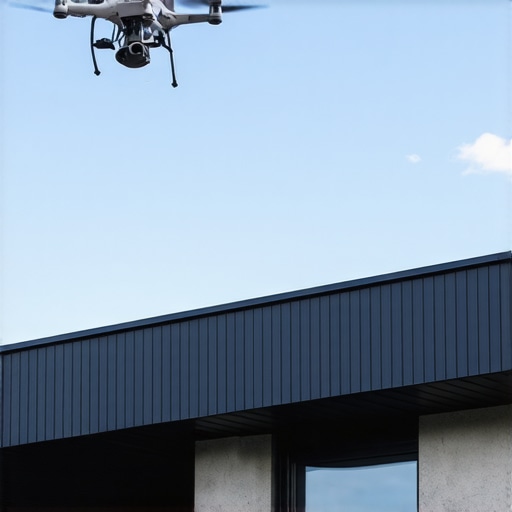
So, how does a drone save you $500? It starts with a square—the industry term for 100 square feet of roofing material. Traditionally, a roofer walks your roof with a tape measure, rounds up to the nearest three squares to cover ‘waste,’ and adds a 10% buffer just in case. You’re paying for shingles that will end up in a landfill. A 2026 drone survey uses photogrammetry to create a 3D digital twin of your home with millimeter accuracy. No more ’rounding up.’ You pay for exactly what you need. But the real savings come from the FLIR (Forward Looking Infrared) sensors. During a forensic survey, we fly the drone at sunset. Dry insulation cools down rapidly, but wet insulation—the kind hidden under a perfectly good-looking shingle—retains heat. The drone sees these ‘hot spots’ through the roof deck. We can pinpoint a leak that hasn’t even stained your ceiling yet. Identifying a small valley repair today prevents a full-deck replacement tomorrow. That is where the $500 in immediate savings lives: in the surgical precision of the repair vs. the ‘shotgun’ approach of replacing everything because the contractor couldn’t find the source.
The Material Truth: Asphalt vs. The Elements
In this climate, your choice of materials isn’t about aesthetics; it’s about survival. I’ve seen local roofers push ‘Lifetime Warranty’ asphalt shingles as if they’re invincible. They aren’t. In high-wind zones, those shingles are subject to uplift forces that can strip a roof bare in a single afternoon if the nails weren’t driven into the ‘sweet spot’ of the common bond. A drone survey can actually detect ‘fishmouthing’—where the edge of a shingle has slightly lifted due to heat deformation—before it becomes a point of failure. If you’re looking at a full replacement, you need to understand uplift ratings. Metal roofs are gaining ground because they shed heat, but even they have a weakness: galvanic corrosion. If a roofer uses the wrong fasteners, the salt in our air will eat those nails until the whole sheet is held on by luck and gravity.
“Water is the most significant factor in the premature deterioration of roofing systems.” – National Roofing Contractors Association (NRCA)
The Trap of the ‘Shiner’
In the trade, we talk about ‘shiners.’ This is a nail that missed the rafter and is sticking out through the plywood in your attic. During a cold snap, moisture from your house hits that cold nail and turns to frost. When it warms up, it drips. Homeowners see a spot on the ceiling and think the roof is leaking. A ‘trunk slammer’ contractor will tell you that you need a new roof. A forensic expert with a drone and an attic inspection will see the shiner and fix it for the price of a service call. This is why the tech matters. It removes the ‘sales’ part of the conversation and replaces it with ‘evidence.’ We look for the cricket—that small peak behind your chimney designed to divert water. If the cricket is undersized, water pools, and no amount of high-end shingles will stop the eventual rot. The drone sees the ponding water patterns that are invisible from the ground.
The 2026 Standard for Local Roofers
If you’re calling roofing companies and they aren’t mentioning 3D mapping or thermal diagnostics, they are living in 1995. You are paying for their inefficiency. A modern drone survey also protects you from the ‘supplement’ game. Many contractors bid low to get the job, then ‘discover’ $2,000 worth of bad wood once the shingles are off. A drone’s thermal survey identifies that bad wood before the contract is signed, so the price you’re quoted is the price you actually pay. Don’t let a ‘storm chaser’ tell you that a few missing granules mean you need a total replacement. Demand the data. Look for the thermal lag. Make sure they checked the valleys and the starter strips. In the end, a roof isn’t just a covering; it’s a complex ventilation and drainage system. If one part fails—the cricket, the flashing, or the ventilation—the whole thing dies. Invest in the survey, save the $500 on wasted materials and unnecessary repairs, and keep your home dry for another twenty years.“, “image”: {“imagePrompt”: “A high-tech professional drone flying over a residential roof with a detailed thermal heat map overlay showing red and blue areas, with a professional roofer holding a tablet in the foreground.”, “imageTitle”: “Modern Drone Roof Inspection with Thermal Imaging”, “imageAlt”: “A drone performing a thermal roofing survey to detect leaks and moisture.”}, “categoryId”: 0, “postTime”: “”}