
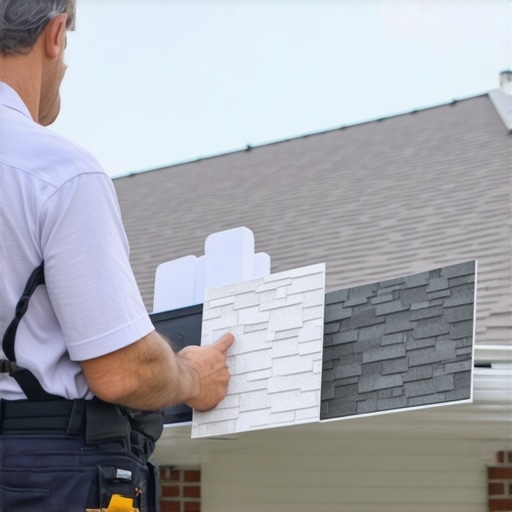
The Ghost of Shingles Past: Why Your 2026 Roof Won’t Match Your 2020 Repair
Walking on that roof felt like walking on a sponge. I knew exactly what I’d find underneath—not just the rotted OSB, but the evidence of a failed attempt to ‘match’ a repair that had occurred years prior. The granules were rolling under my boots like ball bearings, and the homeowner was complaining that the new patch looked like a dark bruise against the original deck. In the high-desert heat where the sun treats asphalt like a cheap steak on a grill, color isn’t just an aesthetic choice; it’s a forensic timeline. If you’re looking at local roofers to fix a section of your home, you’re about to run headfirst into the reality of 2026 color trends vs. the brutal physics of UV degradation.
The Physics of the Fade: Why ‘Identical’ Doesn’t Exist
When you buy a square of shingles today, you aren’t just buying color; you’re buying a chemical cocktail designed to deflect radiation. However, as soon as those shingles hit the roof, the clock starts. In climates where the thermometer hits 110°F and the roof surface screams at 160°F, the bitumen begins to lose its plasticizers. This process, known as photodegradation, breaks down the polymer chains that hold the ceramic-coated granules in place. Once those granules shed, the underlying asphalt is exposed, and the way light reflects off the surface changes entirely. This is why a 2026 ‘Weathered Wood’ shingle will never look like a 2022 ‘Weathered Wood’ shingle that has been baking in the sun for four years. The 2026 versions are pivoting toward high-reflectivity pigments to meet new energy codes, meaning they have a higher L-value in color science terms, appearing brighter and more ‘crisp’ than their predecessors.
“Color matching is inherently subjective and affected by the angle of the sun, the age of the product, and the batch number of the manufacturer.” – National Roofing Contractors Association (NRCA) Guidelines
1. The Forensic Spectrometer Approach
The first way high-end roofing companies are tackling the 2026 matching problem is through spectrophotometry. Instead of some guy named ‘Vinnie’ holding up a dirty sample board and squinting, professional local roofers are using handheld sensors to measure the exact light bounce of your current roof. They take this data and cross-reference it with 2026 manufacturing runs. Often, the best match for an old ‘Charcoal’ shingle isn’t a new ‘Charcoal’—it’s actually a ‘Slate Grey’ from a different product line that has the same level of granule depletion and pigment shift. This prevents the ‘patchwork quilt’ look that devalues your property.
2. Strategic Interfacing and the ‘Cricket’ Diversion
If you can’t match the color perfectly, you have to hide the transition. A seasoned veteran knows that you never stop a repair in the middle of a plane. We look for natural breaks in the architecture—a valley, a hip, or a cricket. By replacing an entire facet of the roof rather than just a patch, the human eye doesn’t have a side-by-side comparison to trigger the ‘that looks wrong’ alarm. We call this ‘plane-matching.’ If we’re fixing a leak around a chimney, we might suggest re-shingling everything from the ridge down to the drip edge on that specific section. It costs more in material, but it saves the homeowner from a 20% hit in curb appeal when they try to sell the house in 2027.
3. The ‘Aged-Out’ Simulation Technique
Some 2026 manufacturers are introducing ‘Repair Kits’ that feature intentionally muted tones designed to mimic three-to-five years of weathering. These aren’t your standard off-the-shelf items. They are specifically for forensic repairs. When installing these, we pay close attention to the starter strips and ensuring we don’t leave any shiners—those missed nails that stay exposed and rust out. A shiner is the hallmark of a ‘trunk slammer’ who is in a hurry to get to the next job. If your roofer isn’t talking about nail placement and thermal expansion, they aren’t thinking about the longevity of the match.
“The design and installation of the roof system shall provide for the drainage of water… to the exterior of the building envelope.” – International Building Code (IBC) Section 1503.1
The Trap: Why ‘Lifetime Warranties’ Won’t Save Your Color
Don’t let a salesman tell you their ‘Lifetime Warranty’ covers color matching. It doesn’t. Read the fine print. Those warranties cover ‘manufacturer defects’—things like the shingle delaminating or the asphalt bleeding. They do not cover the fact that the sun is a giant nuclear reactor in the sky that bleaches everything it touches. If you have a leak, the insurance company is only required to return the roof to a ‘functional’ state, not an ‘aesthetic’ one. This is where local roofers with a backbone come in; they know how to argue for a full replacement if a reasonable match cannot be found, citing ‘line of sight’ rules that many adjusters try to ignore.
The Final Walkthrough: Picking Your Crew
When the 2026 shingle lines drop, the marketing will be full of words like ‘iridescent’ and ‘deep-dimension.’ Ignore the fluff. Look for the contractor who talks about thermal shock and how the 2026 pigments handle the expansion and contraction of the roof deck. If they don’t understand the physics of how a roof breathes, they won’t understand why the color you picked in the showroom looks like a neon sign once it’s nailed down. Protecting your home means looking past the surface and into the deck itself.
Reading through this article, I realize how critical it is to select the right roofing contractor who truly understands the nuances of color matching and UV degradation. I had a similar experience with a repair a few years ago where the patch stood out like a sore thumb, and it was only after consulting with a specialist that I learned about spectrophotometry. I appreciate the detailed explanation of how weathering affects shingle color over time—something most homeowners wouldn’t consider before choosing their roofing material. The idea of replacing entire roof sections to maintain visual consistency is smart, especially in high-heat areas. One thing I wonder about is the long-term effectiveness of these ‘aged-out’ simulation kits. Have any of you used these kits, and how well did they hold up after a couple of years? It seems like the future of roofing will heavily rely on these innovative techniques to keep our homes looking great for decades.