
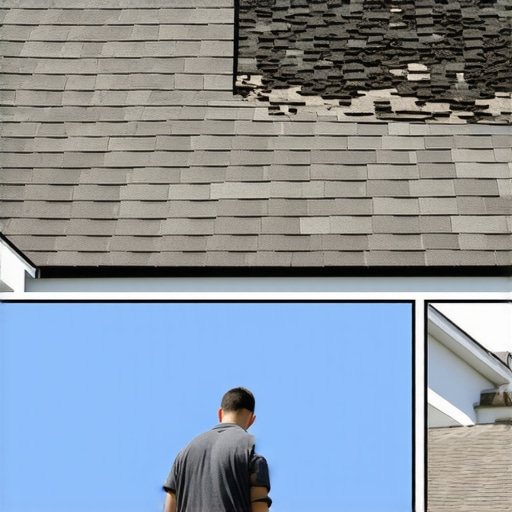
The Forensic Autopsy of a Failed Roof
The first sign isn’t the roar of wind or the crack of a branch; it’s the rhythmic, rhythmic thwap-thwap-thwap of a single asphalt tab vibrating against its neighbor. I was standing in a living room in Houston last July, watching a slow, rhythmic drip hit a mahogany dining table. The homeowner was baffled. ‘The roof is only six years old,’ he told me. I didn’t need to see the attic to know what happened. I climbed up and saw it immediately: a slight shadow under the third course of shingles. A lifting tab. My old foreman used to say, ‘Water is patient. It will wait for you to make a mistake.’ And the mistake here was a single high nail—a shiner—that prevented the thermal sealant from ever fully biting into the shingle below it. In the humid, wind-heavy climate of the Southeast, a lifted shingle isn’t just an eyesore; it’s a structural vacuum. When wind moves over a roof, it creates a low-pressure zone. If a shingle is even slightly unsealed, that pressure difference acts like an airplane wing, generating lift that pulls the shingle upward, stressing the fasteners and inviting wind-driven rain to crawl vertically underneath the material through capillary action.
The Physics of Failure: Why Shingles Lift
To understand why you need to find local roofers who know their physics, you have to look at the sealant strip. Every modern asphalt shingle has a factory-applied line of bitumen. When the sun hits the roof, this bitumen reaches a ‘softening point,’ bonding the top shingle to the one below it. However, in tropical zones, if the roof was installed during a ‘dusty’ day or if the roofing companies left the bundles out in the heat too long, that bond fails. Once the bond is broken, the shingle is no longer a part of a waterproof shield; it’s a loose flap. Water doesn’t just fall down into the hole. It gets sucked in. As wind gusts hit the gable end, they accelerate. This creates a vortex at the roof edge. If your poor roof flashing hasn’t been integrated correctly at the edges, the wind catches the ‘starter strip’ and begins the unzipping process. This is where most roofing systems fail—not in the middle of the field, but at the edges where the pressure is highest.
“The primary purpose of a roof is to shed water… improper fastening is the root of most wind damage.” – National Roofing Contractors Association (NRCA)
5 Signs of Shingle Lifting Every Homeowner Must Know
1. The ‘Shadow Line’ at Dawn or Dusk. You won’t see a lifted shingle in the high noon sun; the shadows are too short. You need to look at your roof when the sun is at a low angle. If you see a jagged shadow beneath a specific row of shingles, it means the tab is sitting 1/8th of an inch high. That is enough for a 60mph gust to get a foothold. 2. Granule Accumulation in the Gutters. When a shingle lifts and drops repeatedly, it flexes the fiberglass mat. This flexing breaks the ceramic granules loose. If you see ‘sand’ in your downspouts, your shingles are moving. 3. The Sound of the ‘Roof Drum.’ During a storm, if you hear a localized thumping sound above a bedroom, that’s not a ghost. It’s an unbonded shingle flapping. 4. Visible ‘Shiners’ or High Nails. If you can see the head of a nail, the shingle above it has lifted. A ‘shiner’ is a nail that was driven into the gap between plywood sheets or simply too high on the shingle face, missing the reinforced nail zone. 5. Shingle Buckling. Sometimes shingles don’t just lift; they distort. If you notice a wave-like pattern, check for shingle buckling which is often caused by the underlayment wrinkling and pushing the shingle upward, breaking the seal. If you ignore these signs, you’re inviting hidden rafter rot that will cost ten times more than a simple repair.
The Anatomy of a Professional Fix vs. The Trunk Slammer Band-Aid
When you call roofing companies after a disaster, half of them will offer to ‘just throw some mastic under it.’ That’s a death sentence for your roof. Asphalt shingles need to breathe and expand. If you goop them down with excessive roofing cement, you create a thermal bridge that will cause the shingle to blister and fail within two summers. A real forensic roofer will check the nail pattern. If the nails are too high, the whole section needs to be replaced. They will look for the ‘starter course’—the hidden layer of shingles at the eave. If that wasn’t installed with an offset, the vertical seams align, allowing water to hit the deck directly. This is roofing 101, yet I see it missed on ‘luxury’ homes every single week. Water is a liquid crowbar; once it finds a way to lift that first tab, the hydrostatic pressure of the next rain will do the rest of the work.
“A roof is only as good as its flashing.” – Old Roofer’s Adage
Why Regional Climate Dictates Your Defense
In the Southeast, we don’t just worry about the sun; we worry about the ‘Salt Air Corrosion’ on the fasteners. If your local roofers used standard electro-galvanized nails instead of hot-dipped galvanized or stainless steel, those nails are likely rusting beneath the surface. As a nail rusts, it expands, pushing the shingle up and breaking the bitumen bond. This is why forensic inspection is vital. You can’t just look from the ground with binoculars. You need to get a redundant moisture probe or a thermal camera to see if that lifting shingle has already allowed water to saturate the insulation. If the plywood has turned to the consistency of oatmeal, you’re no longer looking at a repair; you’re looking at a surgical replacement of the deck. Always vet your roofing provider’s reputation. Don’t trust a guy who doesn’t know what an uplift rating is. Ask about their ‘square’ pricing and ensure they include a cricket behind any chimney to prevent the most common water-entry point in the valley.