
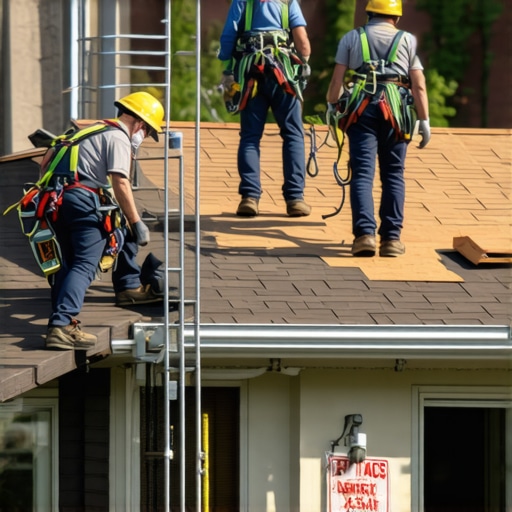
The Speed Trap: Why Safety Records are Built on the Ground
In the Gulf Coast heat, where the humidity is thick enough to chew and the afternoon thunderstorms are so predictable you can set your watch by them, the roofing business becomes a race. Every local roofer I know is trying to beat the clouds. But there is a lethal trap in that ‘fast’ mentality. I’ve spent over two decades climbing up ladders and looking at what the other guys left behind. I’ve seen what happens when speed outpaces safety. My old foreman, a man who had more scars on his hands than a dockside brawler, used to say, ‘Water is patient, but gravity is greedy. It will wait for you to make a single mistake, then it takes everything.’ He wasn’t talking about the shingles. He was talking about the men on the roof.
Building a safety record isn’t just about avoiding a visit from OSHA; it’s about the forensic reality of the job site. When you’re rushing to beat a tropical depression, the first thing that goes is the harness check. The second is the ladder pitch. And that is exactly when the ‘early’ start turns into a late-night emergency room visit. If you want your roofing company to survive the next decade, you need to understand the physics of the fall and the chemistry of the heat. A solid reputation is built by handling local project crew safety with the same precision you use for a valley flashing.
“A roof is only as good as its flashing.” – Old Roofer’s Adage
1. The Physics of the Fall: Beyond the Harness
Most contractors think a harness is a magic cape. It’s not. In our region, the UV radiation from the sun doesn’t just bake the shingles; it degrades the nylon webbing of your fall arrest systems. I’ve seen ‘safety’ equipment that would snap like a dry twig if it actually had to catch a 200-pound man. Mechanism zooming: imagine a man slipping on a 9:12 pitch. The asphalt granules, loosened by the 130-degree surface heat, act like microscopic ball bearings. He slides. If his anchor point is a single ‘shiner’—a missed nail that didn’t hit the rafter—that anchor is coming out like a loose tooth. Building a safety record means inspecting every anchor point for structural integrity before a single foot touches the deck. You aren’t just looking for wood; you’re looking for rot. If you see hidden plywood delamination, that deck is a trapdoor. You don’t secure an anchor to oatmeal.
2. Heat Stress: The Silent Killer in the Southeast
In Houston or Miami, the roof isn’t just a workspace; it’s an oven. When the ambient temperature is 95°F, the roof surface is north of 140°F. The air rising from the deck is a shimmering wall of heat. Heat stress leads to ‘brain fog,’ and brain fog leads to missed steps. A roofer with heat exhaustion loses the peripheral vision necessary to track the edge of the gable. I’ve seen crews skip the ‘fast’ early morning starts because they didn’t stage the materials the night before. By 11 AM, they are cooked. A real safety record involves mandatory hydration breaks and the use of cooling vests. We aren’t just keeping men comfortable; we are keeping their nervous systems functional so they don’t walk off a edge because they were too dizzy to see it.
3. The 4:1 Rule and Ladder Forensic Safety
The ladder is where most roofing companies lose their insurance. It’s the transition point between the ground and the work. In our climate, wind-driven rain makes the soil around the foundation soft. If your ladder isn’t on a stabilizer or a solid pad, one leg will sink three inches while you’re carrying a square of shingles on your shoulder. That’s the end of your career. The 4:1 rule—for every four feet of height, the base should be one foot out—is non-negotiable. But I take it further. I check the rungs for ‘mud-slick.’ If the crew has been walking through a wet job site and then climbs, those aluminum rungs become ice rinks. A safety-first company cleans the boots before the climb. This attention to detail is how you avoid rotted roof decking incidents where a roofer steps through a soft spot because they were too busy worrying about their footing on the ladder.
4. Debris Management: The Hidden Liability
Safety isn’t just about falling off the roof; it’s about what you throw off it. In a ‘fast’ tear-off, shingles fly everywhere. In a residential neighborhood, a stray nail in a homeowner’s driveway is a lawsuit. A stray nail in a roofer’s boot is a week of lost labor. We use magnetic sweeps after every single square is removed. But more importantly, we manage the ‘drop zone.’ If you aren’t using a catch-all system, you’re risking the safety of the ground crew. I’ve seen a bundle of shingles slide off a steep pitch and hit a guy because there was no toe-board. That’s not an accident; that’s a failure of job site management. You want to build a local record? Don’t let your job site look like a war zone. If the deck is clear, you can spot shingle buckling or deck issues before the new underlayment goes down.
“The building code is a set of minimums, not a target for excellence.” – Forensic Engineer’s Creed
5. The Vetting Process: Subcontractor Accountability
The biggest threat to a safety record is the ‘trunk slammer’—the guy who shows up with a hammer and no insurance. Many roofing companies sub out their labor to the lowest bidder to keep things moving ‘early and fast.’ This is a recipe for disaster. If they aren’t on your workers’ comp, you are one slip away from bankruptcy. I vet every crew by watching how they set up their site. If I see a guy on a ridge without a rope, the whole crew is gone. No warnings. You cannot ‘fix’ a safety culture that is fundamentally broken. Building a record means hiring for character and training for skill. It means building local project safety records by documenting every safety meeting and every harness inspection. This paper trail is your shield when the adjusters come calling.
The Final Walkthrough: Why Quality and Safety are Twins
At the end of the day, a safe roof is usually a high-quality roof. Why? Because a crew that is careful about where they step is also careful about how they nail. They aren’t leaving ‘shiners’ that will leak in three years. They aren’t over-driving nails through the matting. They are taking the time to ensure the ‘cricket’ behind the chimney is actually diverting water, not just collecting it. In the Southeast, where wind-driven rain will find any gap, that extra five minutes of safety-focused attention saves you thousands in warranty repairs. Don’t be the contractor who disappears when the first leak appears. Be the forensic veteran who knows the roof is solid because the crew was safe enough to do the job right. The ‘fast’ money is a myth. The real money is in the record of safety and the longevity of the install.