
The Forensic Autopsy of a Failing Roof
It usually starts with a faint, tea-colored stain on the bedroom ceiling, or worse, the sound of a slow, rhythmic drip-drip-drip inside a wall cavity during a January thaw. By the time you see the water, the crime has been committed months or even years ago. As someone who has spent over two decades tearing off the failures of ‘low-bid’ roofing companies, I can tell you that the culprit is almost never the shingle itself. It is the metal—or the lack thereof. We call it flashing, and in the trade, it is the thin line between a dry home and a total structural loss.
My old foreman used to pull me aside when I was just a ‘grunt’ hauling bundles up a ladder. He’d point to a complex valley and say, ‘Water is patient, kid. It doesn’t have a job, it doesn’t have a family, and it doesn’t sleep. It will wait for you to make a mistake, and then it will live in that hole until the house falls down.’ He was right. Most local roofers treat flashing as an afterthought, a piece of scrap metal to be bent by hand and hidden with a tube of cheap caulk. But physics doesn’t care about your caulk. Physics cares about hydrostatic pressure and capillary action.
“A roof is only as good as its flashing. Proper integration of flashing is the primary defense against water intrusion at all roof-to-wall and roof-to-penetration intersections.” – National Roofing Contractors Association (NRCA)
1. The ‘Caulk-and-Walk’ Special: Visible Sealant Instead of Mechanical Integration
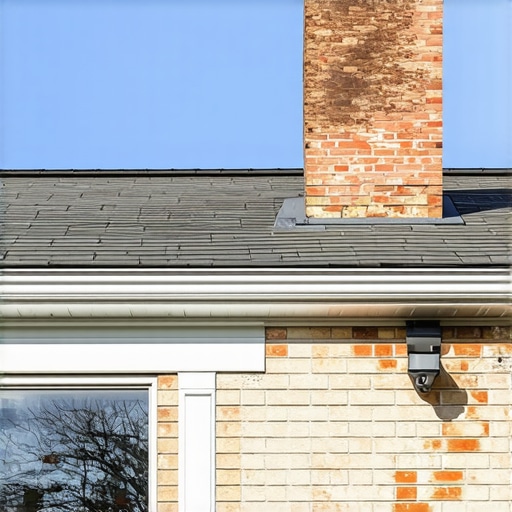
The first sign of a hack job is seeing big, gloppy beads of roofing cement or silicone around your chimney or wall transitions. In a proper installation, the metal should do the work. We use ‘step flashing’—individual L-shaped pieces of aluminum or copper that weave into every single course of shingles. This creates a mechanical staircase that sheds water back onto the roof surface. When roofing companies get lazy, they ‘surface mount’ a single long strip of metal and try to seal the top edge with a bead of goo.
In our cold Northern climate, this is a death sentence. When the temperature swings from 10°F at night to 40°F during a sunny afternoon, the metal expands and contracts. That bead of caulk? It’s rigid. Within one season, it pulls away, creating a microscopic gap. Now, thanks to capillary action, water actually gets sucked up into that gap during a rainstorm. It’s like a straw. Once the water is behind the metal, it’s trapped. It sits against your OSB sheathing until the wood turns into a substance I call ‘oatmeal.’ If you don’t catch it, you’ll be looking at local roofers’ fixes for rotted roof decking sooner than you think.
2. The Missing ‘Cricket’ and Valley Weeping
If you have a chimney wider than 30 inches, the International Residential Code (IRC) requires a ‘cricket’—a small peaked roof structure behind the chimney to divert water. Without it, your chimney acts as a dam. In a heavy snowstorm, slush builds up in that dead spot. As the house loses heat through the attic (what we call ‘thermal bridging’), the bottom of that snow pile melts. The water can’t go down because of the dam, so it goes sideways under the shingles. This is where we find the most ‘shiners’—missed nails that act as cold-conductors. The water hits the cold nail, condenses, and drips into your insulation.
Check your valleys. Are the shingles cut back properly? If the flashing metal isn’t wide enough or if a roofer drove a nail too close to the center of the valley, you’ve got a leak waiting to happen. We call this ‘valley weeping.’ The water travels down the metal, finds a nail hole, and follows the shank of the nail right into the plywood. [image] This is why local roofers must prioritize the integrity of the valley seam. If your valley is lifting or shows signs of rust, it’s a red flag. You might need to look at fixes for loose roof valley seam flashing to prevent a total interior ceiling collapse.
3. Pipe Boot Failure and the ‘Dry Rot’ Illusion
The third sign is perhaps the most common: the plumbing vent pipe boot. Most contractors use a cheap ‘3-in-1’ plastic and rubber boot. These are ‘sun-baked’ into oblivion within five to seven years. The rubber collar cracks, and water trickles down the PVC pipe. The irony? This often looks like a plumbing leak, not a roofing leak. I’ve seen homeowners spend thousands on plumbers only to realize the issue was a $20 piece of flashing.
When you have a failed pipe boot, the water often bypasses the attic and travels down the pipe into the kitchen or bathroom. If you see water rings around your exhaust fans, you need to check the signs of leaky pipe boots immediately. In our region, ice dams can also back up water under these boots. If the roofer didn’t install ‘Ice & Water Shield’—a self-adhering membrane—around the base of that pipe, you are relying entirely on a piece of thin rubber to protect your home. That’s a gamble you will eventually lose.
“Flashing shall be installed at wall and roof intersections, at gutters, and at changes in roof slope or direction.” – International Residential Code (IRC) R903.2.1
The Physics of the Fix: Surgery vs. The Band-Aid
If you find these signs, don’t let a ‘trunk slammer’ tell you they can fix it with more caulk. That is a Band-Aid on a gunshot wound. Proper repair requires ‘surgery.’ This means tearing off the shingles around the penetration, removing the old, rusted, or improperly bent metal, and installing new flashing that is integrated with a high-temperature underlayment. We don’t just want it to be ‘watertight’; we want it to be fail-safe. If the sealant fails, the metal should still carry the water away. If the metal fails, the secondary membrane should still hold.
When interviewing roofing companies, ask them how they handle kickout flashing. If they look at you with a blank stare, show them the door. Kickout flashing is a simple 45-degree bend at the end of a wall-to-roof run that kicks water away from the siding and into the gutter. Without it, the water runs down the siding, gets behind the ‘J-channel,’ and rots your corner posts. It’s a $10 part that prevents $10,000 in structural damage. Don’t let your home become a forensic case study for the next guy with a crowbar. Ensure your chimney water entry is addressed with lead or copper counter-flashing, not just a bucket of tar and a prayer.