
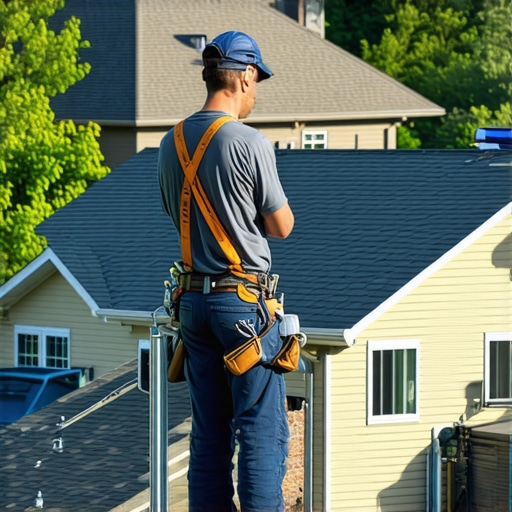
The Scent of a ‘Deal’ and the Reality of the Roof Deck
Every time a homeowner asks me about a multi-project discount, I’m reminded of what my old foreman used to say: ‘Water is patient. It will wait for you to make a mistake.’ He’d be standing on a 10-pitch roof, chewing on a piece of licorice, watching a crew of ‘trunk slammers’ rush through a neighborhood-wide shingle job. Those crews weren’t roofing; they were racing. When roofing companies offer you a massive price cut for bundling your roof with your neighbor’s or adding a siding job, you have to ask yourself: where is that money coming from? In my 25 years of tearing off failures, I can tell you that a discount often smells like a shortcut, and a shortcut usually looks like a shiner (that’s a missed nail for you laypeople) rusting out in your attic three winters from now.
If you live in the Northeast or the Great Lakes region, the physics of a roof failure aren’t a joke. We aren’t just dealing with rain; we’re dealing with the brutal cycle of ice dams and thermal bridging. When you try to save a few ‘squares’ (100 square feet of roofing area) on a multi-project deal, you’re often tempting the contractor to skimp on the very things that keep your plywood from turning into mulch. Let’s talk about the actual mechanics of how water moves. It doesn’t just fall; it migrates. Through capillary action, water can literally climb uphill under a shingle if the headlap isn’t set right. If the crew is rushing to hit a volume quota for a discount, they might miss the cricket—the small peaked structure behind a chimney—resulting in a pool of standing water that will eventually find a way through your ceiling.
“The roof shall be covered with approved roof coverings secured to the roof deck in accordance with the manufacturer’s installation instructions.” – International Residential Code (IRC), R905.1
The Physics of Failure: Why Bundling Can Be Dangerous
When local roofers talk about multi-project discounts, they are usually looking at ‘labor efficiency.’ In theory, it makes sense. If they can park the dumpster once and move the crew across two houses, they save on mobilization. But here is the material truth: a roof is a system, not a product. If you bundle a roof replacement with a gutter install, and the contractor doesn’t understand the relationship between the drip edge and the gutter trough, you’re in trouble. I’ve seen hundreds of jobs where a ‘discounted’ bundle resulted in roof-inspection-3-signs-of-decking-rot-behind-gutters because the installer didn’t overlap the flashing correctly, allowing snowmelt to wick back into the fascia. To help you navigate these waters, I’ve broken down five strategies to ensure your discount doesn’t become a debt.
1. The Liability Audit: Don’t Share the Risk
When a company is doing multiple houses on a block, the chaos level triples. More ladders, more nail guns, more chances for a ‘shiner’ to go through a pressurized gas line or a worker to take a tumble. Before you sign any multi-project contract, you must perform a roofing-companies-3-ways-to-verify-general-liability check. A discount is worthless if the company’s insurance policy has a cap that’s exceeded because they had three accidents on the same street in one week. Ask for a specific COI (Certificate of Insurance) that names your property address, even if you are part of a neighborhood group buy.
2. The Material Standard: Specify the Performance
Many roofing outfits will try to squeeze their margins by using ‘contractor grade’ materials on discounted jobs. Don’t let them. If you are doing a multi-project deal, demand high-performance components. For 2026, you should be looking at roofing-materials-4-best-composite-shingles-for-2026. These materials are designed to handle the thermal shock of a 70-degree afternoon followed by a 20-degree night. In the North, this expansion and contraction is what pulls nails out and creates ‘buckling.’ If the contractor won’t commit to a high-end underlayment, walk away from the deal.
3. The ‘Valley’ of Despair: Inspecting the Hard Parts
The most common place for a ‘discounted’ crew to fail is in the valley. This is where two roof planes meet, and it’s where the most water flows. A rushed crew will ‘closed-cut’ a valley because it’s faster than a ‘woven’ or ‘open’ metal valley. If they don’t set the shingles back far enough, hydrostatic pressure will push water right under the lap. You need to verify they are using a proper ice and water shield in these areas. If you notice leaks after a heavy storm, you might be looking at roofing-services-5-fixes-for-loose-roof-valley-seam-flashing-fast-early-fast-early-fast-early-fast-early-fast-early-fast-early. A real pro will show you the flashing before the shingles go over it.
4. Off-Season Scheduling: The Real Negotiation Tool
The best way to get a discount from local roofers without compromising quality is to offer them work during their ‘shoulder seasons.’ In cold climates, this is late fall or early spring. They are hungry for work and more likely to let their ‘A-Team’ stay on your job longer because they aren’t rushing to a dozen other sites. However, you must ensure they understand cold-weather installation. Asphalt shingles have a sealant strip that needs sun-heat to activate. If it’s too cold, they need to hand-tab each shingle with asphalt cement. If they miss this, you’ll be calling for emergency-roof-services-4-ways-to-stop-shingle-blowing during the first wind storm of November.
“A roof is only as good as its flashing.” – Old Roofer’s Adage
5. The Inspection Clause: Trust but Verify
Never pay the final 20% of a multi-project contract until a third-party or a senior foreman has walked the deck. Look for shingle gaps or ‘high nailing.’ A high nail is a killer; it misses the double-layer ‘common bond’ area of the shingle, meaning the shingle only has half the wind resistance it should. In my experience, crews chasing a volume discount are notorious for high nailing because they are moving too fast to see the nail line. If you see shingles lifting after a light breeze, check out local-roofers-5-ways-to-spot-shingle-lifting-early-storm-fast-early-fast-early-fast-early-fast-early-fast-early-fast-early-fast-early-fast-early-fast-early-fast-early-fast.
The Forensic Conclusion: Is the Discount Worth It?
I’ve spent a lifetime on these slopes. I’ve seen plywood that looked like shredded wheat because a homeowner saved $500 on a ‘neighborhood deal’ that forgot to install a ridge vent. Roofing companies are businesses, and they have to make a profit. If the price is too low, they aren’t losing money—you are losing quality. Use these tips to leverage your buying power, but never sacrifice the integrity of your home’s first line of defense. A roof isn’t just a layer of stone-coated paper; it’s a complex thermal and moisture barrier. Treat it with respect, or it will let the rain remind you why you shouldn’t have been so cheap. Always check for roof-inspection-3-signs-of-hidden-decking-plywood-decay-fast-early-fast-early-fast-early-fast-early-fast-early-fast-early-fast-early-fast-early-fast-early-fast-early-fast-early-fast before the new shingles go down. If the wood is soft, no amount of discount will save your home from the rot that follows.