
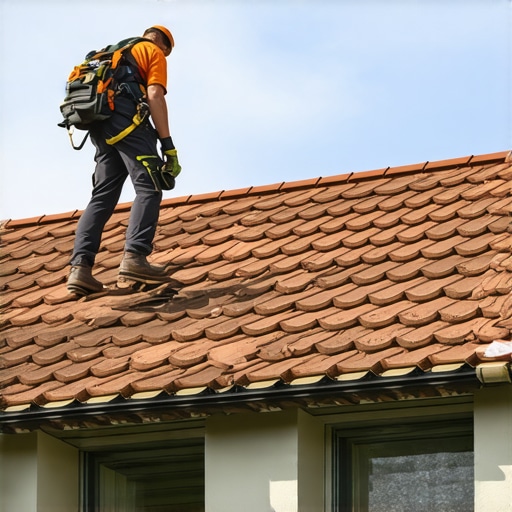
The Autopsy of a Coastal Roof Failure
Walking on that roof felt like walking on a sponge. I knew exactly what I’d find underneath before I even pulled my flat bar out of my belt. The homeowner was pointing at a brown circle growing on her master bedroom ceiling, but the real crime scene was forty feet up, where the 2026 storm season had already started taking its toll. You could smell it before you saw it—that damp, sour reek of OSB that has been saturated for three weeks too long. This wasn’t just a leak; it was a systemic collapse of the building envelope, a result of what happens when local roofing companies prioritize speed over the physics of wind uplift.
When we talk about wind-blown shingles, most people think of a hurricane-force gust ripping a house apart. In reality, it’s much more insidious. It’s about the Bernoulli Principle. As wind rushes over your roof ridge, it creates a zone of low pressure above the shingles. If your attic isn’t pressurized correctly, or if the shingles aren’t sealed, that high pressure inside the house or under the shingle literally pushes the material upward. It starts with a tiny flutter—a sound like a playing card in bicycle spokes. That flutter breaks the thermal seal. Once that bond is gone, the shingle is just a sail waiting for the next gust to tear it out of the ‘common bond’ area. [IMAGE_PLACEHOLDER]
“The nail shall be driven flush with the shingle surface. Not into the shingle, not crooked, and never high-nailed.” – International Residential Code (IRC) R905.2.5
Fix 1: The ‘High-Nailing’ Epidemic and the 6-Nail Solution
The most common failure I see when investigating local roofers’ work is high-nailing. Manufacturers have a very specific ‘strike zone’—the common bond where two layers of the shingle overlap. If you hit that zone, the nail holds through two layers of material. If you nail two inches too high, you’re only hitting one. In high-wind zones like ours, 4 nails per square just doesn’t cut it. To survive the 2026 climate shifts, you need a 6-nail pattern. Every ‘shiner’—that’s trade talk for a nail that missed the rafter or was driven crooked—is a direct conduit for water. When the wind lifts the shingle, it pulls right over the head of a high nail, leaving the nail behind and the wood exposed to the elements. This isn’t just a mistake; it’s a structural failure that voids your warranty before the truck even leaves your driveway.
Fix 2: Thermal Seal Activation and the Dust Problem
Every asphalt shingle has a strip of sealant—a line of bitumen that’s supposed to melt and bond to the shingle below it when the sun hits. But here’s the problem in our tropical humidity: if a roof sits in the warehouse too long, or if the local roofing companies install it during a dusty windstorm, that sealant gets ‘blinded.’ Dust coats the sticky strip, preventing it from ever bonding. If I can slide my hand under your shingle with zero resistance on a 90-degree day, your roof is effectively a deck of cards. The fix isn’t more nails; it’s hand-sealing with asphalt plastic cement. We apply three one-inch diameter spots of adhesive under each tab. It’s tedious, it’s back-breaking, and it’s exactly what the ‘trunk slammers’ won’t do because it eats into their margins.
Fix 3: The Starter Strip Sabotage
Most wind failures start at the eave—the very edge of the roof. If the starter strip isn’t installed correctly, or if the roofer just used a regular shingle turned upside down (an old-school hack that fails modern codes), the wind gets under the first course and peels the whole ‘square’ back like a banana. A proper starter strip has the adhesive at the very bottom edge, right at the drip edge. This creates a locked perimeter. Without it, the hydrostatic pressure of wind-driven rain will push water uphill, under the shingles, and straight onto your fascia boards, rotting them out from the inside until your gutters literally fall off the house.
“A roof is only as good as its flashing and its perimeter attachment.” – Old Roofer’s Adage
Fix 4: Secondary Water Resistance (The ‘Belt and Suspenders’ Approach)
In 2026, relying on felt paper is like wearing a cardboard raincoat. We are seeing more ‘micro-bursts’ that can drive water sideways at 80 mph. If a shingle does blow off, you need a second line of defense. This is where ‘Ice and Water Shield’ or synthetic underlayment comes in. But specifically, in our zone, you need a self-adhering membrane across the entire deck. This seals around every nail penetration. Even if the wind-blown shingles are gone, the house stays dry. Most local roofers will try to upsell you on fancy shingles but use the cheapest ‘slap-on’ underlayment they can find. That’s like putting a Ferrari engine in a lawnmower frame.
Fix 5: The Cricket and the Dead Valley Fix
Water is patient. It will wait for the wind to give it an opening. I recently did a forensic tear-off where the shingles were fine, but the ‘dead valley’—a flat spot where two roof planes meet—was a disaster. The wind was pushing water into a corner where it had nowhere to go but up. We had to build a ‘cricket’—a small peaked structure behind the chimney or in that valley—to divert the water. If your local roofing companies aren’t talking about water diversion and only talking about shingle brands, they aren’t roofing; they’re just selling. A real pro looks at the geometry of the roof to see where the wind will force water against the grain.
The Surgery: Why Caulk is a Lie
I see people all the time trying to fix wind damage with a tube of caulk. Let me be clear: caulk is a maintenance item, not a structural repair. If your shingles are flapping, a glob of goo isn’t going to fight the physics of a 100-mph gust. The ‘surgery’ involves removing the damaged courses, checking the deck for ‘oatmeal’ (rotted wood), and re-integrating the new shingles into the existing weather-lap. It’s hard work, it’s hot, and it requires a veteran’s eye to ensure the new material doesn’t create a ‘hump’ that catches even more wind. Don’t let a ‘storm chaser’ tell you a quick smear of tar will last ten years. It won’t last ten months.
Conclusion: Protecting Your Investment
At the end of the day, a roof isn’t a product; it’s a system of managed shedding. When the wind blows in 2026, you’ll either have a roof that was engineered to stay down or a collection of expensive debris in your neighbor’s yard. Picking from the pile of local roofing companies is about finding the guy who cares as much about the nails you can’t see as the shingles you can. Stop looking for the lowest bid and start looking for the forensic evidence of quality. Your ceiling—and your wallet—will thank you.