
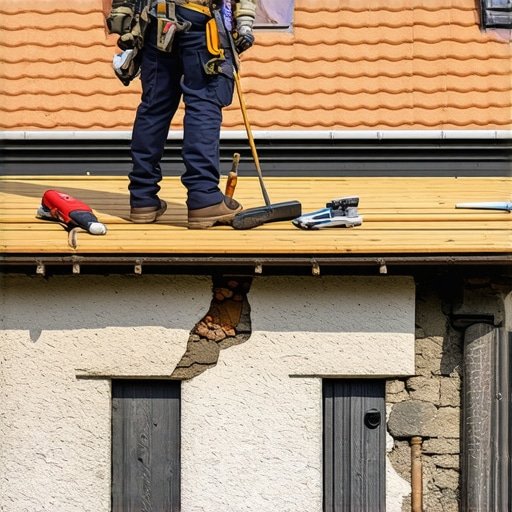
The Forensic Autopsy of a Failing Roof Deck
I was standing on a steep-slope Tudor in the height of a February freeze when I felt it—the ‘squish.’ Any local roofer worth their salt knows that feeling. It isn’t just a soft spot; it’s the sensation of a 5/8-inch sheet of CDX plywood that has lost its structural integrity and turned into something resembling wet cardboard. When I pulled the shingles back, the smell of fermented wood and active fungal growth hit me like a shovel. This wasn’t a simple leak; it was a systemic failure of the home’s envelope. Most roofing companies will just slap a new sheet of OSB over the problem and move on, but if you don’t understand the physics of why the wood rotted, you’re just burying a corpse in a shallow grave.
The Mechanism of Decay: Why Plywood Fails
Roof decking doesn’t just rot because it gets wet; it rots because it stays wet. In our cold northern climate, the primary killer is the dew point. When warm, moist air from your bathroom or kitchen escapes into the attic—an event we call an ‘attic bypass’—it hits the underside of the cold roof deck. The water vapor undergoes a phase change, turning into liquid moisture. This moisture provides the perfect habitat for Serpula lacrymans, the wood-rotting fungus. Over time, the moisture breaks down the lignin—the natural glue holding wood fibers together. If you see signs of hidden plywood delamination, the structural ‘sandwich’ of the wood is already cooked. The layers pull apart, the nails lose their ‘withdrawal resistance,’ and suddenly, those expensive shingles are held on by nothing but hope.
“Roof decks shall be dry and free of moisture prior to the installation of the roof covering.” – International Residential Code (IRC) R905.1
Fix 1: The Surgical Replacement and H-Clip Integration
The only real fix for rotted decking is the total removal of the affected area. You cannot ‘save’ rotted wood with a sealant. We identify the rot, then cut back to the center of the nearest healthy rafters. One of the biggest mistakes ‘trunk slammers’ make is failing to use H-clips during the replacement. These small metal brackets bridge the gap between sheets, allowing for the natural thermal expansion and contraction of the wood. Without them, the edges of the new plywood can rub together, creating a ‘buckle’ that telescopes through your shingles, making a brand-new roof look like a roller coaster. While performing this surgery, look for ‘shiners’—nails that missed the rafter and are now rusting. These act as tiny lightning rods for condensation, dripping water onto the insulation and feeding the rot from below. If you’re seeing sagging between the rafters, you may be looking at signs of hidden decking plywood decay that requires a wider replacement radius than you initially thought.
Fix 2: Correcting the Attic Micro-Climate
If the rot is concentrated near the ridge or the eaves, the problem isn’t your shingles—it’s your ventilation. In the North, ice dams are the symptomatic result of a ‘hot roof.’ When heat leaks into the attic, it melts the bottom layer of snow on the roof. That water runs down to the cold eave, freezes, and creates a dam. This forces water back up under the shingles through capillary action. To fix this, we must address the R-value and the airflow. You need a balanced system of intake (soffit vents) and exhaust (ridge vents). I’ve seen countless jobs where the ridge vents were installed, but the installer forgot to cut the actual slit in the plywood. It sounds ridiculous, but it happens more than you’d think. Without that airflow, the underside of your deck becomes a sauna, and no amount of new plywood will stay dry for more than five years.
“The authority having jurisdiction may require a vapor retarder on the warm-in-winter side of the insulation.” – NRCA Manual for Cold Weather Roofing
Fix 3: The Flashing and Cricket Defense
Sometimes the rot is localized around a chimney or a wall joint. This is usually due to ‘hydrostatic pressure’ where water is channeled into a specific area faster than it can drain. For chimneys wider than 30 inches, we must install a ‘cricket’—a small peaked roof structure behind the chimney that diverts water to the sides. Without a cricket, the back of the chimney acts as a dam, trapping leaves and debris. This wet ‘muck’ holds moisture against the shingles and eventually eats through to the deck. When we repair these areas, we don’t just replace the wood; we upgrade the flashing. Using a high-quality ice and water shield—a self-adhering membrane—is the standard. It seals around every nail that passes through it, creating a secondary water barrier. If you’re noticing leaks near the peaks, it’s time to check the guide to attic insulation to see if your heat loss is contributing to the problem. Don’t let a local roofer tell you that a bead of caulk is a ‘fix’ for a valley leak. Caulk is a maintenance item; metal flashing is a roofing solution.
The True Cost of a Cheap Repair
When you’re vetting roofing companies, ask them how they handle deck rot. If they say they ‘inspect it and move on,’ find someone else. A forensic approach means looking at the rafter tails, checking the fascia for ‘runback’ rot, and ensuring the drip edge is actually doing its job. A single square of shingles (100 square feet) weighs about 240 pounds. If your decking is rotted and soft, it cannot support that load. Over time, the nails will pull out, the shingles will flap in the wind, and you’ll be right back where you started, only this time with a much larger bill. Fixing the deck is the foundation of the entire system. If the foundation is mush, the rest is just expensive trash.