
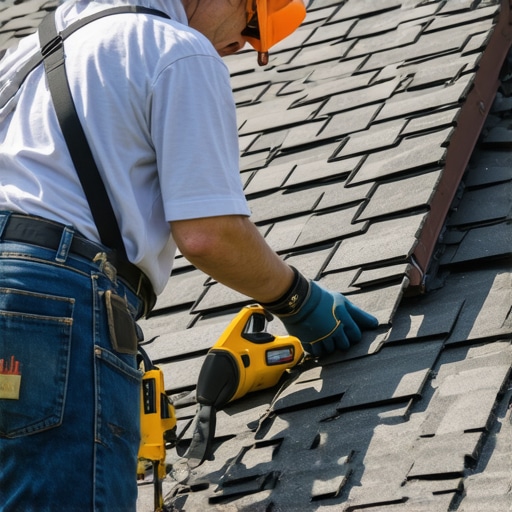
You hear it before you see it. That rhythmic tink-tink-tink of water hitting the drywall inside your bedroom ceiling. By the time that brown ring appears on the paint, the forensic evidence in the attic is already a mess. I have spent 25 years climbing ladders and I can tell you this: most homeowners think a leak is a ‘hole.’ It is rarely a hole. It is usually a failure of physics at the intersection of two planes. We call it the valley, and it is the busiest highway on your roof. When the flashing there goes loose or the seams separate, you aren’t just dealing with a drip; you are dealing with a structural bypass. Most local roofers will run up there with a tube of cheap caulk and call it a day. That is not a fix; that is a stay of execution.
“A roof is only as good as its flashing.” – Old Roofer’s Adage
My old foreman used to say, ‘Water is patient. It will wait for you to make a mistake.’ He was right. Water does not just fall off a roof; it hunts for gaps. In the valley, where two slopes dump hundreds of gallons of water during a storm, the pressure is immense. If your flashing is loose, the water uses capillary action to pull itself upward, defying gravity, and slipping behind the metal. Once it hits the plywood, it’s game over. You start seeing signs of hidden rafter rot before you even realize the valley was the culprit. In cold climates like the Northeast, this gets worse. Snow sits in that valley, melts from the bottom due to heat loss, and turns into a slow-motion flood that stays there for weeks. This is why ‘fast and early’ intervention is the only way to save a square of shingles from the landfill.
The Physics of the Failure: Why Valleys Let Go
Valleys fail because of thermal expansion. Your roof is a living thing. During a 90-degree day, that metal valley flashing can reach 150 degrees. At night, it drops to 60. That metal expands and contracts at a vastly different rate than the wood deck beneath it or the shingles on top. This creates a ‘tearing’ motion. Over five or ten years, that movement pulls the fasteners out. We call these shiners when a roofer misses the rafter, and those loose nails become conduits for water. If the original crew didn’t use a high-quality synthetic shingle felt or a dedicated ice and water shield, that metal is rubbing directly against raw wood. The friction eventually wears a hole in the underlayment, and now you have a direct line to your insulation.
Fix 1: The ‘Surgery’ – Resealing with High-Solids Polyurethane
If the flashing is just starting to lift at the edges, do not use ‘plastic roof cement.’ That stuff dries out and cracks within two seasons. You need a high-solids polyurethane sealant that stays flexible. You have to clean the valley seam meticulously. Any grit or old asphalt will prevent a bond. We apply the sealant under the shingle edge where it meets the metal, creating a gasket. If you see shingle buckling near the valley, it is a sign the shingles were nailed too close to the center of the valley, preventing the metal from moving freely. We call this ‘pinning’ the flashing, and it is a rookie mistake that guaranteed this failure.
Fix 2: Fastening the ‘Shiners’ and Adding Cleats
When I find loose flashing, I look for the nails. If they are backing out, we don’t just hammer them back in. We pull them, seal the hole, and move the new fastener to a fresh piece of wood. Better yet, we use cleats. A cleat is a small strip of metal that holds the flashing down without puncturing the main water-carrying surface. This allows for that thermal expansion I mentioned without the metal trying to rip itself off the roof.
“Flashings shall be installed in a manner that prevents moisture from entering the wall and roof through joints in copings, through moisture-permeable materials and at intersections with dissimilar materials.” – International Residential Code (IRC) R903.2
Fix 3: Installing a ‘Cricket’ or Diverter
Sometimes the valley is just designed poorly. If you have a massive slope dumping into a smaller one, the water ‘overshoots’ the valley. We see this often in modern ‘McMansions.’ The fix is to install a cricket—a small peaked structure that diverts the water flow before it hits the weak seam. This reduces the hydrostatic pressure on the loose flashing. If your roofing companies aren’t talking about water volume and velocity, they are just shingle-tossers, not roofers. You can also look for hidden shingle lifting which often happens at these high-pressure points.
Fix 4: Replacing the Underlayment ‘V’
If the leak is persistent, the metal isn’t the problem—the stuff under the metal is. We have to perform a ‘tear-back.’ We pull the shingles three feet back on each side of the valley, remove the metal, and lay down a double layer of ice and water shield. I prefer using synthetic shingle felt pads as a secondary defense. This creates a ‘roof under the roof.’ If the metal fails again, the underlayment carries the load. This is the difference between a repair that lasts 2 years and one that lasts 20.
Fix 5: The Hemmed Edge Transition
For open valleys, the best fix for loose seams is ‘hemming.’ We take the edge of the metal flashing and fold it back on itself. This creates a ‘hook’ that prevents water from being blown sideways under the shingles by high winds. It also adds rigidity to the metal so it doesn’t ‘oil can’ or buckle in the heat. If you see the metal looking wavy, it’s already lost its structural integrity. You need local roofers who know how to work a metal brake, not just a hammer. Most guys today just want to slap up a ‘W’ valley and go home. A hemmed edge is the mark of a pro. When you are vetting roofing companies, ask them how they terminate their valley edges. If they look at you like you have two heads, keep looking.
The Cost of Hesitation
Water is like a slow-moving fire. It eats the lignin in your plywood, it breeds mold in your insulation, and it ruins the air quality of your home. A loose valley seam is an emergency, even if it’s only dripping ‘a little.’ By the time it drips ‘a lot,’ you’re replacing rafters. Don’t let a ‘trunk slammer’ tell you a bit of caulk is enough. Fix the physics, or the physics will fix your bank account.