
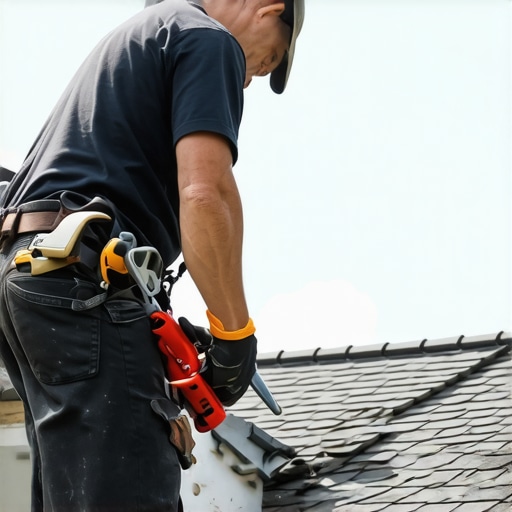
I’ve spent over twenty-five years crawling through attic spaces that smell like a wet basement in the middle of July, all because some local roofers thought they could cheat the laws of physics. My old foreman, a man who had more tar under his fingernails than a kettle of hot asphalt, used to say, ‘Water is patient. It will wait for you to make a mistake.’ He was right. When we talk about roofing companies and multi-year contracts, we aren’t just talking about a stack of paper. We are talking about preventing the slow-motion disaster that occurs when a roof system fails in a cold climate. In the North, the enemy isn’t just a heavy rain; it’s the thermal bridging and the ice dams that turn a small oversight into a five-figure repair bill. If you aren’t looking at your roof through a forensic lens, you’re just waiting for the rot to set in.
1. The Forensic Pre-Contract Audit
Before any roofing company signs you up for a multi-year maintenance deal, they need to do more than just lean a ladder against your gutters. A real pro looks for the ghosts of past failures. I’m talking about [hidden decking plywood decay](https://modernroofingguide.com/roof-inspection-3-signs-of-hidden-decking-plywood-decay-fast-early-fast-early-fast-early-fast-early-fast-early-fast-early-fast-early-fast-early-fast-early-fast-early-fast). You can have the prettiest shingles in the neighborhood, but if the substrate is turning into oatmeal because of poor ventilation, you’re building on sand. A multi-year contract should start with a baseline moisture map. We look for ‘shiners’—those missed nails that didn’t hit the rafter. In a cold attic, a shiner acts like a cold finger; it collects frost in January, and when that frost melts in the afternoon sun, it drips onto your insulation. Over five years, that’s enough water to ruin a ceiling. If your contract doesn’t include a crawl into the deep corners of the eaves, it isn’t worth the ink.
“A roof is only as good as its flashing.” – Old Roofer’s Adage
2. Mandating Material Consistency and ‘The Square’
One of the biggest traps in the industry is the material swap. A company quotes you high-end architectural shingles but uses the cheapest ‘starter strip’ they can find in the back of the truck. When we talk about multi-year protection, we need consistency across every Square—that’s roofing speak for 100 square feet of area. For cold climates, you must specify [synthetic shingle felt](https://modernroofingguide.com/roofing-materials-4-benefits-of-synthetic-shingle-felt) rather than old-school organic paper that wrinkles the second it gets damp. The contract should explicitly state the use of ice and water shields at the eaves and in every valley. A valley is where two roof planes meet, and in a heavy snow year, it becomes a literal river of slush. If the company isn’t using a heavy-duty liner there, capillary action will pull that slush right under the shingle lap and into your rafter tails.
3. Thermal Management and Attic Physics
The secret to a roof that lasts thirty years isn’t actually the roof—it’s the air underneath it. In a multi-year contract, roofing companies should be responsible for monitoring your ventilation balance. This involves checking that your soffit vents aren’t blocked by blown-in insulation. This is where [attic baffles](https://modernroofingguide.com/roofing-materials-3-best-ways-to-install-attic-baffles) are mandatory. Without them, your ridge vent is useless because it has no intake. Imagine trying to breathe through a straw while someone holds your nose shut; that’s your roof without baffles. When heat builds up in the attic, it warms the roof deck, melts the bottom layer of snow, and sends it running down to the cold gutters where it freezes into an ice dam. A good maintenance contract includes an annual check of the [ridge vent sealing](https://modernroofingguide.com/residential-roofing-3-signs-of-poor-ridge-vent-sealing-fast-early) to ensure no wind-driven snow is nesting in your ridge.
“The primary purpose of a roof is to shed water, yet its secondary failure is often the management of air.” – Building Science Institute Axiom
4. The Flashing and Cricket Protocol
If a roofing company tells you they can just ‘caulk’ a chimney leak, fire them on the spot. Caulk is a Band-Aid, not a solution. Every multi-year contract should include a physical inspection of the step flashing and the Cricket. A cricket is a small peaked structure behind a chimney that diverts water. Without it, water pools against the chimney brick, and through hydrostatic pressure, finds its way into the mortar joints. During a freeze-thaw cycle, that water expands, cracking your chimney and your roof deck simultaneously. We see [hidden rafter rot](https://modernroofingguide.com/roof-inspection-3-signs-of-hidden-rafter-rot) most often behind chimneys where the ‘trunk slammers’ skipped the flashing and just dumped a bucket of roofing cement. A real contract ensures these transition points are pulled back and inspected every few seasons.
5. Liability and the Paper Trail
Finally, let’s talk about the boring stuff that saves your house: paperwork. You need to [check for valid insurance](https://modernroofingguide.com/roofing-companies-3-ways-to-check-for-valid-insurance) every single year. Don’t assume that because they were covered in 2024, they are covered in 2026. A multi-year contract should require the roofing company to provide an updated COI (Certificate of Insurance) annually. This protects you from the nightmare scenario where a worker takes a tumble off your 12/12 pitch roof and decides your homeowner’s policy is his retirement plan. Furthermore, ensure the contract specifies [general liability](https://modernroofingguide.com/roofing-companies-3-ways-to-verify-general-liability) limits that actually cover the value of your home. If they drop a bundle of shingles through your skylight, you don’t want to be the one holding the bag. In the end, a roof is a system of physics and legalities. Treat it like one, and you’ll stay dry for decades. Ignore it, and you’ll be calling someone like me to figure out why your plywood looks like compost.{“@context”:”https://schema.org”,”@type”:”HowTo”,”name”:”How to Evaluate a Multi-Year Roofing Contract”,”step”:[{“@type”:”HowToStep”,”text”:”Conduct a forensic attic audit to identify moisture markers and rafter health.”},{“@type”:”HowToStep”,”text”:”Verify material specifications, ensuring the use of synthetic underlayment and proper ice shields.”},{“@type”:”HowToStep”,”text”:”Inspect attic ventilation components, including baffles and ridge vents, to prevent ice damming.”},{“@type”:”HowToStep”,”text”:”Assess all transition points, focusing on chimney crickets and step flashing integrity.”},{“@type”:”HowToStep”,”text”:”Validate the contractor’s insurance and liability coverage on an annual basis.”}]}