
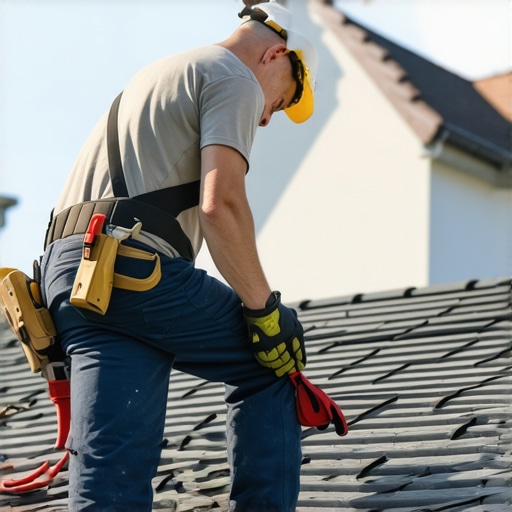
The Forensic Reality: More Than Just Shingles
Walking on that roof felt like walking on a sponge. I knew exactly what I’d find underneath before I even pulled my pitch gauge out. The homeowner in the driveway was talking about a ‘small leak’ over the kitchen, but the bounce under my boots told a different story. It wasn’t just a leak; it was a systemic failure of the entire building envelope. When I finally peeled back the architectural laminates, the deck didn’t just look wet—it was delaminating, the plys of the wood separating like wet cardboard because of a decade of trapped attic moisture. This is the reality most local roofers won’t tell you: you aren’t paying for shingles; you’re paying for a managed battle against physics.
“A roof is only as good as its flashing.” – Old Roofer’s Adage
1. The ‘Lifetime Warranty’ is a Mathematical Mirage
In 2026, the term ‘Lifetime’ has become the most expensive word in the roofing industry. I’ve spent twenty-five years watching homeowners buy into the 50-year promise, only to see the system fail in twelve. The secret? The fine print usually excludes ‘improper ventilation.’ If your attic isn’t balanced—meaning you have the exact same amount of intake at the soffits as you do exhaust at the ridge—the shingles will cook from the inside out. In a typical Northern winter, warm air escapes through attic bypasses—those tiny holes for wires and pipes—and hits the cold underside of your roof deck. This creates condensation that mimics a leak. You don’t need a new roof; you need an air sealer. Most roofing companies will sell you the square of shingles because there’s no profit in telling you to buy a $5 can of spray foam to seal your top plates.
2. The Physics of the ‘Shiner’ and Capillary Action
I often find what we call a ‘shiner’—a nail that missed the rafter and sits exposed in the attic space. During a cold snap, that nail becomes a thermal bridge. It gets cold, moisture in the attic frosts onto it, and when the sun hits the roof, it drips. Homeowners see a spot on the ceiling and think the roof is shot. It’s not. But let’s talk about capillary action. Water is a sticky molecule. If your contractor doesn’t understand the physics of surface tension, they’ll install your starter strip or your valley metal in a way that actually sucks water uphill. I’ve seen water travel three inches sideways under a shingle because a local roofer forgot to ‘dog-ear’ the top of a flashing piece. You’re overpaying if you’re paying for labor that doesn’t respect the way water moves.
3. The Material Trap: Synthetic vs. Organic
By 2026, the shift toward synthetic underlayments is complete, but don’t let a salesperson convince you it’s a magic bullet. While synthetic is harder to tear, it’s also less ‘breathable’ than the old 15lb or 30lb felt. If moisture gets trapped between the deck and a synthetic barrier, it stays there. I’ve done forensic tear-offs where the plywood was black with mold because the ‘high-tech’ underlayment acted like a plastic wrap on a sandwich. When choosing roofing materials, look at the perm rating. You want a system that allows the house to breathe. If you’re in an ice-dam-prone zone, the Ice & Water Shield must be applied directly to the deck at the eaves, but overdoing it can turn your home into a terrarium. It’s about the balance of the R-value in the attic and the permeability of the roof deck.
“Roofing assemblies shall be designed and installed in accordance with this code and the manufacturer’s installation instructions.” – International Residential Code (IRC) R903.1
4. The ‘Cricket’ and the Chimney Scams
If you have a chimney wider than 30 inches and your roofer didn’t mention a cricket, fire them. A cricket is a small peaked structure built behind the chimney to divert water. Without it, the back of your chimney becomes a dam. Debris collects, holds moisture, and eventually rots the valley. Most roofing companies skip the cricket because it takes two hours of carpentry that they didn’t bid for. They’ll just slather the back with mastic—or ‘roofer’s butter’—and hope it lasts until their tail-light warranty expires. True roofing isn’t about the shingles; it’s about the metalwork and the carpentry that supports it. If they aren’t talking about counter-flashing into the brick mortar joints, they are just ‘shingle flippers,’ not roofers.
5. The 2026 Labor Economy: Vetting the ‘Trunk Slammer’
The biggest secret to not overpaying is understanding the labor market. A ‘cheap’ quote in 2026 usually means the crew is being paid by the square and rushing to finish before sundown. This is when the crickets get skipped and the shiners happen. When vetting local roofers, ask for their ‘Foreman’s Quality Checklist.’ If they don’t have one, they aren’t managing the physics; they’re just managing the aesthetics. You want a forensic-minded contractor who looks at the drip edge and the rake edge as the primary defense lines. Don’t pay for the brand of the shingle—pay for the integrity of the person holding the nail gun. A perfectly installed 25-year 3-tab shingle will outlast a poorly installed ‘Lifetime’ architectural shingle every single time. Stop looking at the glossy brochures and start looking at the flashing details in their portfolio. If you see visible caulk on a finished flashing job, walk away. Caulk is a maintenance item, not a permanent waterproofing solution.