
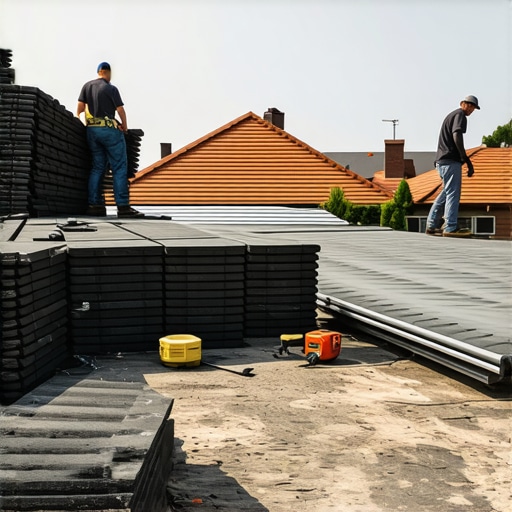
I walked onto a job site last November where the shingles felt like stale crackers. The homeowner was thrilled about their ‘new’ roof, but as I stepped across the field of the roof, every third shingle made a sickening snap. This wasn’t a decade-old install; the crew had finished just three weeks prior. I didn’t need a magnifying glass to see the disaster. The local roofers who handled the job had bought their ‘square’ count months in advance during a price dip and left the pallets sitting in a non-ventilated metal container through a record-breaking heatwave. They had effectively baked the life out of the asphalt before the first nail ever met the deck. Walking on that roof felt like walking on a sponge in some spots and glass in others. I knew exactly what I’d find underneath: degraded bitumen and a mat that had lost its structural integrity.
The Physics of the Asphalt Shingle: Why Storage Matters
Asphalt shingles aren’t just pieces of heavy paper. They are complex multi-layered systems consisting of a fiberglass mat, a coating of asphalt (bitumen), and ceramic-coated granules. In the industry, we call the asphalt the ‘soul’ of the shingle. It provides the waterproofing and the flexibility. When you talk about roofing companies today, many focus on the install speed, but the forensic reality is that the way those shingles are stored determines their 30-year lifespan. By 2026, we are seeing more polymer-modified (SBS) shingles entering the market. While these are ‘tougher,’ they are also more sensitive to ‘oil migration’ if stored improperly. If you let a pallet sit in the sun, the oils in the top shingles begin to migrate downward through the stack. This creates a ‘shiner’ effect on the granules where they lose their bond, and you end up with a bald shingle before the roof is even finished.
“A roof is only as good as its flashing.” – Old Roofer’s Adage
1. Temperature Control and the ‘Baking’ Effect
In our climate, we deal with thermal shock. Most roofing companies think shingles are indestructible because they sit on a 140°F roof. The difference is airflow. On a roof, you have attic ventilation and wind. In a stagnant storage unit or a tightly wrapped pallet, you are creating a kiln. For 2026, as manufacturers lean into higher recycled content in their bitumen blends, keeping storage temperatures below 110°F is no longer just a suggestion—it is a requirement. If you ignore this, the ‘sealant strips’ on the shingles—those sticky lines that help the shingles bond together—will pre-activate. When the crew tries to pull a shingle from the bundle, it tears the face off the one below it. You’ve just turned a $150 square into trash.
2. The Stacking Geometry: Avoiding the Permanent Curl
I’ve seen local roofers stack pallets four high to save space in the warehouse. Here is the trade secret: asphalt has a ‘memory.’ If you stack shingles on an uneven surface or stack them too high, the bottom two pallets will develop a permanent ‘curl.’ When you go to install those shingles, they won’t lay flat against the plywood. This creates a ‘fish-mouth’ where wind-driven rain can be driven up under the shingle by capillary action. Once water gets under that shingle, it’s only a matter of time before the plywood turns into something resembling wet oatmeal. Always store pallets on a level, flat surface, and never more than two high. If you see a pallet leaning, that’s a red flag for the material inside.
3. Vapor Pressure: The Ground-Up Attack
Never store your roofing material directly on green concrete or dirt. Concrete is a sponge; it breathes moisture. If you set a pallet of shingles on a concrete floor in a damp warehouse, the bottom layer of bundles will absorb that vapor. This causes the paper wrappers to rot and the fiberglass mat to become ‘pre-saturated’ with moisture. When those shingles finally hit the hot sun on a roof, that trapped moisture turns to steam, creating ‘blisters’ in the asphalt. Those blisters will eventually pop, leaving a hole in your waterproofing layer. Use a pallet or a heavy-duty vapor barrier between the material and the ground. It’s a simple step that separates the ‘trunk slammers’ from the professional roofing companies.
“The primary purpose of a roof is to shed water, but its secondary purpose is to survive its own environment.” – Architecture Axiom
4. UV Shielding and the Clear-Wrap Trap
Many local roofers leave pallets in the yard covered in clear stretch-wrap. This is a death sentence. Clear plastic creates a greenhouse effect, magnifying UV rays and trapping heat. UV radiation breaks down the chemical bonds in the asphalt, a process called ‘photo-oxidation.’ By the time you get that shingle on the roof, it has already aged five years. If you must store material outside, use an opaque, breathable tarp. This keeps the sun off the granules and allows heat to escape through the top, preventing the bitumen from ‘sweating’ out its essential oils.
5. Inventory Rotation: The FIFO Method
First In, First Out (FIFO) is a rule that many roofing companies ignore until it bites them. In 2026, the chemistry of shingles is changing fast to meet new environmental codes. You don’t want to be mixing ‘old stock’ with ‘new stock’ on the same roof. The colors won’t match—even within the same manufacturer—and the chemical ‘weathering’ rate will be different. This leads to a ‘checkerboard’ roof in three years. Always mark your pallets with the delivery date. Use the oldest stock first to ensure the roof has a uniform appearance and consistent performance across every ‘square’ installed. If you ignore the age of your material, you’ll eventually be building a ‘cricket’ to divert water away from a problem you created yourself by using brittle, aged stock.
The Forensic Reality of Waiting
Waiting to fix a storage issue is like ignoring a leak in your valley. It only gets more expensive. If you are hiring local roofers, ask them where they keep their material. A pro will show you a clean, dry, temp-controlled space. A hack will point to a pile of shingles in the mud behind their garage. The cost of a new roof is too high to risk on ‘pre-damaged’ materials. Remember, water is patient. It will wait for you to make a mistake in storage, and it will find that mistake the first time the wind picks up or the ice starts to melt. Protect your investment by ensuring your roofing companies respect the material before it ever leaves the ground. If the shingles look ‘wavy’ or ‘oily’ on the pallet, send them back. Your home deserves better than a roof that was ruined in the warehouse.