
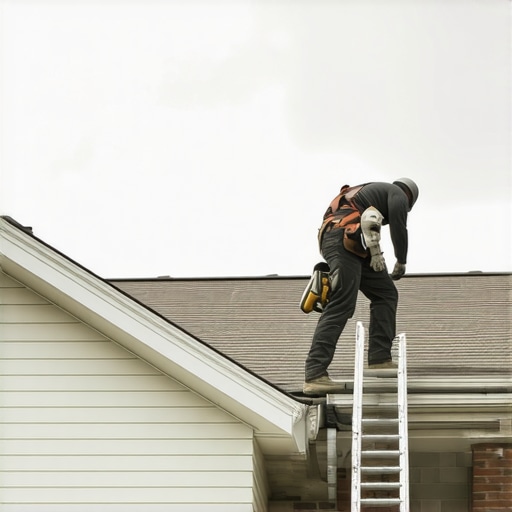
The Knock at the Door and the Invisible Leak
You hear the rumble before you see the rain. In the Gulf Coast and across the hurricane-prone Southeast, the 2026 storm season isn’t just a calendar event; it is a physical assault on your home’s primary defense. Most homeowners wait for the drip on the dining table to call local roofers. By then, the forensic story of your roof’s failure has already been written in the dark, humid silence of your attic. I have spent two and a half decades pulling up shingles that were ‘guaranteed for life,’ only to find the plywood underneath had the consistency of wet cardboard. Water doesn’t just fall; it hunts. It hunts for the shortcut taken by a tired sub-contractor on a Friday afternoon. It hunts for the ‘shiner’—that missed nail that didn’t hit the rafter and now acts as a cold-conduit for condensation. When the wind speeds climb toward triple digits, the physics of your roof change. It stops being a lid and starts acting like a wing, trying to lift your house off its foundation. If you aren’t looking at these four specific mechanical points before the sky turns black, you aren’t just risking a leak; you’re risking a total structural compromise.
My old foreman, a man whose hands looked like gnarled oak roots and who smelled permanently of hot asphalt, used to sit me down on a ridge vent at 6 AM. He’d point at a valley where two planes of a roof met and say, ‘Look at that, kid. Water is patient. It will wait for years. It will wait for you to leave one nail a quarter-inch too high, or for a single piece of flashing to back out by a hair. It will find that hole, and it will invite its friends.’ He was right. Most of the roofing failures I see today aren’t acts of God; they are acts of negligence buried under a layer of pretty shingles.
“The roof shall be covered with approved roof coverings secured to the building or structure in accordance with the provisions of this code.” – International Residential Code (IRC), Section R903.1
1. The Fastener Pattern: Beyond the ‘Six-Nail’ Myth
When you hire roofing companies, they’ll brag about using ‘architectural shingles’ or ‘high-wind rated’ materials. That is marketing fluff. A shingle is only as wind-resistant as the nail holding it down. In high-velocity hurricane zones, the fastener pattern is the difference between a roof that stays put and one that ends up in your neighbor’s pool. I’ve performed autopsies on roofs where the shingles were rated for 130 MPH, but they blew off at 70 MPH. Why? Because the installers high-nailed. Instead of hitting the common bond—the narrow strip where two layers of the shingle overlap—they nailed an inch too high. This missed the double-layer reinforcement, leaving the shingle held up by a single thin layer of fiberglass mat. In the heat of a 140°F attic, that mat softens. When the wind gets underneath, it creates a ‘pull-through’ effect. The shingle rips right over the nail head like paper through a thumbtack.
Before 2026, ask your local roofers to show you their fastening plan. Are they using four nails, or six? In the Southeast, if it isn’t six nails per square, they are cutting corners. And check the nails themselves. If you are within 3,000 feet of salt water, standard galvanized nails are a ticking time bomb. The salt air eats the zinc coating, the steel rusts, and the fastener loses its ‘grip’ on the wood fibers. I’ve seen 10-year-old roofs where I could pull the nails out with my bare fingers. You want stainless steel. It’s expensive, yes, but so is a ceiling collapse.
2. The Secondary Water Resistance (SWR): Your Last Line of Defense
Imagine your shingles are gone. The wind has peeled them back. What is left? In the old days, we used 15-lb or 30-lb felt paper. It was basically construction paper soaked in tar. It worked okay for a while, but it wrinkles, it tears, and it degrades. For the 2026 storm season, if your roofing professional isn’t talking about a ‘sealed roof deck,’ you are looking at the wrong contractor. This involves using a self-adhering polymer-modified bitumen membrane—commonly known as ‘peel and stick’—applied directly to the plywood or OSB. This creates a monolithic, waterproof barrier. Even if every single shingle blows off, your house stays dry. This is the ‘Secondary Water Resistance’ (SWR) rating that insurance adjusters look for. The physics of SWR are fascinating; the material actually heals itself around the nail as it is driven through, creating a gasket-like seal. Without it, water driven by 80 MPH winds will find its way into the seams of your roof deck through capillary action, moving sideways and upwards against gravity until it finds a gap.
3. The Geometry of the Valley and the ‘Cricket’
Water is lazy until it’s crowded. When two roof planes meet, they form a valley. This is the busiest highway on your roof. Local roofers often take shortcuts here by using ‘woven’ valleys, where shingles overlap. In a heavy storm, the sheer volume of water moving down those slopes can create enough hydrostatic pressure to force liquid under the shingles at the bottom of the valley. A forensic roofer looks for ‘open’ valleys lined with heavy-gauge metal. But there’s a bigger culprit: the chimney. If your chimney is wider than 30 inches and sits on a slope, it needs a ‘cricket.’ This is a small, peaked false-roof built behind the chimney to divert water. Without a cricket, the chimney acts like a dam. Debris (pine needles, leaves) collects there, holds moisture, and rots the flashing. I once investigated a ‘mystery leak’ in a luxury home where the chimney flashing looked perfect from the ground. When I got up there, the lack of a cricket had allowed a five-pound mass of wet leaves to sit against the brick for three years. The water eventually ate through the mortar and was pouring down the inside of the fireplace. Caulk is not a repair; it is a confession of failure. If your roofer reaches for a tube of sealant to fix a flashing issue, fire them. Metal should be lapped and integrated into the masonry, not ‘glued’ with goop that will crack after one summer of UV exposure.
“A roof is only as good as its flashing.” – Old Roofer’s Adage
4. The ‘Storm Chaser’ Red Flags and the Warranty Trap
As 2026 approaches, you will see a surge in roofing companies offering ‘free’ roofs through insurance claims. Be wary of the ‘contingency agreement.’ These are documents that look like inspection forms but are actually binding contracts that sign over your insurance rights to the contractor. These ‘trunk slammers’ often use the cheapest labor available, people who don’t know a ‘shiner’ from a ‘starter strip.’ They get the job done in a day, take the insurance check, and disappear. When your roof fails two years later, that ‘lifetime warranty’ is worthless because the company no longer exists. A real local professional will walk you through the ‘NORA’ (Notice of Right of Assignment) and won’t pressure you to sign anything until you’ve seen a line-item estimate. They should be able to explain the ‘uplift rating’ of the specific shingle they are installing and how they plan to handle the drip edge—the metal strip that prevents wind-driven rain from being pushed back under the shingles at the eaves. If they don’t mention the drip edge, they are leaving the most vulnerable part of your roof wide open to ‘wicking’ damage, which will rot your fascia boards before you even notice a leak inside.
The Cost of the ‘Low Bid’
I’ve walked on thousands of roofs. I’ve smelled the moldy insulation that indicates a slow leak that’s been active for a decade. I’ve seen families lose everything because a $500 savings on a roofing bid meant the difference between a roof that stayed and a roof that flew. Roofing isn’t a commodity; it’s a craft of managed layers. Every layer—from the deck to the underlayment, the starter course, the shingles, and the ridge vent—must work in a mechanical sequence. If one part of that sequence is broken by an installer who is trying to beat the clock, the entire system fails. Before the 2026 storms arrive, do your own forensic walk-through. Look for ‘shiners’ in your attic. Look for ‘granule loss’ in your gutters, which looks like coarse black sand and means your shingles are losing their UV protection. Most importantly, find a roofer who speaks the language of physics, not just the language of sales. Your home’s survival depends on the details you can’t see from the curb.