
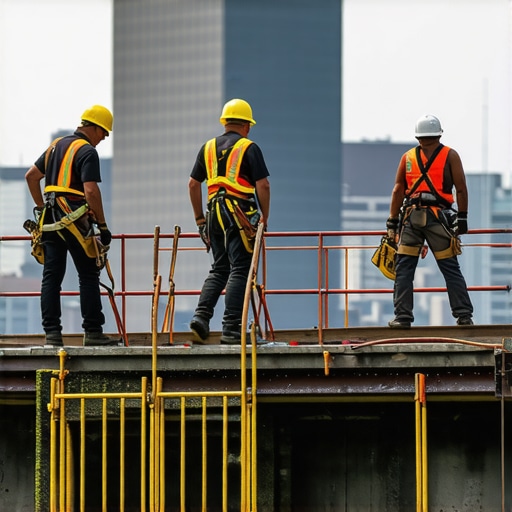
The Anatomy of a Fall: Why Gravity is the Most Patient Roofer
I’ve spent twenty-five years watching the way water and gravity cooperate to ruin a homeowner’s life. Gravity is patient. It doesn’t care about your deadline, the humidity, or the fact that you’re behind on the mortgage. My old foreman, a man who had more scars on his knuckles than a shop teacher, used to say, ‘Water is patient, but gravity is faster. It will wait for you to make a single mistake.’ That mistake usually happens at 7:00 AM on a Tuesday when the morning dew is still sitting on the shingles like a layer of grease. I’ve stood on roofs where the previous crew left a shiner—a nail that missed the rafter—sticking through the decking, just waiting to catch a boot and send a man sliding. When we talk about roofing companies and safety, we aren’t talking about wearing neon vests. We are talking about the forensic reality of what happens when the physics of a roof deck meets the human body. In the North, where frost can hide on a north-facing slope until mid-day, crew safety isn’t a checklist; it’s a survival strategy. If you’re hiring local roofers, you need to know exactly how they manage the risk of a 140-degree attic or a 10-in-12 pitch.
“The employer shall ensure that each employee on a walking/working surface with an unprotected side or edge which is 6 feet or more above a lower level shall be protected from falling by guardrail systems, safety net systems, or personal fall arrest systems.” – OSHA 1926.501(b)(1)
1. The Anchor Point Autopsy: Beyond the Harness
Most homeowners see a guy in a harness and think he’s safe. That’s like looking at a car and assuming the brakes work because it has a steering wheel. The harness is useless if the anchor point is a joke. I’ve seen ‘trunk slammers’ screw a D-ring into rotten OSB using three-inch deck screws. When a 200-pound man falls, the deceleration force can easily exceed 1,000 pounds. If that anchor is into hidden decking plywood decay, it’s going to pop out like a tooth from a meth addict. A real pro finds the rafter. They use lag bolts. They understand that the roof isn’t just a surface; it’s a structural system that has to withstand dynamic loads. You have to look at the ‘mechanism of failure’ before the failure happens. This means checking the integrity of the substrate before the first square of shingles is even torn off. If the decking is soft, the safety system is a lie.
2. Subcontractor Vetting and the ‘Paper Shield’
The biggest secret in the industry is that many big-name roofing companies don’t actually have employees. They have paper. They hire subcontractors who hire other subcontractors. By the time the crew gets to your house, nobody knows who is actually responsible for the safety plan. You need to ask specific questions about subcontractors to ensure the guys on your ridge aren’t just day laborers with a borrowed ladder. I once saw a crew in the middle of July trying to beat a thunderstorm. They were moving so fast they forgot to tie off their ladders. One gust of wind, and that ladder was flat on the driveway, leaving three guys stranded on a 45-degree slope. A reputable company maintains their own local project safety records and doesn’t hide behind a web of LLCs. If the estimate looks too good to be true, they’re probably cutting corners on the insurance and the gear.
3. The Physics of the Pitch: Footwear and Friction
In the North, we deal with thermal bridging and condensation that turns a roof into a skating rink. Safety starts with the boots. I’ve seen guys show up in sneakers, which is basically a death wish on a steep valley. Professional local roofers use high-friction soles designed specifically for asphalt. But even the best boots won’t save you from a ‘shingle slide.’ This happens when the sun heats up the top layer of shingles, but the adhesive hasn’t set yet. If a worker steps on the wrong spot, the whole square can slide right off the underlayment. It’s a literal carpet pull. Managing this requires a crew that understands the ‘fast early’ window—getting the work done before the heat makes the asphalt soft and dangerous, or the frost makes it slick. You have to audit the detailed estimate to see if they’ve factored in the proper safety equipment for your specific roof’s pitch.
“A roof is only as good as its flashing, and a crew is only as safe as its slowest worker.” – Old Roofer’s Adage
4. Ladder Transitions: The No-Man’s Land
The most dangerous part of a roofing job isn’t being on the roof—it’s the three feet between the ladder and the eave. This is the transition zone. If the ladder isn’t extended three feet past the roof line, the worker has to do a ‘circus move’ to get off. That’s where the center of gravity shifts, and that’s where the bones break. I always look for ladder stabilizers. They keep the ladder from crushing the gutters and, more importantly, they keep it from sliding sideways when a guy with a 80-pound bundle of shingles on his shoulder tries to step onto the deck. If you see a crew leaning a ladder against a cricket or a weak gutter, fire them. They are amateurs. A pro treats the ladder like a bridge, not a tool.
5. Heat Stress and the Attic ‘Oven’
We focus so much on falling that we forget about the silent killer: heat stroke. In an attic with poor ventilation, temperatures can reach 150 degrees. A worker who gets dizzy 30 feet in the air is a liability to everyone. Local roofing companies must have a mandatory hydration and ‘off-roof’ rotation. When the brain starts to cook, judgment goes out the window. That’s when the shiners happen. That’s when the valley flashing gets nailed too tight, causing leaks later. Safety and quality are two sides of the same coin. A tired, overheated roofer makes mistakes that turn into leaks five years down the road. If the crew isn’t taking breaks, they aren’t being ‘efficient’; they are being dangerous. I’ve seen plywood turn to oatmeal from years of trapped moisture, but a human body can fail in just thirty minutes of extreme heat. You need a crew that respects the sun as much as they respect the rain.