
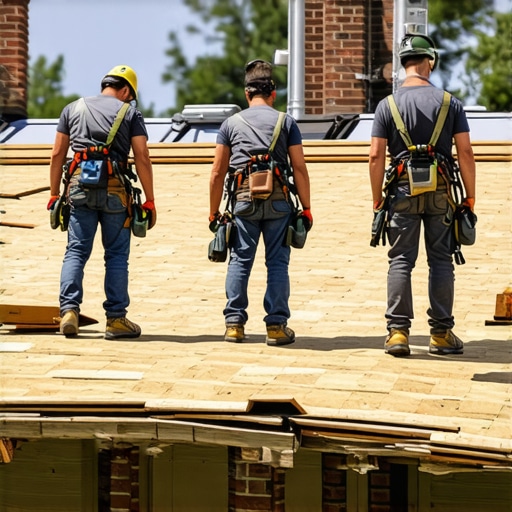
The Veteran’s Perspective on Local Roofing Safety
I’ve spent a quarter-century crawling over hot asphalt and rotting cedar, and if there is one thing I’ve learned, it is that most roofing companies don’t understand the difference between a ‘fast’ job and a ‘safe’ job. You see them every morning—the trunk slammers in beat-up pickups, throwing down a square of shingles in twenty minutes and calling it craftsmanship. My old foreman, a man who had calluses thicker than a deck of cards and a permanent squint from the glare of galvanized steel, used to tell me every morning at the job site: ‘Water is patient. It will wait for you to make a mistake.’ He wasn’t just talking about leaks; he was talking about the integrity of the entire system. When local roofers rush, they don’t just leave behind a shiner—a missed nail that eventually rusts out—they leave behind a liability that can compromise the structural safety of your entire home. Safety records aren’t built on clipboards in an air-conditioned office; they are built in the trenches, or in our case, on the 10/12 pitch of a residential roof in the middle of July.
The Physics of Failure in the Humid Southeast
In our climate zone, the enemy isn’t just a sudden downpour; it is the relentless cycle of humidity and thermal expansion. If you are hiring roofing companies in high-wind regions, you have to look at the physics of how a roof actually stays on. When wind hits a gable end, it creates a pressure differential. If the starter strip wasn’t installed with military precision, the wind gets under that first layer. This starts a chain reaction called shingle-lifting. I’ve seen entire slopes peeled back like a banana because some crew wanted to finish by noon. To prevent this, you need to understand how to spot shingle lifting early before the next storm turns your attic into a swimming pool. It’s about more than just nails; it’s about the bond between the sealant strip and the granule surface below it. In the heat of the South, that bond can take hours to set. If a crew is stomping all over the shingles while they are still soft, they break that seal before it ever has a chance to protect the home. This is why building local project safety records is often about slowing down the pace to ensure the material actually works the way the engineers intended.
“A roof is only as good as its flashing.” – Old Roofer’s Adage
The Trap of the ‘Lifetime’ Warranty
Every local roofer wants to sell you on a ‘lifetime’ warranty. It sounds great over a kitchen table, but as a forensic investigator, I can tell you that those papers are often worth less than the scrap metal in a dumpster. Most warranties are voided the moment a crew ignores the IRC building codes.
“Steep-slope roof coverings shall be applied in accordance with this code and the manufacturer’s installation instructions.” – International Residential Code (IRC)
If your contractor uses four nails instead of six in a high-wind zone, your warranty is dead. If they reuse the old, pitted aluminum flashing around your chimney, it’s dead. I once investigated a project where the homeowner thought they were safe because they had a ‘premium’ shingle. Underneath, however, the crew had used cheap organic felt instead of high-grade synthetic underlayment. The felt absorbed moisture from the attic, buckled, and forced the shingles upward, creating a ‘hump’ that caught the wind. Understanding the benefits of synthetic underlayment is a baseline safety requirement in 2026. If a company is still pitching you on old-school 15-pound felt, they are living in the 1990s, and they are putting your decking at risk for rot.
Mechanism Zooming: Why Valleys and Edges Fail
Let’s talk about the anatomy of a leak. Water doesn’t just fall through a hole; it travels. Through capillary action, water can move sideways and even upward against gravity if the surface tension is right. This is most common in the valleys. Many roofing companies take the ‘fast’ route with a closed-cut valley because it’s easier than installing a proper metal W-flashing. But if the shingles aren’t trimmed back properly, water dams up against the edge of the shingle and gets forced underneath. You can usually see the results within three years. If you notice signs of poor valley drainage, such as silt buildup or moss growing only in the crease, you have a ticking time bomb. The water isn’t just sitting there; it’s slowly eating away at the plywood decking. I’ve stepped on roofs where my boot went straight through the valley because the ‘pro’ crew didn’t bother to install a cricket behind a wide chimney or used a ‘shiner’ nail right in the center of the water channel. That’s not a mistake; that’s negligence disguised as speed.
How to Build Local Project Safety Records Fast
For the contractors listening, or the homeowners trying to vet them, building a safety record isn’t just about hard hats. It’s about documentation and verification. The best tips for building safety records involve real-time photo documentation of the ‘hidden’ parts of the roof. I want to see the drip edge. I want to see the ice and water shield in the valleys. I want to see the staggering of the shingle joints. If a company can’t show you photos of the roof *before* the shingles went on, they are hiding something. They are likely hiding the signs of hidden decking plywood decay that they just shingled right over to save time. It happens every day. A crew sees a soft spot, and instead of stopping down to replace the sheet, they just nail over it. They save twenty minutes, and you lose five years of roof life. A true safety-first company treats the roof deck like the foundation of a house—if it isn’t solid, nothing else matters.
The Long-Term Cost of the Quick Fix
We live in an era of ‘fast’ services, but roofing is a trade of patience. When you rush a crew, they take shortcuts with the nail gun. They ‘over-drive’ the nails, which blows the head straight through the shingle, leaving it held up only by friction. Or they ‘under-drive’ them, leaving the head sticking up to eventually wear a hole through the shingle above it. Neither of these issues will cause a leak tomorrow, but both will lead to a catastrophic failure during the first tropical storm of the season. Building a record of safety means having a foreman who actually walks the roof and checks the nail depth. It means ensuring the ‘starter strip’ is actually at the eave to prevent wind uplift. Don’t be fooled by the shiny brochures and the talk of ‘seamless’ transitions. Roofing is a dirty, mechanical process that requires attention to the smallest details. If you want a roof that lasts thirty years, you need a contractor who is more afraid of a ‘shiner’ than they are of a late-afternoon deadline. In the end, the most expensive roof you will ever buy is the ‘cheap’ one that needs to be replaced twice because the first crew was trying to be ‘fast early’ instead of ‘safe always’.