
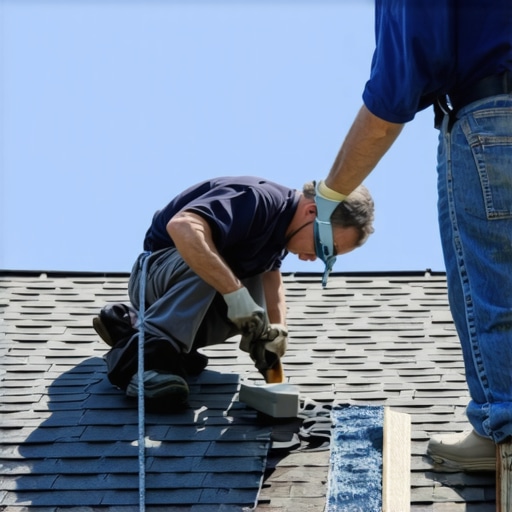
The Autopsy of a ‘Mystery’ Leak: When the Ridge Becomes a River
It starts with a brown ring on the ceiling of your master bedroom, right near the peak of the vault. You call a few local roofers, and they tell you that your shingles look fine. But every time the wind kicks up from the North and the thermometer drops, that spot grows. I’ve spent 25 years climbing 12-pitch roofs in the biting cold of the Great Lakes region, and I’ve seen this exact movie a thousand times. The problem isn’t the shingles; it’s the physics of your ridge and gable intersections. When I walk onto a roof like that, it feels like walking on a damp sponge. My old foreman used to say, ‘Water is patient. It will wait for you to make a mistake, and once it finds a path, it will never forget it.’ Most roofing companies just want to slap a new layer of asphalt down and call it a square, but they ignore the transition points where the air exits your attic.
The mechanics of failure here are elegant and brutal. You have a ridge vent—that plastic or mesh strip sitting at the very peak—and it meets the vertical wall of a gable. If that joint isn’t sealed with the precision of a surgical incision, you are essentially inviting wind-driven rain and fine-mist snow to settle directly onto your plywood decking. We call this ‘capillary action.’ Water doesn’t just fall; it climbs. It uses the tension between the bottom of a shingle and the top of a vent to pull itself uphill, right into your insulation. If you don’t catch it, you’ll eventually see hidden decking plywood decay that turns your structural support into something resembling wet cardboard.
“The roof shall be covered with approved roof coverings secured to the building or structure in accordance with the provisions of this code.” – International Residential Code (IRC) R903.1
1. The Precision Transition Cap: Engineering the Gable-to-Ridge Joint
The most common failure point I see during a forensic inspection is the ‘butt-joint’ where the ridge vent simply ends at the gable trim. Most crews just run the ridge vent to the edge and glob some cheap silicone on it. That’s a ‘Band-Aid’ fix that will fail after two seasons of thermal expansion and contraction. The right way—the forensic way—is to use a custom-bent metal transition cap. This piece of flashing sits underneath the last few inches of the ridge vent and overlaps the gable trim. It creates a mechanical barrier that forces water to shed outward rather than allowing it to seep into the ‘V’ where the two planes meet. If your roofing crew isn’t using a brake to bend custom flashing for these joints, they are just hoping for the best. You can’t rely on caulk alone when the wind is shoving rain at 60 miles per hour.
2. High-Performance Bio-Based Sealant Integration
Standard roofing cement is a dinosaur. It dries out, cracks, and pulls away from the substrate within five years. To truly seal a gable ridge vent, you need to use advanced polymers that remain flexible at -20°F. When we pull back the ridge cap shingles, we look for shiners—those missed nails that went into the air instead of the rafter. Each shiner is a highway for frost to travel into your attic. Using bio-based roof shingle sealants at the fastener points and the vent edges ensures that even as the house shifts, the seal remains airtight. This prevents ‘attic bypass,’ where warm air from your house escapes and hits the cold underside of the roof, creating condensation that mimics a leak.
3. The Baffle and Filter Overhaul
Many homeowners complain about snow blowing into their attic through the ridge vent. This usually happens because the vent lacks an internal baffle. A baffle is a small curved diverter that uses the wind’s own energy to create a low-pressure zone, sucking air out of the attic while blocking debris and moisture from entering. If your current vent is a ‘low-profile’ mesh style without a hard exterior baffle, you’re essentially living under a screen door. Replacing these with high-wind-rated baffled vents is the only way to stop the ingress. I’ve seen attics in the North where three inches of snow had drifted onto the insulation because the ridge vent was wide open to the elements. You have to check for signs of poor ridge venting like rust on nails or matted insulation before the wood starts to rot.
“Proper ventilation is the key to preventing the premature failure of the roof system and the structural components of the attic.” – NRCA (National Roofing Contractors Association)
4. Correct Fastener Patterning and ‘Cricket’ Logic
Finally, let’s talk about the ‘Starter Strip’ and the nail line. If the ridge cap shingles are nailed too high, they won’t compress the vent’s weather-strip properly. If they are nailed too low, you’ve just created a leak point that isn’t covered by the overlapping shingle. We use a specific staggered patterning to ensure that every nail is ‘blind-nailed’—covered by the next piece of material. On steep gables, we sometimes install a small ‘cricket’ or diverter above the vent termination to split the water flow. It’s a tiny detail, a three-inch piece of metal, but it’s the difference between a dry home and a $10,000 mold remediation bill. If you are noticing water entry near the peak, you may need to stop leaks around vent pipes and ridge lines simultaneously to ensure the entire system is hydrostatic-proof.
The Surgery: Why You Can’t Just ‘Caulk and Walk’
If you ask a ‘trunk slammer’ contractor to fix a gable leak, he’ll climb up with a ladder and a tube of goop. He’ll smear it over the shingles and be gone in twenty minutes. That is not a repair; that is a delay. To fix this right, you have to perform ‘surgery.’ This means removing the ridge cap shingles, pulling the vent, inspecting the decking for soft spots, and then reinstalling with proper flashing and ice-and-water shield membranes. It’s more expensive upfront, but it stops the cycle of failure. If your roof is already showing its age, you might want to look into impact-rated shingles or synthetic underlayments for the next full replacement. Don’t let a local roofer talk you into a cheap fix for a structural physics problem. Water is patient, but you shouldn’t be. Fix the ridge, seal the gable, and keep your attic dry before the next storm hits.